Ashwagandha: Which brand is the best to buy in 2026?
The best ashwagandha is the one that matches the trials: a named root extract, 300 to 600 mg a day, with nothing hidden. We read six US labels. NOW’s 600 mg KSM-66 is our pick at about 37 cents a day; Jarrow’s 300 mg capsules suit a split dose; NOW’s 450 mg extract is the budget choice. Gummies cost four times as much a day and add sugar and vitamin D.
- 6products compared
- Labelsread on makers’ own sites
- Nopaid placements
If you read nothing else
- Buy a named root extract — KSM-66 is the one most trials used — at 300 to 600 mg a day. A label that just says “ashwagandha 500 mg” may be much weaker powder.
- Our pick: NOW KSM-66 Ashwagandha 600 mg, one capsule a day, about 37 cents a day at list price. Jarrow’s 300 mg KSM-66 matches the twice-daily trial pattern.
- Budget: NOW Ashwagandha 450 mg, a standardised extract at about 19 cents a day — but not one of the extracts the trials tested.
- Gummies can cost four times as much a day and add sugar and vitamin D. No brand makes ashwagandha safe in pregnancy or with liver or thyroid problems.
How they compare
Read from each maker’s label on 1 October 2026. Prices are the maker’s list price — Amazon’s will differ, so compare the cost a day at the full dose. KSM-66 is sold as at least 5% withanolides, so about 30 mg in 600 mg.
| Product | Extract | Daily dose | Withanolides | Cost a day | Pack | Vs. evidence |
|---|---|---|---|---|---|---|
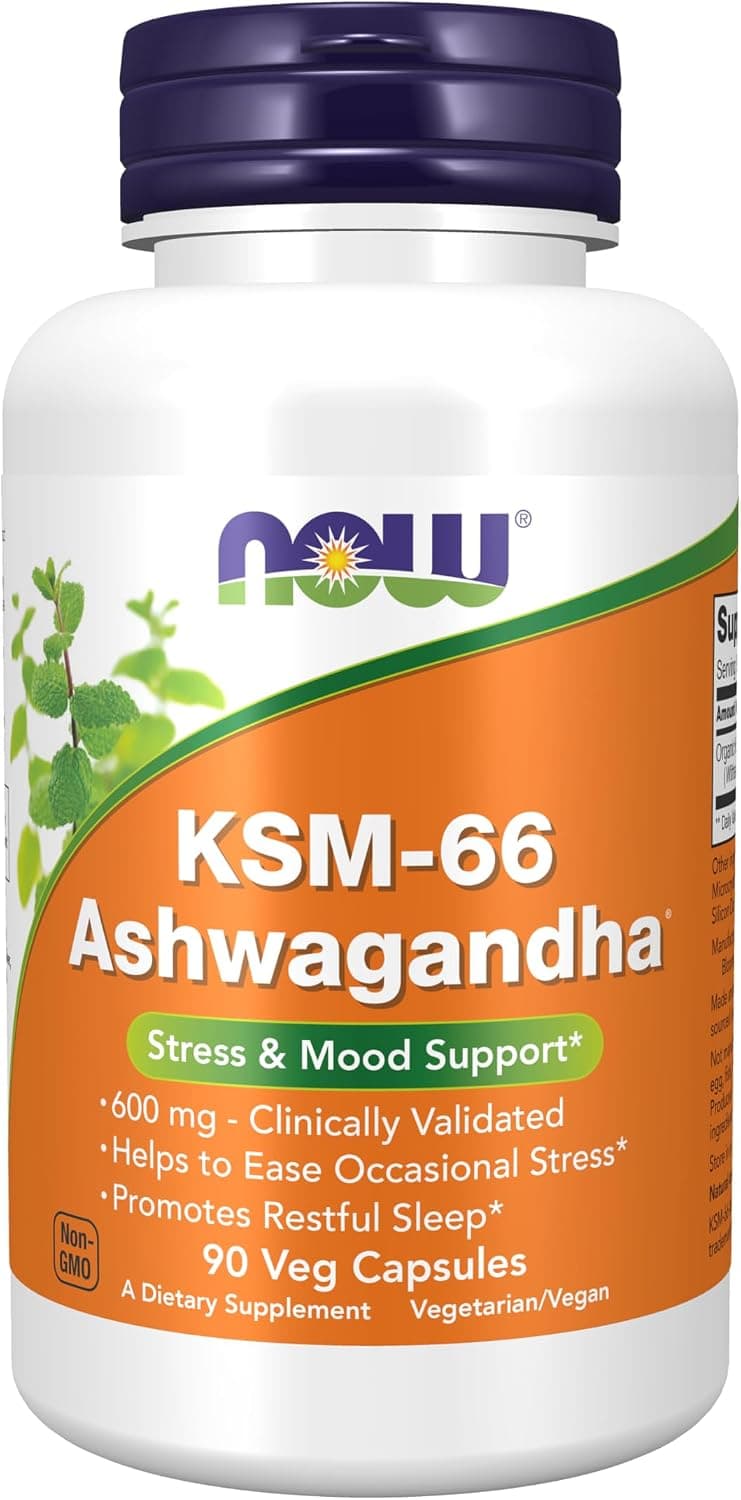 Best overallNOW KSM-66 Ashwagandha 600 mg Best overallNOW KSM-66 Ashwagandha 600 mg | KSM-66Organic root | 600 mg1 capsule | ~30 mgNot printed | $0.37List price | 90 capsules$32.99 · 3 months | Matches the trials |
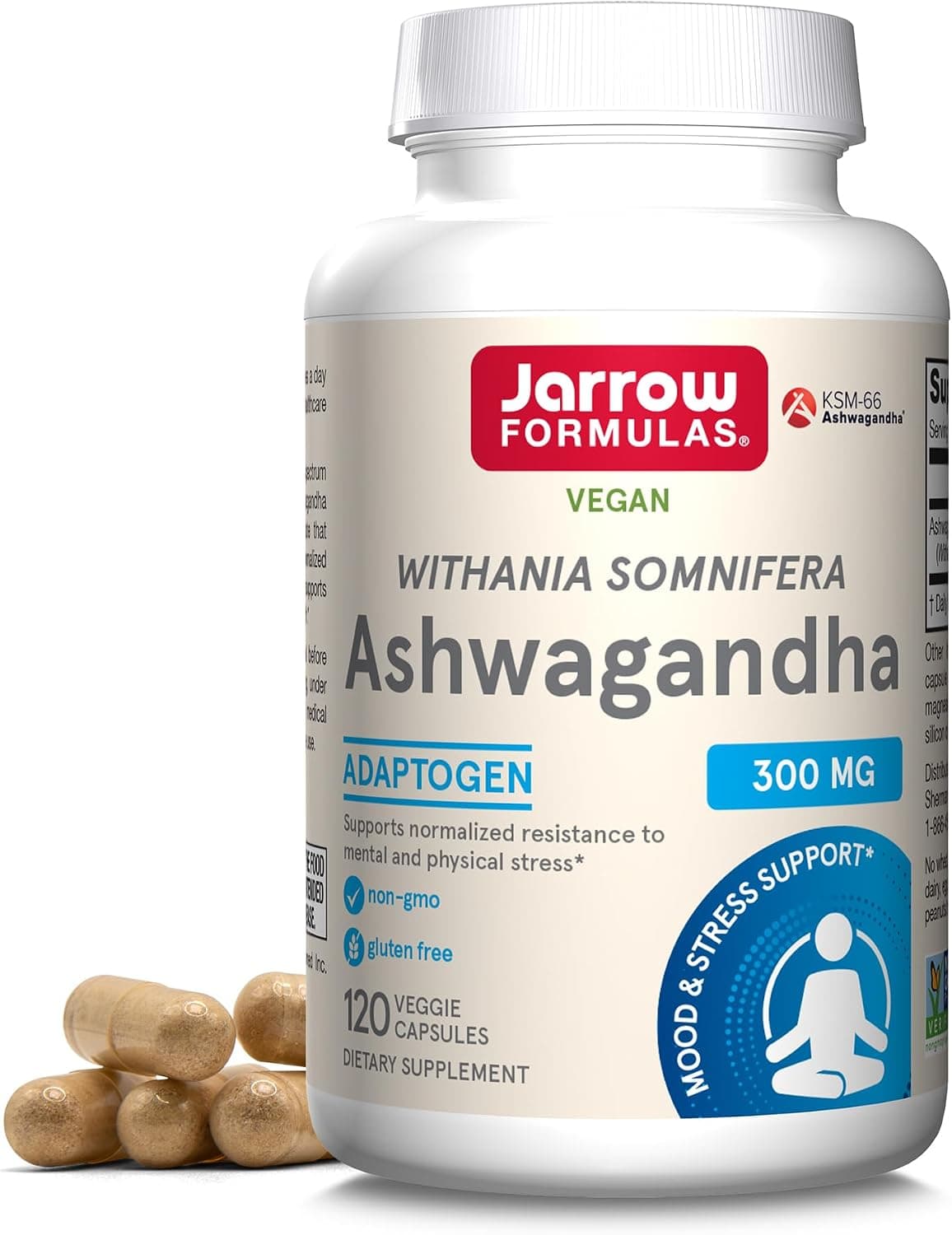 Best split doseJarrow Formulas Ashwagandha 300 mg Best split doseJarrow Formulas Ashwagandha 300 mg | KSM-66Root | 600 mg1 capsule twice a day | ~30 mgNot printed | $0.42List price | 120 capsules$24.99 · 2 months | Matches the trials |
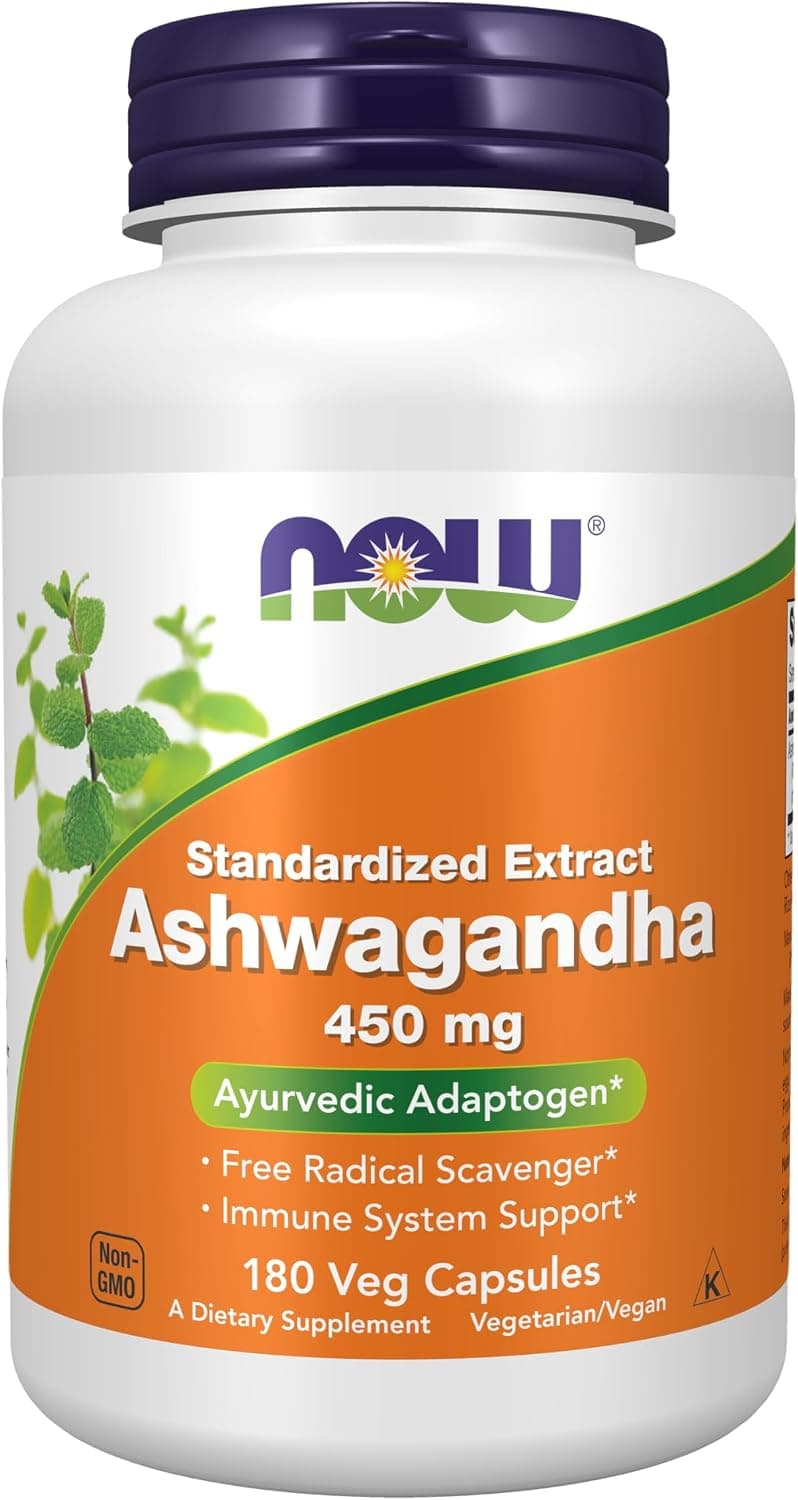 Best budgetNOW Ashwagandha 450 mg Best budgetNOW Ashwagandha 450 mg | StandardisedRoot and leaf, min. 2.4% | 450 mg1 capsule | ≥10.8 mgPrinted | $0.19List price | 180 capsules$34.99 · 6 months | Partly matches |
| Best low doseLife Extension Optimized Ashwagandha | SensorilRoot and leaf | 250 mg1 capsule twice a day | 10%As glycosides | —Price not shown | 60 capsules1 month | Matches the trials |
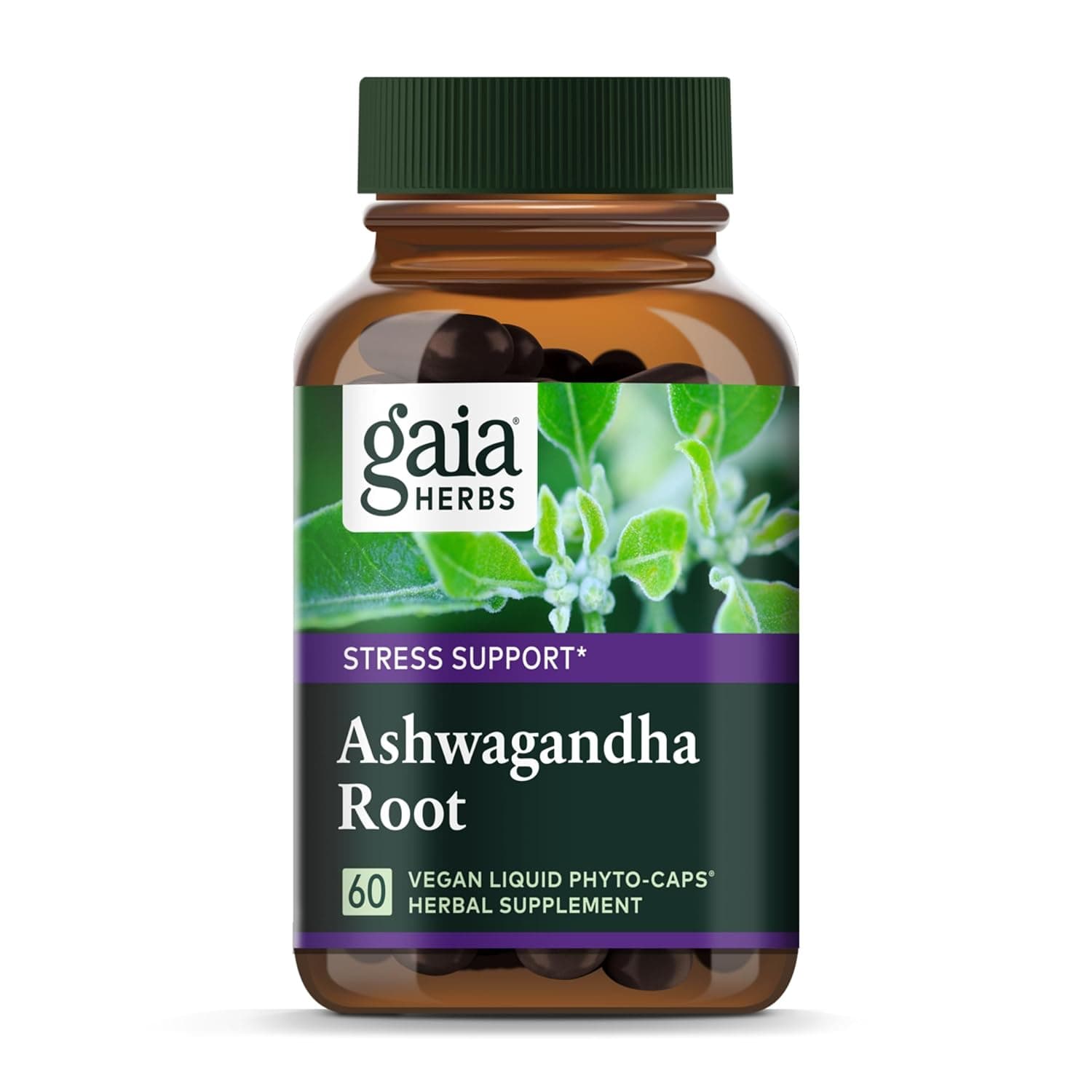 For whole-root fansGaia Herbs Ashwagandha Root For whole-root fansGaia Herbs Ashwagandha Root | Root + extractOrganic | 350 mgPer capsule | 2.5 mgPer capsule | $0.42Per capsule | 60 capsules$25.19 | Below trial levels |
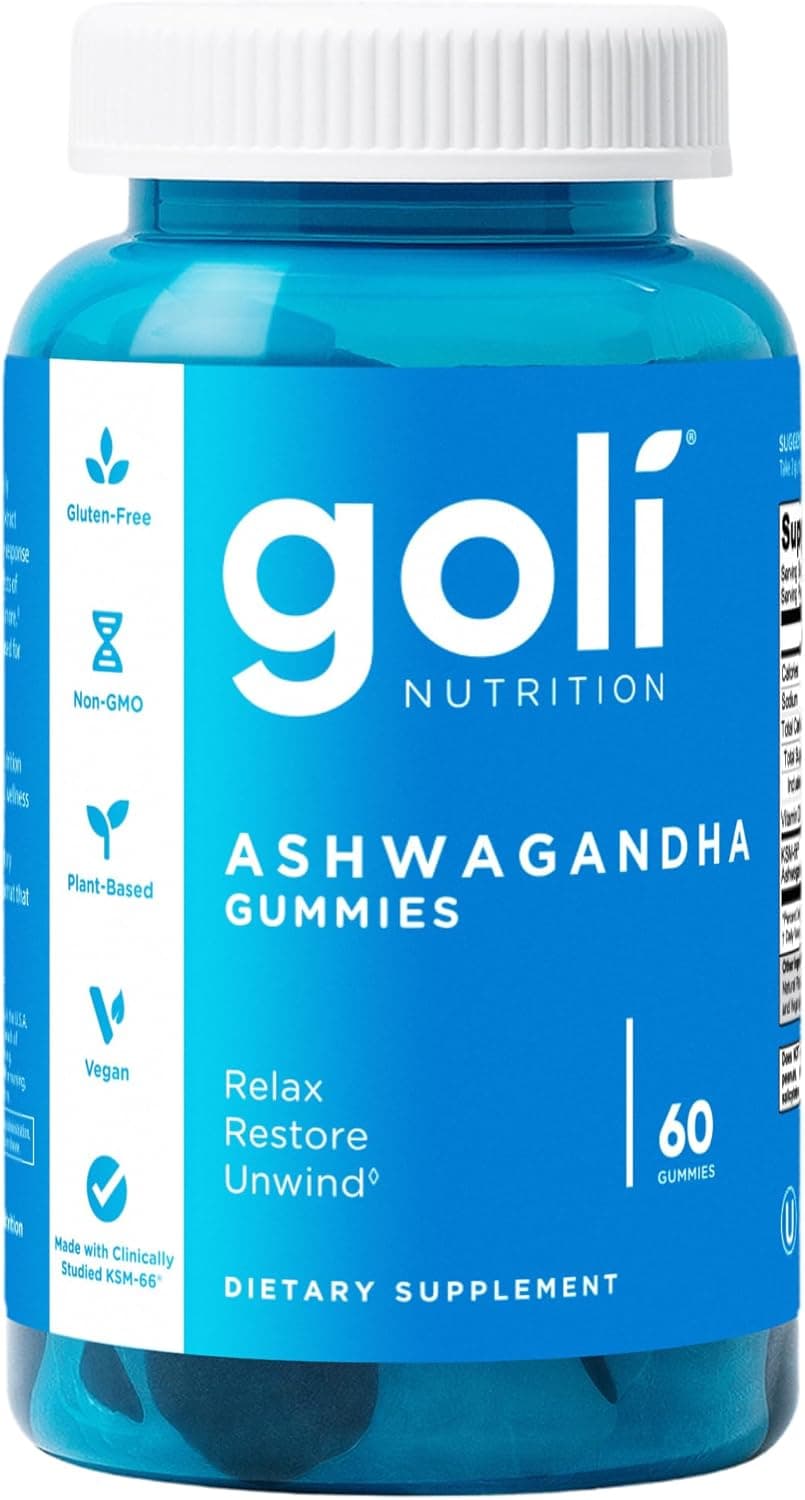 If you want a gummyGoli Ashwagandha & Vitamin D Gummies If you want a gummyGoli Ashwagandha & Vitamin D Gummies | KSM-66Root | 600 mg2 gummies twice a day | ~30 mgNot printed | $1.67List price | 60 gummies$25.00 · 15 days | Matches, with extras |
Why each one made the list
NOW KSM-66 Ashwagandha 600 mg
NOW FoodsBest forMost people: the trial extract and dose in one capsule a day.
The simplest way to take what the trials took. One capsule gives 600 mg of organic KSM-66 root extract, and nothing else is added beyond the capsule and flow agents. The label carries the right cautions — not for pregnancy, and check with a doctor if you take thyroid medicine or have liver or thyroid problems. At the $32.99 list price for 90 capsules it works out at about 37 cents a day, and three months’ supply — the longest you should take it without checking in with a doctor — is a single bottle.
- Extract
- KSM-66Organic root
- Daily dose
- 600 mg1 capsule
- Withanolides
- ~30 mgNot printed
- Cost a day
- $0.37List price
- Pack
- 90 capsules$32.99 · 3 months
What we like
- KSM-66 root extract at 600 mg — the extract behind many stress and sleep trials, at the dose that did best
- One capsule a day, and one bottle is a three-month course
- Cheapest KSM-66 per day of our picks at list price
- Label warns against use in pregnancy and flags thyroid and liver conditions
Watch out for
- Withanolide percentage is not printed on the label
- 600 mg in one dose may be a lot to start on if your stomach is sensitive
- No USP or NSF mark found on the maker’s page
Jarrow Formulas Ashwagandha 300 mg
Jarrow FormulasBest forAnyone who wants two smaller doses, or to start at 300 mg.
The 2012 stress trial gave 300 mg of root extract twice a day, and this is that pattern exactly: one 300 mg KSM-66 capsule morning and evening. Splitting the dose suits people who get an upset stomach or daytime drowsiness from 600 mg at once, and makes it easy to drop to 300 mg a day. Older listings describe this product as Sensoril; Jarrow’s current label is KSM-66 root extract, so check the panel on the bottle you receive. A 120-capsule bottle lasts two months at the full dose.
- Extract
- KSM-66Root
- Daily dose
- 600 mg1 capsule twice a day
- Withanolides
- ~30 mgNot printed
- Cost a day
- $0.42List price
- Pack
- 120 capsules$24.99 · 2 months
What we like
- Exactly the 300 mg twice-a-day pattern of the best-known stress trial
- Easy to start at one capsule a day and build up
- Splitting the dose can ease stomach upset and daytime drowsiness
Watch out for
- Two capsules a day to remember
- A little dearer per day than NOW’s one-a-day
- Some retail listings still call it Sensoril — check the label on your bottle
NOW Ashwagandha 450 mg
NOW FoodsBest forKeeping the cost down with a properly standardised extract.
Half the daily cost of the KSM-66 products, and a properly standardised extract — at least 2.4 per cent withanolides, so at least 10.8 mg a capsule, printed on the label. The trade-off is that it is a generic root-and-leaf extract rather than one of the branded extracts the trials tested, so the dose is in the studied range but the evidence does not transfer directly. A reasonable choice if cost matters more than matching a specific study.
- Extract
- StandardisedRoot and leaf, min. 2.4%
- Daily dose
- 450 mg1 capsule
- Withanolides
- ≥10.8 mgPrinted
- Cost a day
- $0.19List price
- Pack
- 180 capsules$34.99 · 6 months
What we like
- Half the daily cost of the KSM-66 capsules
- Withanolide content printed on the label — at least 2.4%
- Sold in 30, 90, 120 and 180 capsules
Watch out for
- A generic extract, not one of the branded extracts the trials tested
- Includes leaf, which falls outside traditional, root-only use
Life Extension Optimized Ashwagandha
Life ExtensionBest forStarting low with a concentrated, trial-tested extract.
Sensoril is a more concentrated root-and-leaf extract, so its trials used smaller doses, 125 to 500 mg a day. This is 125 mg a capsule, taken twice daily — 250 mg a day, in the lower half of that range, which makes it a sensible way to start low. A 60-capsule bottle is a month’s supply. Life Extension shows its price only to signed-in customers, and we could not find the single bottle on Amazon, so this links to the maker.
- Extract
- SensorilRoot and leaf
- Daily dose
- 250 mg1 capsule twice a day
- Withanolides
- 10%As glycosides
- Cost a day
- —Price not shown
- Pack
- 60 capsules1 month
What we like
- Sensoril is a trial-tested extract, studied at 125 to 500 mg a day
- 250 mg a day is a gentle place to start
- Standardisation printed in full: 10% withanolide glycosides, 32% oligosaccharides
Watch out for
- Includes leaf, which falls outside traditional, root-only use
- Label says to take it on an empty stomach
- Price hidden until you sign in; no single bottle found on Amazon
Gaia Herbs Ashwagandha Root
Gaia HerbsBest forPeople who want organic, traditional root rather than a concentrate.
Gaia’s liquid capsules use organic ashwagandha root and root extract in vegetable glycerin, and — to its credit — the label states the withanolide content: 2.5 mg a capsule. That is the problem as well as the virtue. It is about a twelfth of the roughly 30 mg in a 600 mg KSM-66 capsule, so this is closer to traditional root than to the concentrated extracts the trials used. Choose it if you prefer a whole-root, organic product; do not expect it to match the trial results capsule for capsule.
- Extract
- Root + extractOrganic
- Daily dose
- 350 mgPer capsule
- Withanolides
- 2.5 mgPer capsule
- Cost a day
- $0.42Per capsule
- Pack
- 60 capsules$25.19
What we like
- Organic root and root extract only — no leaf
- Withanolide content stated honestly on the label
- Liquid capsule, vegan
Watch out for
- 2.5 mg of withanolides a capsule — about a twelfth of a 600 mg KSM-66 capsule
- Not comparable to the extracts the trials used
Goli Ashwagandha & Vitamin D Gummies
GoliBest forOnly if you will not take a capsule — and do not take other vitamin D.
The best-known ashwagandha gummy does use KSM-66, and at the suggested two gummies twice a day you reach 600 mg. But look at what comes with it: four gummies a day is 8 g of sugar and 50 mcg (2,000 IU) of vitamin D2 — more than three times the US daily amount of 600 IU and half the 4,000 IU upper limit, which adds up fast if you already take vitamin D. A 60-gummy bottle lasts 15 days, so at the $25 list price it costs about $1.67 a day. Fine as a treat; poor value as a daily habit.
- Extract
- KSM-66Root
- Daily dose
- 600 mg2 gummies twice a day
- Withanolides
- ~30 mgNot printed
- Cost a day
- $1.67List price
- Pack
- 60 gummies$25.00 · 15 days
What we like
- Uses KSM-66 and reaches 600 mg at the suggested four gummies
- Easy to take if you struggle with capsules
Watch out for
- 8 g of sugar a day at the full dose
- 2,000 IU of vitamin D2 a day — half the adult upper limit, before any other vitamin D
- About four times the daily cost of the capsules; a bottle lasts 15 days
How we chose
We started with the evidence, not the brands. The trials that support ashwagandha for stress and sleep mostly used 250 to 600 mg a day of a standardised root extract for eight weeks, and several used KSM-66. A product earns a place here by getting close to that — and loses ground for anything that makes the dose unclear or adds something you did not ask for.
For each product we read the Supplement Facts panel on the manufacturer’s own website on 1 October 2026, not a retailer listing — which matters: Jarrow’s capsule is still described as a Sensoril product on some retail sites, but its current label is KSM-66. We recorded the extract, plant part, amount per capsule, suggested use, withanolide content where stated, and the maker’s list price, then worked out the daily dose and cost a day at the suggested use.
What we did not do: test the capsules ourselves, or check each company’s batch certificates. We did not find a USP Verified or NSF Certified mark for any of these six products on the makers’ pages. The evidence behind every claim is on our ashwagandha ingredient page.
What to check on any label
Whether you buy one of these or something else, six checks sort a sensible ashwagandha from a poor one.
- A named extract or a withanolide %
KSM-66, Sensoril or Shoden — or a stated percentage. “Ashwagandha 500 mg” alone may be plain powder.
- 250–600 mg a day of extract
The range the trials used. Work it out from the serving size, not the number on the front.
- Root, unless you choose otherwise
Most trials used root extract. Root-and-leaf extracts differ chemically and are dosed lower.
- Nothing hidden
Avoid proprietary blends that hide the ashwagandha amount, and check for added melatonin, caffeine or vitamin D.
- Safety warnings on the label
Good labels warn against use in pregnancy and flag thyroid and liver conditions. It is a sign the maker takes this seriously.
- Cost per day, not per bottle
A cheap bottle of gummies can cost four times more a day than capsules once you take the full dose.
KSM-66, Sensoril or plain root: which extract?
| Extract | What it is | Studied daily dose | Best for |
|---|---|---|---|
| KSM-66 | Root only, marketed as at least 5% withanolides | 300–600 mg | Most people: it is the extract behind many of the stress and sleep trials |
| Sensoril | Root and leaf, 10% withanolide glycosides | 125–500 mg | Starting low; more concentrated, so smaller doses |
| Generic standardised extract | Root, or root and leaf, with a stated withanolide % | Follow the label | Budget buyers who accept a less direct link to the trials |
| Root powder | Dried ground root, not concentrated | Several grams (traditional) | Traditional use; weaker than trial extracts per capsule |
A higher milligram number is not a stronger product. Gaia’s capsule contains 350 mg but only 2.5 mg of withanolides; a 600 mg KSM-66 capsule has roughly 30 mg. Compare extracts and withanolides, not the big number on the front.
What to avoid
- Proprietary blends. “Stress blend 800 mg” with ashwagandha somewhere inside tells you nothing about how much you are taking.
- Stacked extras. Sleep and “cortisol” formulas often add melatonin, magnesium, L-theanine or rhodiola. Fine if you want them — but then you are not taking ashwagandha, you are taking a mixture.
- Megadose claims. A capsule advertising 1,000 mg or more is often root powder or a less concentrated extract — check which. A bigger number is not what the trials tested.
- Gummies as a daily habit. They can reach the trial dose, but with sugar, extra vitamins and a much higher cost a day.
- “Clinically proven” on the front. The trials tested specific extracts at specific doses for eight weeks. A clinical claim only transfers if the label matches.
Before you buy any brand
A better label does not make ashwagandha suitable for everyone. Do not take any brand if you are pregnant or breastfeeding, and check with your doctor first if you have a thyroid or liver condition, an autoimmune disease, or take sedatives, thyroid, diabetes, blood-pressure or immune-suppressing medicines. Rare liver injury has been reported with ashwagandha, usually 2 to 12 weeks after starting — see what happens if you take it daily. Plan an eight-week trial, and stop by about three months.
The bottom line
Buy the extract, not the brand. For most people, that means a KSM-66 root extract at 600 mg a day — NOW’s one-a-day capsule is the simplest and cheapest way to get it, and Jarrow’s is the best two-a-day version. If budget matters most, NOW’s standardised 450 mg extract is a sensible compromise. Whatever you buy, check the panel against the six points above, and compare the cost a day at the full dose rather than the price of the bottle, and remember that no brand changes who should not take ashwagandha at all.
Not sure you need it? Start with why people take ashwagandha, and what the evidence does and does not support.
Your questions
Which brand of ashwagandha is best?
The best kind is a named root extract at 300 to 600 mg a day, the dose and form used in the trials. In the US, NOW KSM-66 Ashwagandha 600 mg is our pick: one capsule a day of KSM-66 for about 37 cents a day at list price. Jarrow’s 300 mg KSM-66 capsules suit a twice-daily dose.
Is KSM-66 the best form of ashwagandha?
It is the best studied. KSM-66 is a root-only extract used in many of the stress, sleep and strength trials, typically at 300 to 600 mg a day. Sensoril is another trial-tested extract, more concentrated and dosed lower. Plain root powder is much weaker per capsule.
What should I look for on an ashwagandha label?
A named extract or a withanolide percentage, 250 to 600 mg of extract a day at the suggested serving, root rather than leaf unless you choose otherwise, no proprietary blend hiding the amount, and clear warnings about pregnancy, thyroid and liver conditions.
Are ashwagandha gummies as good as capsules?
Some use the same extract and can reach the same dose, but you need several a day. Goli’s suggested four gummies give 600 mg of KSM-66 along with 8 g of sugar and 2,000 IU of vitamin D, and cost about four times as much a day as capsules at list price.
Does more milligrams mean a stronger ashwagandha?
No. The extract matters more than the number. A 350 mg whole-root capsule can contain 2.5 mg of withanolides, while a 600 mg KSM-66 capsule contains about 30 mg. Compare the extract and the withanolide content.
Is organic ashwagandha better?
Organic describes how the plant was grown, not how strong the product is. NOW’s KSM-66 is both organic and a trial-tested extract; Gaia’s organic root capsules are far less concentrated. Check the extract and dose first.
References
- NOW Foods. NOW KSM-66 Ashwagandha 600 mg — product page and Supplement Facts, read 1 October 2026. nowfoods.com
- Jarrow Formulas. Jarrow Formulas Ashwagandha 300 mg — product page and Supplement Facts, read 1 October 2026. jarrow.com
- NOW Foods. NOW Ashwagandha 450 mg — product page and Supplement Facts, read 1 October 2026. nowfoods.com
- Life Extension. Life Extension Optimized Ashwagandha — product page and Supplement Facts, read 1 October 2026. lifeextension.com
- Gaia Herbs. Gaia Herbs Ashwagandha Root — product page and Supplement Facts, read 1 October 2026. gaiaherbs.com
- Goli. Goli Ashwagandha & Vitamin D Gummies — product page and Supplement Facts, read 1 October 2026. goli.com
- Akhgarjand C et al. (2022). Does ashwagandha supplementation have a beneficial effect on the management of anxiety and stress? A systematic review and meta-analysis of randomized controlled trials. Phytotherapy Research — 12 trials, 1,002 participants; 300–600 mg a day did best for stress. onlinelibrary.wiley.com
- Chandrasekhar K, Kapoor J, Anishetty S (2012). A prospective, randomized double-blind, placebo-controlled study of safety and efficacy of a high-concentration full-spectrum extract of ashwagandha root in reducing stress and anxiety in adults. Indian Journal of Psychological Medicine 34(3):255-262 — 300 mg twice a day. pubmed.ncbi.nlm.nih.gov
- Cheah KL et al. (2021). Effect of ashwagandha (Withania somnifera) extract on sleep: a systematic review and meta-analysis. PLoS One 16(9):e0257843. journals.plos.org
- NIH Office of Dietary Supplements. Ashwagandha: is it helpful for stress, anxiety, or sleep? — Fact Sheet for Health Professionals. ods.od.nih.gov
- MedlinePlus. Vitamin D — 600 IU (15 mcg) a day for adults up to 70; upper limit 4,000 IU (100 mcg). medlineplus.gov
Page history
- First published. Six US products compared from the manufacturers’ own labels and list prices, read on 1 October 2026. No product is scored; none has been reviewed in full. Not yet reviewed by a clinician.