Akkermansia muciniphila (WB-STR-0001)
DWeak evidenceAt a glance
- Dose in the first human trial
- 10 billion a dayLive or pasteurised bacteria for three months; 32 people finished (Depommier 2019).
- WB-STR-0001 in Pendulum Akkermansia
- 100 million AFUA hundredth of that trial dose — and counted by a different method, so not directly comparable even then.
- EU safe intake (pasteurised strain MucT)
- 3.4 × 10¹⁰ cells a dayEFSA, 2021, for adults excluding pregnancy and breastfeeding. It covers the heat-killed form only.
- Trials of WB-STR-0001 on its own
- None foundIt has been tested only inside a five-strain blend, WBF-011, alongside inulin.
- FDA GRAS notice for WB-STR-0001
- None foundFDA’s GRAS notice inventory returned no Akkermansia notices when searched on 24 September 2026.
- Normal share of gut bacteria
- More than 1%Of faecal cells in healthy adults — a common resident, not a rarity.
What is Akkermansia muciniphila (WB-STR-0001)?
Akkermansia muciniphila was first isolated in 2004, at Wageningen University, from the faeces of a healthy adult, by growing bacteria on a medium where gastric mucin was the only source of carbon and nitrogen. The strain that came out of that experiment, MucT, is still the reference strain, and the name describes the organism: “muciniphila” means mucin-loving. It is a strictly anaerobic bacterium — oxygen kills it — which lives in the mucus layer that lines the gut wall, and it is not unusual: a 2008 study using a DNA probe found it made up more than 1 per cent of the bacterial cells in adult faeces. What made it famous is a correlation. People with overweight, obesity, untreated type 2 diabetes and high blood pressure tend to carry less of it, which is why it is now sold as a supplement. Three strain names matter for reading the evidence. MucT is the strain the EU has authorised, in heat-killed form. AKK-WST01 is the live strain in the 2025 diabetes trial. WB-STR-0001 is Pendulum’s live strain, sold in its Akkermansia capsules and its multi-strain products. The US National Center for Complementary and Integrative Health is explicit that probiotic effects are strain-specific: what one strain does cannot be assumed for another, even within the same species.
How it works
The organism feeds on mucin, the glycoprotein that makes up the protective mucus over the gut lining, and in animal studies its presence is associated with that layer being renewed and the barrier between the gut and the bloodstream holding up better. The most important mechanistic finding, though, cuts against the way the live product is sold. In a 2017 mouse study in Nature Medicine, pasteurising the bacterium did not destroy its effects — it enhanced them, reducing fat-mass gain, insulin resistance and abnormal blood lipids more than the live organism did. The same study identified a protein on the bacterium’s outer membrane, Amuc_1100, that binds an immune receptor called Toll-like receptor 2, survives the temperatures used for pasteurisation, improves the gut barrier and on its own reproduces part of the benefit. If the active ingredient is a structural component rather than a living population, a dead bacterium can work, and “live” stops being the feature it is marketed as. The first human trial fits that reading: the pasteurised form lowered the activity of DPP-IV, an enzyme that breaks down gut hormones, while the live form and placebo did not. What it did not do is raise GLP-1. For live strains specifically, the 2025 diabetes trial adds a second idea — that a supplement only takes hold, and only helps, in a gut that has little of the organism to begin with.
What the research actually shows
Evidence strength varies by what is being claimed, so each use is graded separately against the published criteria rather than averaged into one reassuring letter.
Improving insulin sensitivity and metabolic markers
CLimited evidenceThe most encouraging claim, resting on two small trials that do not quite agree. In the first, a single-centre pilot in overweight, insulin-resistant adults (40 enrolled, 32 finished), 10 billion pasteurised bacteria a day for three months improved insulin sensitivity by 28.62 per cent against placebo (P = 0.002), cut insulin levels by 34.08 per cent (P = 0.006) and lowered total cholesterol by 8.68 per cent (P = 0.02). The live form, at the same dose, improved an insulin-resistance score but did not reproduce those results. In the second, a 2025 trial of the live strain AKK-WST01 in 58 people with overweight or obese type 2 diabetes, both groups improved and the difference between them was not significant. The benefit appeared only in participants who started with low levels of the bacterium. Promising and plausible, but two small studies with different forms and different results is what a C describes.
Sources: Depommier C et al, Zhang Y et al
Weight loss
DWeak evidenceNot established in people. In the first trial, weight fell by 2.27 kg more on the pasteurised form than on placebo, but the difference was not statistically significant (P = 0.091). In the 2025 diabetes trial there was no significant difference in weight between groups overall; reductions in weight and fat mass appeared only in the low-baseline subgroup. A third, larger trial — 90 people given pasteurised A. muciniphila or placebo for six months to see whether it helped keep weight off after a low-calorie diet — was completed in November 2023 and, at the time of writing, has posted no results on ClinicalTrials.gov. A weight-loss claim built on this record is running ahead of it.
Sources: Depommier C et al, Zhang Y et al, ClinicalTrials
Strengthening the gut lining
DWeak evidenceThis is the claim most products lead with, and it is the one resting almost entirely on animal and laboratory work. The mouse evidence is genuinely good: the Amuc_1100 protein improved gut-barrier function and partly reproduced the whole bacterium’s effects. Human evidence that swallowing A. muciniphila measurably strengthens the gut lining is not established by the trials published so far. Where a label footnotes this claim as “based on preclinical studies”, that footnote is accurate, and it is the most important sentence on the pack.
Sources: Plovier H et al, Depommier C et al
Raising GLP-1
FNot supportedThe claim that matters most commercially, and the one the human evidence contradicts. The first trial measured active GLP-1 in the blood directly, by ELISA, and the authors report plainly that they did not find any significant changes in plasma GLP-1 levels — at 10 billion bacteria a day, a hundred times the amount in some commercial capsules. The pasteurised form did lower the enzyme that breaks GLP-1 down, which is presumably where the idea comes from, but a lower-activity enzyme is not the same as a higher hormone level, and the hormone level is what was measured. A product printing “increases GLP-1 production” on the box is making a claim the only direct human measurement does not support.
Sources: Depommier C et al
That WB-STR-0001 itself has clinical proof
DWeak evidenceWB-STR-0001 has been in one published human trial, and not on its own. The 2020 study in BMJ Open Diabetes Research & Care randomised 76 people with type 2 diabetes to placebo or one of two multi-strain formulations for 12 weeks. The one containing WB-STR-0001, called WBF-011, also contained four other strains and inulin. Its primary outcome — glucose over three hours after a meal — improved by 36.1 mg/dL/180 min against placebo at p = 0.0500, exactly on the conventional threshold, with A1c 0.6 lower as a secondary outcome. Every author was employed by Pendulum. A placebo-controlled design is real evidence, but a five-strain blend cannot tell you what one strain did, and a single result at the edge of significance is not replication. For the single-strain product sold on this strain, there is no trial at all.
Sources: Perraudeau F et al, National Center for Complementary and Integrative Health
Effective dosage
The only dose tested in a published trial of A. muciniphila on its own is 10 billion bacteria a day, taken for three months, in both live and pasteurised form. For the heat-killed strain MucT, the European Food Safety Authority set a safe intake of 3.4 × 10¹⁰ cells a day for adults, derived from a 90-day rat study by applying a 200-fold safety margin; the applicant had proposed up to 5 × 10¹⁰. That figure is a safety ceiling, not an effective dose, and it applies to the pasteurised product only. There is no established dose for any live strain taken alone, and none for WB-STR-0001. The 2025 trial adds a practical point that no label can: whether a live strain does anything may depend on how much of it you already carry, which only a stool test can tell you.
Where products diverge from the research. The gap here is large and easy to miss. Pendulum’s single-strain capsule provides 100 million AFU of WB-STR-0001 a day — a hundredth of the 10 billion bacteria used in the first human trial. AFU, or active fluorescent units, are counted by staining cells and passing them through a flow cytometer; the classic probiotic count, CFU, counts cells that grow into colonies on a plate. The two methods measure different things, no label converts between them, and nobody has shown what 100 million AFU corresponds to in trial terms. Across brands, counts run from 100 million to hundreds of billions of AFU, which is less a range of doses than a range of counting conventions. The second gap is regulatory. The EU’s authorisation covers pasteurised MucT; a live product is not covered by it, however similar the name on the front.
Safety, side effects and interactions
A. muciniphila is a normal member of the human gut community, and EFSA describes the reference strain as well characterised, non-toxin-producing and avirulent. In the first human trial, both live and pasteurised forms were well tolerated at 10 billion a day for three months, with no difference in adverse events between groups. EFSA’s safety conclusion excludes pregnant and breastfeeding women, and there is no safety data in children. The general cautions for live probiotics apply with full force here. The National Center for Complementary and Integrative Health notes that the risk of harm is greater in people with severe illness or weakened immune systems, that products have been found to contain organisms not on the label, and that in September 2023 the FDA warned of severe and sometimes fatal infections in premature infants given probiotics. Two research associations are worth knowing without overstating: A. muciniphila has been found at higher levels in untreated multiple sclerosis — where, in laboratory tests, it provoked inflammatory responses from human immune cells — and a five-country analysis found it raised in Parkinson’s disease. Neither shows the bacterium causes either condition, but both are reasons for anyone with those diagnoses, or with inflammatory bowel disease or a compromised immune system, to take a supplement to their clinician rather than their basket.
None of this is medical advice. See the medical disclaimer for what that means before you act on anything here.
Products we have covered containing Akkermansia muciniphila (WB-STR-0001)
Every label overview on this site whose Supplement Facts panel lists Akkermansia muciniphila (WB-STR-0001), with the amount each one discloses.
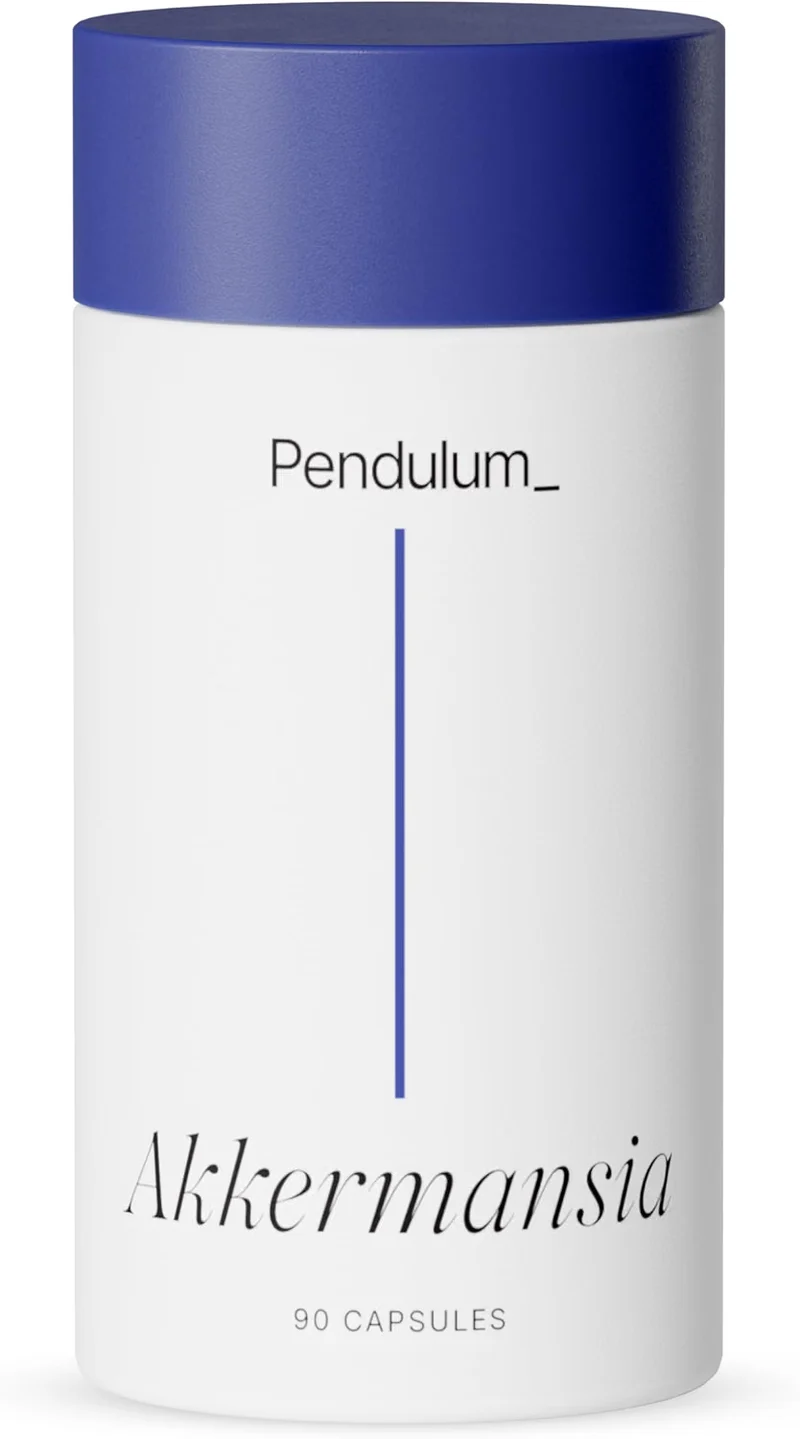
Pendulum Akkermansia
The first company to sell live Akkermansia muciniphila, with one of the cleanest labels in the supplement aisle — and a dose roughly 100 times below the amount used in the first randomised human trial of this organism, where the heat-killed form did more than the live one Pendulum sells.
Common questions
Does Akkermansia work better live or pasteurised?
On the evidence so far, pasteurised. In the only trial to compare them, at the same dose of 10 billion a day, the heat-killed form produced the headline improvements in insulin sensitivity, insulin levels and cholesterol; the live form improved one insulin-resistance score. Mouse work explains why: a protein on the bacterium’s surface, Amuc_1100, survives pasteurisation and carries part of the effect. That does not prove live strains cannot work — a 2025 trial found one helped people who started with little of it — but it does mean “live” is not the selling point it is presented as.
Does Akkermansia increase GLP-1?
Not in the human trial that measured it. Researchers tested active GLP-1 in the blood of people taking 10 billion bacteria a day for three months and found no significant change. The pasteurised form did lower DPP-IV, the enzyme that breaks GLP-1 down, but a change in the enzyme is not a change in the hormone. The GLP-1 label on these products is a marketing position, not a trial result.
Will Akkermansia help me lose weight?
The trials do not show it. The first found a 2.27 kg difference that was not statistically significant; the 2025 diabetes trial found no overall difference between groups; and a completed six-month weight-maintenance trial of 90 people has not published results. Any benefit so far appears limited to people who start with low levels of the bacterium.
Should I test my Akkermansia levels before taking it?
If you are considering it at all, that is the sensible order. The most recent randomised trial found the live strain colonised and helped only in people with low baseline levels, and did neither in people who already had plenty. A stool test gives you a baseline and a way to check whether the supplement changed anything, which is worth more than any claim on the box.
Is WB-STR-0001 FDA approved or GRAS?
Dietary supplements are not FDA-approved before sale, so no probiotic is. On GRAS, FDA’s own notice inventory listed no Akkermansia notices when we searched it on 24 September 2026. A company can describe an ingredient as GRAS on the basis of its own expert panel without FDA ever reviewing it; that is a legal route, but it is not the same as an FDA “no questions” letter, and the two should not be confused.
Can I raise my Akkermansia with food instead?
Possibly, but the human evidence is thinner than the advice suggests. A 2024 pooled analysis of six human studies found galacto-oligosaccharides raised A. muciniphila in healthy people; the same analysis did not report that for inulin, which is the fibre most often paired with it in supplements. A generally fibre-rich diet is a reasonable goal on its own merits, whatever it does for this one organism.
Who should not take an Akkermansia supplement?
Anyone pregnant or breastfeeding, where safety has not been assessed; anyone with a weakened immune system or serious illness, where live probiotics carry more risk; infants, especially premature ones; and anyone with multiple sclerosis, Parkinson’s disease or inflammatory bowel disease, given the research associations, without a clinician’s view first.
References
- Depommier C et al. (2019). Supplementation with Akkermansia muciniphila in overweight and obese human volunteers: a proof-of-concept exploratory study. Nature Medicine 25:1096-1103 — 40 enrolled, 32 completed, 10 billion live or pasteurised bacteria a day for three months. Pasteurised: insulin sensitivity +28.62% (P = 0.002), insulinaemia −34.08% (P = 0.006), total cholesterol −8.68% (P = 0.02), weight −2.27 kg (P = 0.091). The full text reports no significant change in plasma GLP-1 and lower DPP-IV activity with the pasteurised form only. pubmed.ncbi.nlm.nih.gov
- Zhang Y et al. (2025). Akkermansia muciniphila supplementation in patients with overweight/obese type 2 diabetes: efficacy depends on its baseline levels in the gut. Cell Metabolism 37(3):592-605 — 12 weeks, 58 participants, live strain AKK-WST01; no significant between-group difference overall, with benefit confined to those with low baseline levels. pubmed.ncbi.nlm.nih.gov
- Perraudeau F et al. (2020). Improvements to postprandial glucose control in subjects with type 2 diabetes: a multicenter, double blind, randomized placebo-controlled trial of a novel probiotic formulation. BMJ Open Diabetes Research & Care — 76 participants, 12 weeks; WBF-011 contained inulin and five strains including A. muciniphila WB-STR-0001; primary outcome improved by 36.1 mg/dL/180 min at p = 0.0500. All authors were employed by Pendulum Therapeutics. pubmed.ncbi.nlm.nih.gov
- Plovier H et al. (2017). A purified membrane protein from Akkermansia muciniphila or the pasteurized bacterium improves metabolism in obese and diabetic mice. Nature Medicine 23:107-113 — pasteurisation enhanced the effects in mice; the outer-membrane protein Amuc_1100 is heat-stable, binds Toll-like receptor 2 and improves the gut barrier. pubmed.ncbi.nlm.nih.gov
- EFSA Panel on Nutrition, Novel Foods and Food Allergens (2021). Safety of pasteurised Akkermansia muciniphila as a novel food pursuant to Regulation (EU) 2015/2283. EFSA Journal 19(9):6780 — strain MucT; safe at 3.4 × 10¹⁰ cells a day for adults excluding pregnant and lactating women; viable count specified below 10 CFU/g. pmc.ncbi.nlm.nih.gov
- Commission Implementing Regulation (EU) 2022/168 authorising the placing on the market of pasteurised Akkermansia muciniphila as a novel food. eur-lex.europa.eu
- Derrien M et al. (2004). Akkermansia muciniphila gen. nov., sp. nov., a human intestinal mucin-degrading bacterium. International Journal of Systematic and Evolutionary Microbiology 54:1469-1476 — isolation of strain MucT from human faeces. pubmed.ncbi.nlm.nih.gov
- Derrien M et al. (2008). The mucin degrader Akkermansia muciniphila is an abundant resident of the human intestinal tract. Applied and Environmental Microbiology 74:1646-1648 — more than 1% of total faecal cells. pubmed.ncbi.nlm.nih.gov
- ClinicalTrials.gov NCT05417360. Effect of pasteurized Akkermansia muciniphila on maintenance of body weight after a low calorie diet — Maastricht University Medical Center, 90 participants, completed 20 November 2023, no results posted as of 24 September 2026. clinicaltrials.gov
- US Food and Drug Administration. GRAS Notice Inventory — searched for Akkermansia on 24 September 2026, with no records returned. hfpappexternal.fda.gov
- National Center for Complementary and Integrative Health. Probiotics: usefulness and safety — strain-specific effects, higher risk in severe illness and immune compromise, label contamination, and the September 2023 FDA warning on probiotics in premature infants. nccih.nih.gov
- Hirayama M, Ohno K (2021). Parkinson’s disease and gut microbiota. Annals of Nutrition and Metabolism 77(Suppl 2):28-35 — a meta-analysis across five countries indicating mucin-degrading Akkermansia is increased in Parkinson’s disease. pubmed.ncbi.nlm.nih.gov
- Tian R et al. (2024). Effect of inulin, galacto-oligosaccharides, and polyphenols on the gut microbiota, with a focus on Akkermansia muciniphila. Food & Function 15:4763-4772 — six studies, 451 participants; galacto-oligosaccharides increased A. muciniphila in healthy participants. pubmed.ncbi.nlm.nih.gov
Page history
- First published with per-claim evidence grades. Trial figures from the Depommier 2019 abstract and full text (including the GLP-1 and DPP-IV results), the 2025 Cell Metabolism trial and the 2020 WBF-011 trial; mechanism from Plovier 2017; safety from EFSA’s 2021 novel food opinion and NCCIH; GRAS status from FDA’s notice inventory and trial status from ClinicalTrials.gov. Sources were limited to government, regulatory and peer-reviewed medical publications.
Related ingredients
Compiled by SNL Team