Chicory inulin
BModerate evidenceAt a glance
- Dose behind the EU regularity claim
- 12 g a dayThe condition of use attached to the authorised claim for native chicory inulin.
- In Pendulum Akkermansia
- 276 mgAbout one forty-third of that dose. It is there as food for the capsule’s bacteria, not as a dose for you.
- Stool frequency across trials
- No significant changeInulin-type fructans in a 2022 meta-analysis of 16 trials — though stool consistency did improve.
- Body weight across 33 trials
- No effectGlucose and cholesterol improved only in people with type 2 diabetes.
- Where side effects become likely
- Above 20 g a dayWind, bloating, cramps and diarrhoea, per the US National Center for Complementary and Integrative Health.
- On a US label
- Counted as fibreBy FDA enforcement discretion since 2018, pending a formal rule.
What is Chicory inulin?
Inulin is a chain of fructose units, usually capped with a single glucose, that plants use to store energy in place of starch. Chicory root (Cichorium intybus) is the main commercial source, and “native chicory inulin” is the long-chain material extracted from it without being broken down further. Shorter chains made by partly breaking it down are sold as oligofructose, and the whole family is called inulin-type fructans. The chain length matters more than it sounds: the EU health claim applies specifically to native chicory inulin, not to the whole family. The human small intestine has no enzyme that can break the bonds between fructose units, so inulin passes through undigested and reaches the colon intact. That is the entire basis of its use. In the US it can be declared as dietary fibre on Nutrition and Supplement Facts labels, not because it is yet written into FDA’s definition of fibre, but because in 2018 FDA said it would exercise enforcement discretion to allow it while a formal rule is completed.
How it works
In the colon, inulin is fermented by bacteria. Some groups — bifidobacteria most consistently — are unusually good at using it, and grow in response, which is what “prebiotic” means: a substance selectively used by gut microbes in a way that is meant to benefit the host. Fermentation produces short-chain fatty acids, which the colon uses as fuel, and gas, which is why wind is the most predictable side effect. The picture has become more complicated than simple bifidobacterial growth. A 2017 analysis in Gut of a randomised trial in adults with mild constipation found inulin shifted three groups in particular — Anaerostipes, Bifidobacterium and Bilophila — and that the fall in Bilophila, rather than the rise in bifidobacteria, was the change associated with softer stools and better constipation-related quality of life. The fermentation also draws water into the stool and adds bacterial mass, which is the physical route to its effects on regularity.
What the research actually shows
Evidence strength varies by what is being claimed, so each use is graded separately against the published criteria rather than averaged into one reassuring letter.
Raising bifidobacteria (the prebiotic effect)
AStrong evidenceThis is what inulin reliably does, and it clears the bar comfortably. A 2022 systematic review in Advances in Nutrition of human trials in healthy adults concluded that inulin-type fructans promote the abundance of Bifidobacterium, Lactobacillus and Faecalibacterium prausnitzii, and the bifidogenic effect is among the most replicated findings in the field. The grade needs one honest limit. Raising a group of bacteria is a change in the gut, not in itself a health outcome, and the 2017 Gut study found the change most associated with a clinical benefit was a fall in a different genus altogether. An A here means the effect on the bacteria is certain; what that effect does for you is graded in the claims below.
Sources: Hughes RL et al, Vandeputte D et al
Regularity and constipation
BModerate evidenceReal, modest, and narrower than it is usually sold. The European Food Safety Authority concluded in 2015 that six studies in 86 people consistently showed native chicory inulin at 12 g a day or more increases stool frequency, and the EU authorised the claim that chicory inulin contributes to normal defecation by increasing stool frequency. A 2022 meta-analysis in the American Journal of Clinical Nutrition, pooling 16 trials and 1,251 people with chronic constipation, complicates it: in the inulin-type fructan subgroup, stool frequency did not change significantly, stool consistency did improve, and flatulence got significantly worse. Psyllium, in the same analysis, added about three bowel movements a week. So a B: supported, at the right dose, for making stools easier to pass — but if constipation is the problem, it is not the strongest fibre available.
Sources: EFSA Panel on Dietetic Products, Nutrition and Allergies (2015), Commission Regulation (EU) 2015/2314 authorising the claim that chicory inulin contributes to maintenance of normal defecation by increasing stool frequency, with 12 g of native chicory inulin a day as the condition of use, van der Schoot A, Drysdale C, Whelan K, Dimidi E (2022)
Blood sugar and cholesterol
CLimited evidencePresent, but in the wrong people for most of its marketing. A 2017 meta-analysis of 20 randomised trials and 607 adults found inulin-type fructans lowered LDL cholesterol only slightly overall and did not affect fasting glucose; lower fasting insulin appeared in the type 2 diabetes subgroup, from few trials and with possible publication bias. A 2021 meta-analysis of 33 trials reached a sharper version of the same conclusion: significant effects appeared only in people with diabetes — fasting glucose 0.42 mmol/L lower, total cholesterol 0.46 mmol/L lower, triglycerides 0.21 mmol/L lower — with high unexplained variation between studies. Worth discussing with a clinician if you have type 2 diabetes; not a reason to take it if you do not.
Sources: Liu F et al, Li L, Li P, Xu L (2021)
Weight loss
FNot supportedThe largest pooled analysis looked for it and did not find it. Across 33 randomised trials, body weight was not affected by inulin-type fructan intake, in any group studied. The mechanism people cite — fermentable fibre producing satiety signals — is plausible, and it may still matter as part of an overall higher-fibre diet, but a weight-loss claim for inulin itself fails on the trial evidence.
Sources: Li L, Li P, Xu L (2021)
Feeding Akkermansia
DWeak evidenceThis is the reason inulin is paired with Akkermansia in supplements, and the human evidence contradicts itself. In mice, inulin raises Akkermansia levels. In people, a small 45-day trial in 60 overweight adults with type 2 diabetes (about 15 per group) reported a rise with 10 g a day of inulin. But a 2024 pooled analysis of six human studies and 451 participants found that galacto-oligosaccharides increased A. muciniphila in healthy people and did not report the same for inulin. Mixed human results and good animal data is a D — and at the 276 mg found in a typical capsule, well below any amount tested, the pairing is a theory rather than a dose.
Sources: Inulin improves diet-induced hepatic steatosis and increases intestinal Akkermansia genus level (2022), Roshanravan N et al, Tian R et al
Effective dosage
The dose attached to the EU regularity claim is 12 g of native chicory inulin a day. Trials generally use 5 to 20 g a day, and a broader fibre meta-analysis found that doses above 10 g and courses of at least four weeks were where benefits on stool frequency appeared. Starting low and building up over a week or two is the practical advice, because the gut bacteria that ferment it adjust over time and the wind is worst at the start. The US National Center for Complementary and Integrative Health notes that prebiotics taken in large amounts — more than 20 g a day for an adult — can cause gas, bloating, abdominal pain, cramps and diarrhoea.
Where products diverge from the research. The gap is not subtle. Inulin turns up in probiotic capsules as a “prebiotic” at 200 to 500 mg — Pendulum’s single-strain Akkermansia contains 276 mg, about one forty-third of the 12 g behind the only authorised claim. At that amount it can only be doing one job: acting as a carrier and food source for the bacteria in the capsule, a role for which there is no human evidence at that dose. If you actually want inulin’s effects, it is sold as a plain powder, and a teaspoon costs a fraction of a capsule. The label that says “with prebiotic fibre” is telling you what is in it, not that there is enough of it to matter.
Safety, side effects and interactions
Inulin is a food ingredient eaten routinely in onions, garlic, leeks, wheat and bananas, and its side effects are digestive rather than dangerous. Wind is the most consistent: the 2022 meta-analysis found inulin-type fructans significantly worsened flatulence, and NCCIH lists gas, bloating, abdominal pain, cramps and diarrhoea above about 20 g a day. People with irritable bowel syndrome have particular reason for caution. NCCIH reports that inulin-type fructans increased gassiness in people with IBS and that prebiotic supplements did not improve IBS symptoms or quality of life. Anyone following a diet a dietitian has prescribed for IBS should check before adding it. Building up the dose slowly is the single most useful thing you can do to tolerate it.
None of this is medical advice. See the medical disclaimer for what that means before you act on anything here.
Products we have covered containing Chicory inulin
Every label overview on this site whose Supplement Facts panel lists Chicory inulin, with the amount each one discloses.
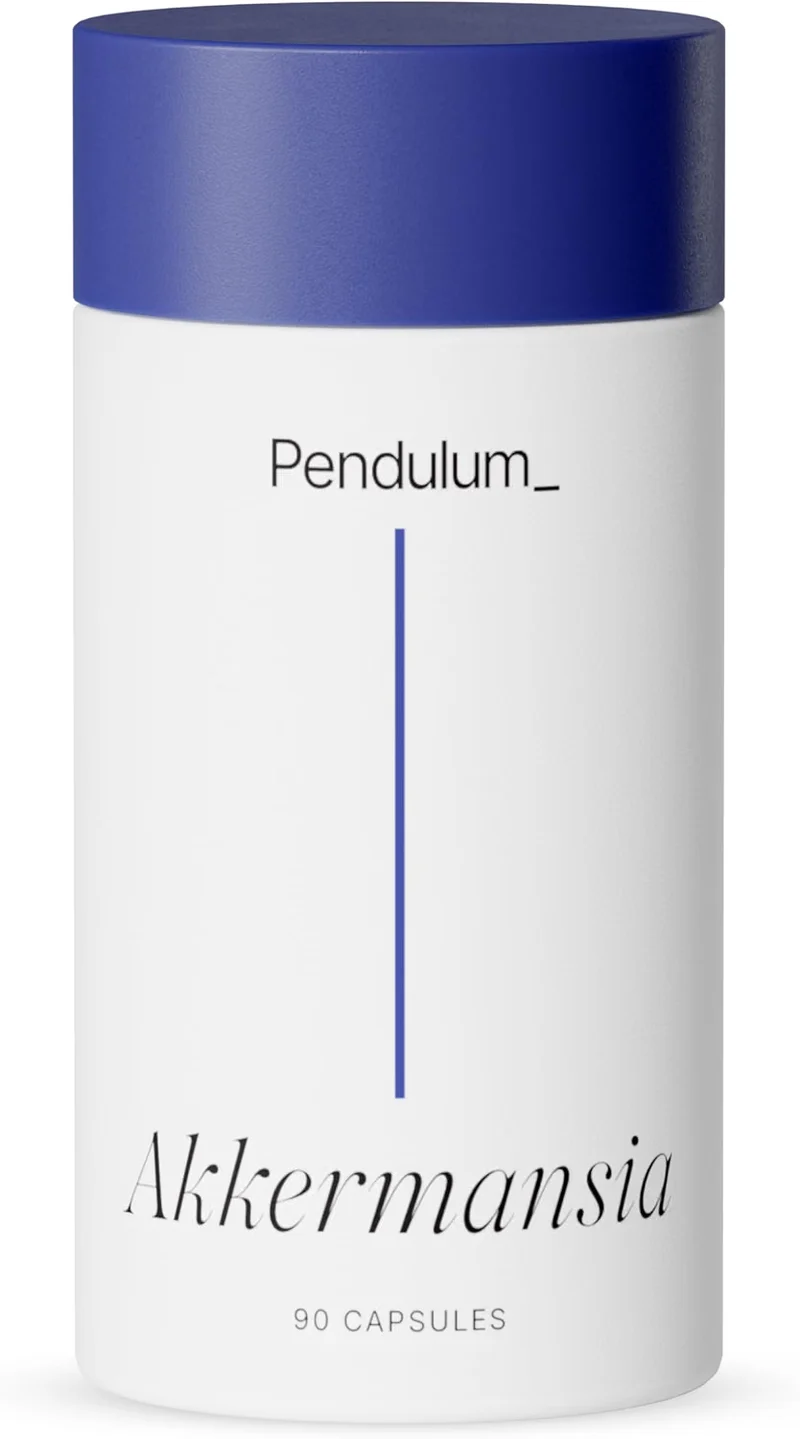
Pendulum Akkermansia
The first company to sell live Akkermansia muciniphila, with one of the cleanest labels in the supplement aisle — and a dose roughly 100 times below the amount used in the first randomised human trial of this organism, where the heat-killed form did more than the live one Pendulum sells.
Common questions
How much inulin do I need to take?
The EU-authorised regularity claim is based on 12 g of native chicory inulin a day, and most trials use between 5 and 20 g. Build up over a week or two, because the wind is worst at the start. Above about 20 g a day, side effects become likely.
Does inulin help with constipation?
Modestly. The EU accepted that 12 g a day increases stool frequency, but a 2022 meta-analysis of 16 trials found inulin-type fructans improved stool consistency rather than frequency, and made flatulence significantly worse. In the same analysis, psyllium added about three bowel movements a week. If constipation is the problem, psyllium has the stronger evidence.
Why does inulin give me wind?
Because the bacteria that ferment it produce gas as a by-product — it is the mechanism working, not a sign of a problem. Starting with a small amount and increasing gradually usually helps. If it persists at a dose that is doing you no other good, it is a reasonable reason to stop.
Is inulin good for IBS?
Often not. The US National Center for Complementary and Integrative Health reports that inulin-type fructans increased gassiness in people with IBS, and that prebiotic supplements did not improve IBS symptoms or quality of life. Speak to your GP or dietitian before adding it.
Will inulin help me lose weight?
Not on the evidence. A 2021 meta-analysis of 33 randomised trials found body weight was not affected by inulin-type fructans. Effects on blood sugar and cholesterol appeared only in people with type 2 diabetes.
Does inulin feed Akkermansia?
In mice, yes. In people the evidence is mixed: one small trial in type 2 diabetes reported a rise with 10 g a day, while a 2024 pooled analysis of six human studies credited galacto-oligosaccharides, not inulin, with raising it. The small amount paired with Akkermansia in supplement capsules has not been tested at all.
Is the inulin in my probiotic capsule enough to do anything?
Almost certainly not by itself. Capsules typically contain 200 to 500 mg, against the 12 g behind the EU claim. It is included to feed the capsule’s own bacteria — a role that is plausible but untested at that dose.
Is inulin the same as FOS or oligofructose?
Closely related, not identical. Oligofructose and fructo-oligosaccharides are shorter chains of the same fructose units, and all of them are inulin-type fructans. The EU regularity claim is specific to native chicory inulin, the long-chain form, so a product using a shorter-chain version cannot rely on it.
References
- EFSA Panel on Dietetic Products, Nutrition and Allergies (2015). Scientific opinion on the substantiation of a health claim related to “native chicory inulin” and maintenance of normal defecation by increasing stool frequency. EFSA Journal 13(1):3951 — six studies, 86 subjects, at least 12 g a day. doi.org
- Commission Regulation (EU) 2015/2314 authorising the claim that chicory inulin contributes to maintenance of normal defecation by increasing stool frequency, with 12 g of native chicory inulin a day as the condition of use. eur-lex.europa.eu
- van der Schoot A, Drysdale C, Whelan K, Dimidi E (2022). The effect of fiber supplementation on chronic constipation in adults: an updated systematic review and meta-analysis of randomized controlled trials. American Journal of Clinical Nutrition — 16 trials, 1,251 participants; inulin-type fructans improved stool consistency (SMD 0.36) but not frequency, and worsened flatulence (SMD 0.79). pmc.ncbi.nlm.nih.gov
- Hughes RL et al. (2022). The prebiotic potential of inulin-type fructans: a systematic review. Advances in Nutrition 13(2):492-529 — human trials in healthy adults; increases in Bifidobacterium, Lactobacillus and Faecalibacterium prausnitzii. pubmed.ncbi.nlm.nih.gov
- Vandeputte D et al. (2017). Prebiotic inulin-type fructans induce specific changes in the human gut microbiota. Gut 66:1968-1974 — changes in Anaerostipes, Bilophila and Bifidobacterium; the fall in Bilophila associated with softer stools. Two authors were from the research institute of an inulin manufacturer. pubmed.ncbi.nlm.nih.gov
- Liu F et al. (2017). Effect of inulin-type fructans on blood lipid profile and glucose level: a systematic review and meta-analysis of randomized controlled trials. European Journal of Clinical Nutrition 71:9-20 — 20 trials, 607 adults. pubmed.ncbi.nlm.nih.gov
- Li L, Li P, Xu L (2021). Assessing the effects of inulin-type fructan intake on body weight, blood glucose, and lipid profile: a systematic review and meta-analysis of randomized controlled trials. Food Science & Nutrition 9:4598-4616 — 33 trials; effects only in people with diabetes; no effect on body weight. pubmed.ncbi.nlm.nih.gov
- Inulin improves diet-induced hepatic steatosis and increases intestinal Akkermansia genus level (2022). International Journal of Molecular Sciences — an animal study. pmc.ncbi.nlm.nih.gov
- Roshanravan N et al. (2017). The effects of sodium butyrate and inulin supplementation on angiotensin signaling pathway via promotion of Akkermansia muciniphila abundance in type 2 diabetes. Journal of Cardiovascular and Thoracic Research 9:183-190 — 60 patients in four groups, 10 g a day of inulin for 45 days. pubmed.ncbi.nlm.nih.gov
- Tian R et al. (2024). Effect of inulin, galacto-oligosaccharides, and polyphenols on the gut microbiota, with a focus on Akkermansia muciniphila. Food & Function 15:4763-4772 — six studies, 451 participants; galacto-oligosaccharides increased A. muciniphila in healthy participants. pubmed.ncbi.nlm.nih.gov
- US Food and Drug Administration. Questions and answers on dietary fiber — inulin and inulin-type fructans among the non-digestible carbohydrates FDA intends to add to the definition of dietary fiber, declarable under enforcement discretion since June 2018. fda.gov
- National Center for Complementary and Integrative Health. Irritable bowel syndrome: what you need to know — inulin-type fructans increased gassiness in IBS; prebiotic supplements did not improve symptoms or quality of life; side effects above 20 g a day. nccih.nih.gov
Page history
- First published with per-claim evidence grades. Regularity from EFSA’s 2015 opinion, the EU’s authorised claim and the 2022 American Journal of Clinical Nutrition meta-analysis; microbiota effects from the 2022 Advances in Nutrition review and the 2017 Gut study; metabolic effects from the 2017 and 2021 meta-analyses; label status from FDA; tolerability from NCCIH. Sources were limited to government, regulatory and peer-reviewed medical publications.
Related ingredients
Compiled by SNL Team