Hypromellose, microcrystalline cellulose, L-leucine and silica
AStrong evidenceAt a glance
- Health benefit
- None claimedAll four are there for manufacturing. The A grade is for their safety record, not for a benefit.
- Plain hypromellose capsule in the stomach
- ≈9 minutesTo break open, in fasted volunteers — no different from gelatin. It is not delayed-release by itself.
- Silicon dioxide limit in US food
- 2% by weightThe ceiling for its use as an anticaking agent under 21 CFR 172.480.
- Highest no-effect level for celluloses
- Up to 9,000 mg/kg a dayIn chronic animal studies reviewed by EFSA in 2018. A capsule contains milligrams.
- Leucine an adult needs each day
- ≈2.7 gWHO’s 39 mg per kg, for a 70 kg adult. The flow-agent amount in a capsule is too small to be declared.
What is Hypromellose, microcrystalline cellulose, L-leucine and silica?
Every capsule has two kinds of ingredient: the ones on the Supplement Facts panel, which are there to do something, and the “other ingredients” listed beneath it, which are there so the product can be made. These four are the second kind, and they appear together on labels often enough to deserve one page. Hypromellose — hydroxypropyl methylcellulose, E 464 in the EU — is cellulose from plants, chemically modified so it forms a clear film when dried; it is what “vegetarian capsule” means on most labels, replacing the animal gelatin of a traditional capsule. Microcrystalline cellulose, E 460(i), is purified, partly broken-down plant cellulose used as a filler and binder: a dose of a few hundred milligrams, or a few milligrams of bacteria, does not fill a capsule on its own, and something inert has to make up the volume. L-leucine is an essential amino acid, the same one found in every protein you eat, used here as a water-soluble lubricant so the powder does not stick to the machinery. Silica is silicon dioxide, E 551, a fine powder that stops particles clumping — the same job it does in table salt and powdered foods.
How it works
None of these is meant to act on the body, so the useful question is what the body does with them. Celluloses, including microcrystalline cellulose and hypromellose, are not absorbed: EFSA’s 2018 re-evaluation found they pass through the gut and are excreted intact, with some fermentation by gut bacteria along the way — which is to say they behave like dietary fibre. Silicon dioxide is poorly absorbed, although EFSA noted silicon-containing material has been found in some tissues. L-leucine is absorbed and used exactly like the leucine in food. The one active property worth understanding is the capsule’s. A hypromellose capsule is designed to dissolve, and a gamma-scintigraphy study — radiolabelled capsules tracked by camera in eight fasted volunteers — found plain hypromellose capsules broke open in the stomach after 9 ± 2 minutes, against 7 ± 4 minutes for gelatin, a difference that was not significant. Protection from stomach acid requires an acid-resistant capsule grade or an enteric coating, and the words “hypromellose (vegetarian capsule)” on a label do not tell you which you have.
What the research actually shows
Evidence strength varies by what is being claimed, so each use is graded separately against the published criteria rather than averaged into one reassuring letter.
Safe at the amounts used in a capsule
AStrong evidenceGraded on the safety record, because none of these ingredients claims a benefit — and the record is unusually consistent. For the celluloses, international expert committees have set the acceptable daily intake as “not specified”, the category reserved for substances of very low toxicity; EFSA’s 2018 re-evaluation found no genotoxicity, no carcinogenicity for microcrystalline cellulose or modified celluloses, and no-effect levels in chronic studies of up to 9,000 mg per kg of body weight a day. In the US, hypromellose is permitted in food as a film former and stabiliser under 21 CFR 172.874. For silicon dioxide, EFSA’s 2024 follow-up concluded it raises no safety concern for any population group at the reported uses, and US rules cap it at 2 per cent of a food’s weight. L-leucine is an essential nutrient and a permitted food additive. Against those margins, the milligrams in a capsule are not close.
Sources: EFSA Panel on Food Additives and Nutrient Sources added to Food (2018), 21 CFR 172, EFSA Panel on Food Additives and Flavourings (2024), 21 CFR 172, 21 CFR 172
A vegetarian (hypromellose) capsule protects its contents from stomach acid
FNot supportedThis is the misconception worth correcting, because it matters most for live probiotics. The human evidence shows the opposite: in the scintigraphy study, every plain hypromellose capsule disintegrated in the stomach, in about nine minutes, no differently from gelatin. The study was small — eight volunteers — but it tracked the capsules directly, and it is the evidence there is. Capsules can be made acid-resistant, with special grades or an enteric coating, and a product that uses one will usually say so specifically. A label that says only “hypromellose (vegetarian capsule)” is describing what the capsule is made of, not what it does.
Sources: Tuleu C et al
The L-leucine adds useful protein or muscle benefit
FNot supportedIt does not, and the arithmetic is not close. WHO puts the adult leucine requirement at 39 mg per kg of body weight a day — about 2.7 g for a 70 kg adult — and a single scoop of whey protein contains a couple of grams. The leucine in a capsule is there as a lubricant, used in amounts small enough that labels do not declare them. It is listed because the law requires every ingredient to be listed, not because it contributes anything nutritionally.
Sources: WHO/FAO/UNU Expert Consultation (2007), Liu W et al
Silica is a hidden health risk
DWeak evidenceThe concern is theoretical rather than demonstrated, and it is worth stating accurately in both directions. EFSA’s 2018 re-evaluation found no indication of adverse effects in the available studies and no genotoxic concern, but it could not set an acceptable daily intake, because the food additive’s specifications do not exclude nano-sized particles and there was no long-term study covering them. Its 2024 follow-up used a margin-of-exposure approach instead and concluded silicon dioxide does not raise a safety concern for any population group at the reported uses, while noting that uncertainty remains about nano-sized aggregates. That is a data gap regulators are actively managing, not evidence of harm.
Sources: EFSA Panel on Food Additives and Nutrient Sources added to Food (2018), EFSA Panel on Food Additives and Flavourings (2024)
Microcrystalline cellulose is a harmful filler
FNot supportedHalf of this is true: it is a filler. The harmful part is not supported. EFSA found microcrystalline cellulose is not absorbed, passes through the gut largely as a fibre would, showed no carcinogenic properties, and produced no specific adverse effects at dietary levels of up to 10 per cent in short-term studies. The legitimate question about fillers is not whether they are dangerous but how much of a capsule they occupy — which, on a product with a very small active dose, can be most of it.
Sources: EFSA Panel on Food Additives and Nutrient Sources added to Food (2018)
Effective dosage
These ingredients are not dosed for an effect, and their amounts are not declared on labels; “other ingredients” are listed by name, not quantity. The limits that exist are generous. Celluloses carry an acceptable daily intake of “not specified”. Silicon dioxide is capped in US food at 2 per cent of the product’s weight when used as an anticaking agent. L-leucine is a nutrient an adult needs about 2.7 g of every day. Nothing about taking one or two capsules a day approaches any of these.
Where products diverge from the research. The gap to watch here is not a dose but a description. Some supplements are sold as “delayed release” while listing only “hypromellose (vegetarian capsule)” among their other ingredients. A plain hypromellose capsule is not delayed-release — it breaks open in the stomach in minutes — so a delayed-release claim depends on a specific acid-resistant grade or a coating that the ingredient list may not identify. If protection from stomach acid is the reason you are choosing a product, ask the manufacturer which capsule it uses, and whether it has been tested.
Safety, side effects and interactions
None of these four is a recognised major allergen, and hypromellose capsules are plant-derived, which makes them suitable for vegetarians and for anyone avoiding animal gelatin for religious or dietary reasons. The one medical exception worth naming is maple syrup urine disease, a rare inherited condition in which the body cannot break down leucine and the other branched-chain amino acids, and which is managed with a strictly controlled diet. Anyone with it should check every supplement’s other ingredients with their metabolic team, however small the amount. For everyone else, these ingredients are among the most thoroughly assessed substances in a supplement bottle, and they are not a reason to choose or avoid a product.
None of this is medical advice. See the medical disclaimer for what that means before you act on anything here.
Products we have covered containing Hypromellose, microcrystalline cellulose, L-leucine and silica
Every label overview on this site whose Supplement Facts panel lists Hypromellose, microcrystalline cellulose, L-leucine and silica, with the amount each one discloses.

NOW L-Theanine 100 mg
One of the best-labelled products we have reviewed, and it is not quite the product its name describes: each capsule carries 100 mg of L-theanine alongside 250 mg of decaffeinated green tea extract — two and a half times as much of the thing not in the title.
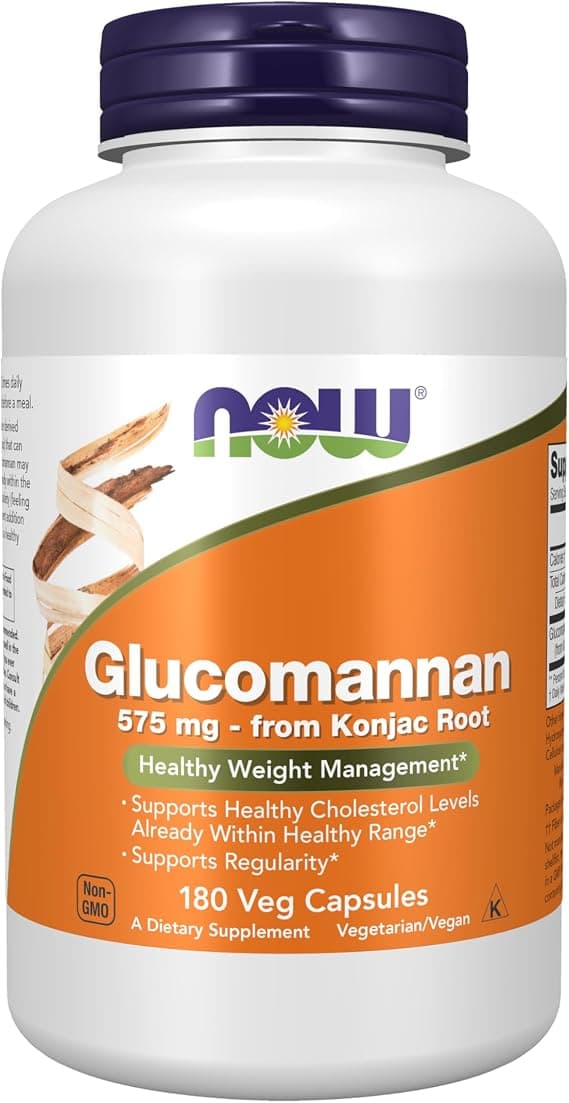
NOW Glucomannan 575 mg
An honest fibre capsule with a complete label, sold under a weight-management headline the trials do not support. The 575 mg on the front is one capsule; the serving is three, and at the label’s upper dose a 180-capsule bottle lasts a month, not six.
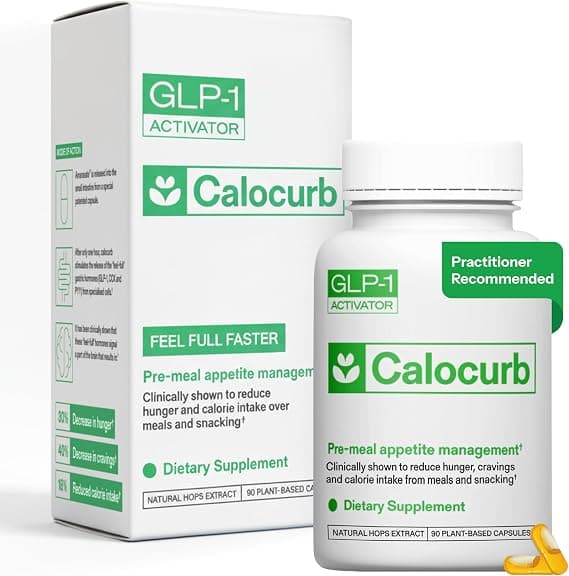
Calocurb (Amarasate)
The only supplement in the GLP-1 aisle with randomised human trials measuring both the hormones and the weight. The science is real, the dose on the label matches the dose in the studies — and at the label’s own target dose a bottle lasts 22 days, not the month it claims.
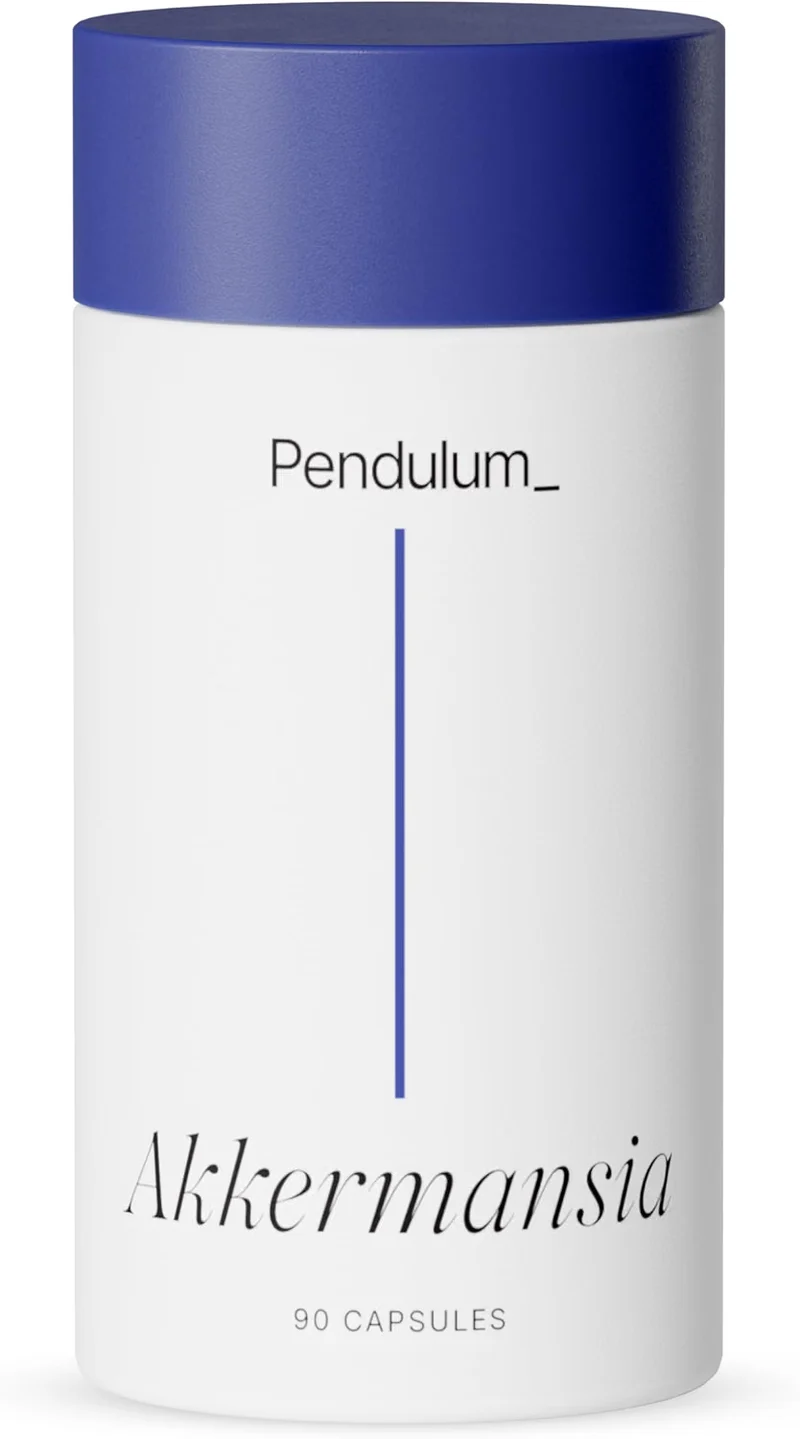
Pendulum Akkermansia
The first company to sell live Akkermansia muciniphila, with one of the cleanest labels in the supplement aisle — and a dose roughly 100 times below the amount used in the first randomised human trial of this organism, where the heat-killed form did more than the live one Pendulum sells.
Common questions
Why are these listed if they do nothing?
Because every ingredient in a supplement has to be listed. The Supplement Facts panel shows the ingredients meant to have an effect, with amounts; the “other ingredients” line lists what makes the product manufacturable — the capsule, fillers, and flow agents — by name only.
Is hypromellose vegan?
Hypromellose is made from plant cellulose, and it is what most “vegetarian capsule” labels refer to. Whether a whole product is vegan depends on everything else in it, but the capsule itself is not from an animal.
Does a vegetarian capsule protect probiotics from stomach acid?
A plain one does not. In a study that tracked radiolabelled capsules in volunteers, hypromellose capsules broke open in the stomach after about nine minutes — no differently from gelatin. Acid-resistant grades and enteric coatings exist for that purpose, and a product using one will usually say so explicitly.
Is silicon dioxide safe to eat?
At the levels used in food and supplements, yes, according to the European Food Safety Authority’s 2024 review, which found no safety concern for any population group. EFSA did note remaining uncertainty about nano-sized particles, which is why it declined to set a formal acceptable daily intake. US rules cap its use at 2 per cent of a food’s weight.
Why is L-leucine in my probiotic?
As a lubricant, so the powder flows through the capsule-filling machine without sticking. It is the same amino acid found in all dietary protein, used in amounts far too small to have any nutritional effect.
Is microcrystalline cellulose just filler?
Yes — that is its job. It is purified plant cellulose that is not absorbed, behaves much like dietary fibre, and has been assessed as very low toxicity. The more useful question it raises is how little of the active ingredient there may be, if most of the capsule is filler.
Should I avoid products that contain these?
No. They are among the most thoroughly reviewed ingredients in any supplement. The exception is anyone with maple syrup urine disease, who should check any product containing added leucine with their metabolic team.
References
- EFSA Panel on Food Additives and Nutrient Sources added to Food (2018). Re-evaluation of celluloses E 460(i), E 460(ii), E 461, E 462, E 463, E 464, E 465, E 466, E 468 and E 469 as food additives. EFSA Journal 16(1):e05047 — ADI “not specified”; not absorbed; no genotoxic or carcinogenic concern; NOAELs up to 9,000 mg/kg bw a day. pubmed.ncbi.nlm.nih.gov
- EFSA Panel on Food Additives and Nutrient Sources added to Food (2018). Re-evaluation of silicon dioxide (E 551) as a food additive. EFSA Journal 16(1):e05088 — poorly absorbed, no indication of adverse effects, no genotoxic concern; ADI not confirmed because specifications do not exclude nanoparticles. pubmed.ncbi.nlm.nih.gov
- EFSA Panel on Food Additives and Flavourings (2024). Re-evaluation of silicon dioxide (E 551) as a food additive in foods for infants below 16 weeks of age and follow-up of its re-evaluation for all population groups. EFSA Journal 22(10):e8880 — no safety concern for any population group at reported uses; uncertainty remains about nano-sized aggregates. pubmed.ncbi.nlm.nih.gov
- 21 CFR 172.874, Hydroxypropyl methylcellulose — permitted in food as an emulsifier, film former, protective colloid, stabiliser, suspending agent or thickener, in accordance with good manufacturing practice. govinfo.gov
- 21 CFR 172.480, Silicon dioxide — permitted as an anticaking agent at no more than 2 per cent by weight of the food. govinfo.gov
- 21 CFR 172.320, Amino acids — L-leucine among the amino acids permitted as food additives. govinfo.gov
- Tuleu C et al. (2007). A scintigraphic investigation of the disintegration behaviour of capsules in fasting subjects: a comparison of hypromellose capsules containing carrageenan as a gelling agent and standard gelatin capsules. European Journal of Pharmaceutical Sciences 30:251-255 — eight volunteers; all capsules disintegrated in the stomach, hypromellose at 9 ± 2 minutes and gelatin at 7 ± 4. pubmed.ncbi.nlm.nih.gov
- WHO/FAO/UNU Expert Consultation (2007). Protein and amino acid requirements in human nutrition. WHO Technical Report Series 935 — an adult leucine requirement of 39 mg per kg of body weight a day. iris.who.int
- Liu W et al. (2011). A new water-soluble lubricant of tablets: L-leucine combined with PEG6000. Zhongguo Zhong Yao Za Zhi 36(15):2061-2065 — L-leucine as a water-soluble tablet lubricant. pubmed.ncbi.nlm.nih.gov
- MedlinePlus Genetics (US National Library of Medicine). Maple syrup urine disease — an inherited inability to break down leucine, isoleucine and valine. medlineplus.gov
Page history
- First published. Safety from EFSA’s 2018 re-evaluations of celluloses and silicon dioxide and its 2024 silicon dioxide follow-up; US permissions from 21 CFR 172.874, 172.480 and 172.320; capsule behaviour from the 2007 gamma-scintigraphy study; leucine requirement from WHO Technical Report Series 935. Sources were limited to government, regulatory and peer-reviewed medical publications.
Related ingredients
Compiled by SNL Team