Bulk Creatine Monohydrate review
The other big UK value creatine, reviewed against what creatine research actually shows. One ingredient and one of the lowest prices per 100 g we have seen — but the serving on the pack is bigger than the 3 g the evidence and the label claim are based on, so you can make it last longer than it says.

Our take: cheap, plain and slightly over-served
Bulk is one of the two big UK value brands for sports nutrition, and its creatine is exactly what a value creatine should be: creatine monohydrate on its own, unflavoured, vegan, at a stated 99.9 per cent purity. At the lowest listing we saw, it works out at about £2.60 per 100 g, level with the cheapest creatine we have reviewed.
The one thing worth knowing is the serving. The 500 g pouch is listed as 100 servings, which means a 5 g scoop — about 4.4 g of creatine. That is safe and it works. But both the research and the authorised claim on the label are built on 3 g of creatine a day, which is about 3.4 g of powder. Use that instead, and the pouch lasts 147 days rather than 100.
This is a desk review. We have read the published label details, UK retailer listings and the research on creatine monohydrate. We have not used this product, tested its contents or run a trial. We could not open Bulk’s own product page while writing, so the next section says where each figure came from.
What exactly are you buying?
Bulk Creatine Monohydrate is sold unflavoured in pack sizes including 500 g, 1 kg and larger, and is described as micronised, vegan and 99.9 per cent pure creatine monohydrate with no additives. UK listings describe the 500 g pouch as 100 servings.
That serving count implies a 5 g serving of creatine monohydrate. Because the monohydrate form includes a bound water molecule — about 12 per cent of its weight — 5 g of powder gives about 4.4 g of creatine. The label’s claim, meanwhile, says the beneficial effect is obtained with a daily intake of 3 g of creatine, which is about 3.4 g of powder.
None of that is a problem physiologically. Taking 4.4 g a day will saturate your muscles slightly faster than 3 g and is well within the doses studied for safety. It simply means that if you follow the pack, you use more powder than the evidence requires. We could not read the scoop size or directions directly, so check them on the pack.
The label does not name where the creatine is made. Bulk sells a separate Creapure-branded creatine, made in Germany, for buyers who want a named source.
What creatine can realistically do
Creatine monohydrate is one of the most studied supplements in sports nutrition. The International Society of Sports Nutrition’s 2017 position stand calls it the most effective nutritional supplement available for increasing high-intensity exercise capacity and lean body mass during training. A 2017 meta-analysis of 53 randomised studies found a consistent improvement in upper-body strength, and an earlier review the same for the lower body. The effects are modest — a few per cent on top of training.
In the classic Nottingham study by Hultman and colleagues, 3 g a day for 28 days raised muscle creatine by about 20 per cent — the same as 20 g a day for six days, just more slowly. That is why 3 g is the figure on the GB nutrition and health claims register, where creatine is authorised to increase physical performance in successive bursts of short-term, high-intensity exercise.
Creatine helps with heavy sets, sprints and stop-start sport. It does little for steady endurance work and does not build muscle on its own: it lets you do slightly more work in training, and the training does the rest.
Testing: what the listings do and do not say
The listings we read state the purity — 99.9 per cent — but make no banned-substance testing claim for this product, such as Informed Sport or Informed Choice. For an ordinary gym-goer, a plain creatine monohydrate from an established UK brand is a low-risk purchase. For an athlete under anti-doping rules, strict liability applies, and the safer choice is a product whose batch you can look up in a certifier’s database. Our Myprotein Impact Creatine review covers one that claims Informed Choice certification.
Price: as cheap as creatine gets
A UK price comparison site listed the 500 g pouch from £12.99, about £2.60 per 100 g. We read that from a search listing rather than taking an order through checkout, so confirm the delivered price before you pay.
At 3 g of creatine a day (about 3.4 g of powder), that is roughly 9p a day, and the pouch lasts about 147 days. At the pack’s 5 g serving, it is about 13p a day for 100 days.
For comparison, we priced Myprotein Impact Creatine at about £3.20 per 100 g for 500 g on offer and £2.60 to £3.50 for 1 kg, and Optimum Nutrition Micronised Creatine at £6.31 to £7.49 per 100 g at list price. For the same compound, Bulk is at or near the bottom of the range.
Best alternatives
The ones we have fully reviewed are linked, and appear in the comparison cards below this article. The others we name for comparison only: we have not reviewed them in full, so do not read their inclusion as a recommendation.
- Myprotein Impact Creatine (reviewed) — our highest-scoring creatine. Similar price per 100 g in its larger packs, a serving that matches the 3 g claim exactly, and an Informed Choice testing claim.
- Optimum Nutrition Micronised Creatine (reviewed) — the big-brand option at the same 3 g dose, but more than twice the price per 100 g at list price and a product page that contradicts itself on serving size.
- Bulk Creapure Creatine (not yet reviewed) — Bulk’s own premium version made with Creapure, for buyers who want a named German source. It costs more, and the trials were run on creatine monohydrate, not on a brand of it.
- A batch-tested creatine — if you compete under anti-doping rules, choose whichever monohydrate you can look up by batch in a certifier’s database.
Who should skip it, and what to watch for
For healthy adults, creatine monohydrate has one of the better safety records in the supplement aisle. The ISSN’s 2021 review of common questions and misconceptions concluded that the research does not support claims that creatine harms healthy kidneys, causes dehydration or cramping, or leads to hair loss.
Expect a kilogram or so of extra body weight in the first weeks, mainly water drawn into muscle. Creatine raises blood creatinine, a marker used to estimate kidney function, so tell your doctor you take it before a routine blood test.
Anyone with kidney disease, anyone taking medicines that affect the kidneys, and anyone pregnant or breastfeeding should talk to their GP or pharmacist before starting. Creatine is not recommended for under-18s. Food supplements sold in Great Britain are not approved by a regulator for safety or effectiveness before sale, so the label is the manufacturer’s responsibility rather than a regulator’s endorsement.
Sources and shopping: our UK buying checklist
Before you order, choose the unflavoured version and a pack size you will finish before its best-before date. Check the delivered price and divide it by the pack weight to get the cost per 100 g; around £3 or less is good value for plain monohydrate. Check whether the seller is Bulk or an authorised retailer.
When the pack arrives, check the seal, the batch code and the best-before date. Weigh out about 3.4 g once — a cheap kitchen scale that reads to 0.1 g is enough — to see how much of the scoop that is, and use that amount daily. Give it four weeks before judging whether it is doing anything.
Our commercial link for this product is our Bulk Creatine Monohydrate link. It earns us a commission at no extra cost to you, and it has no influence on the score above — which is an 8.2, held back by a pack serving larger than the evidence needs, an unnamed source and no testing claim.
The fair summary is this. Bulk Creatine Monohydrate is plain creatine at about as low a price as it goes in the UK. Take 3 g of creatine a day rather than the pack’s serving, and it is one of the best buys in the aisle.
Ingredient analysis
Creatine monohydrate (micronised)
strong evidenceThe whole product. The evidence rating is for creatine monohydrate and short, high-intensity exercise, where the randomised-trial evidence is genuinely strong — not for this brand specifically.
Who it’s for. What to consider.
Who it may suit
An adult who lifts weights, sprints or plays a stop-start sport and wants plain creatine monohydrate for as little as possible, and is happy to measure a 3 g daily dose rather than follow the pack’s larger serving.
Who should avoid it
Anyone under 18. Anyone with kidney disease or on medicines that affect the kidneys, unless their doctor agrees. Anyone pregnant or breastfeeding without advice. Competing athletes who need a batch-certified product.
What stands out
One ingredient: creatine monohydrate at a stated 99.9 per cent purity
About £2.60 per 100 g at the lowest listing we saw — roughly 9p a day at 3 g of creatine
Unflavoured, micronised and vegan
A 500 g pouch lasts about 147 days at the evidence-based dose
Worth considering
The pack’s implied 5 g serving is more than the 3 g of creatine the evidence and the label claim use
We could not confirm the scoop size or directions directly
The source of the creatine is not named
No banned-substance testing claim on the listings we read
Score breakdown
Five criteria, each out of 10, averaged to the overall score. See how we score products.
How does it compare?
A closer look at the alternatives. Compare the ingredients and serving sizes, then explore the full review.
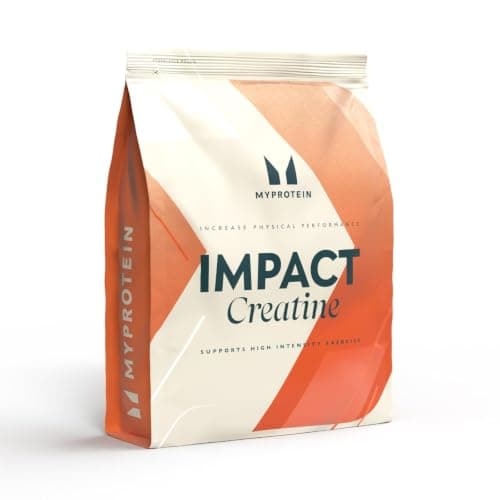
Myprotein Impact Creatine
The UK’s value-brand creatine, reviewed against what creatine research actually shows. One ingredient, the right 3 g dose, a serving that adds up, and a banned-substance testing claim — at around half the price of the big-name tubs when it is on offer. The small high-street packs are the exception.
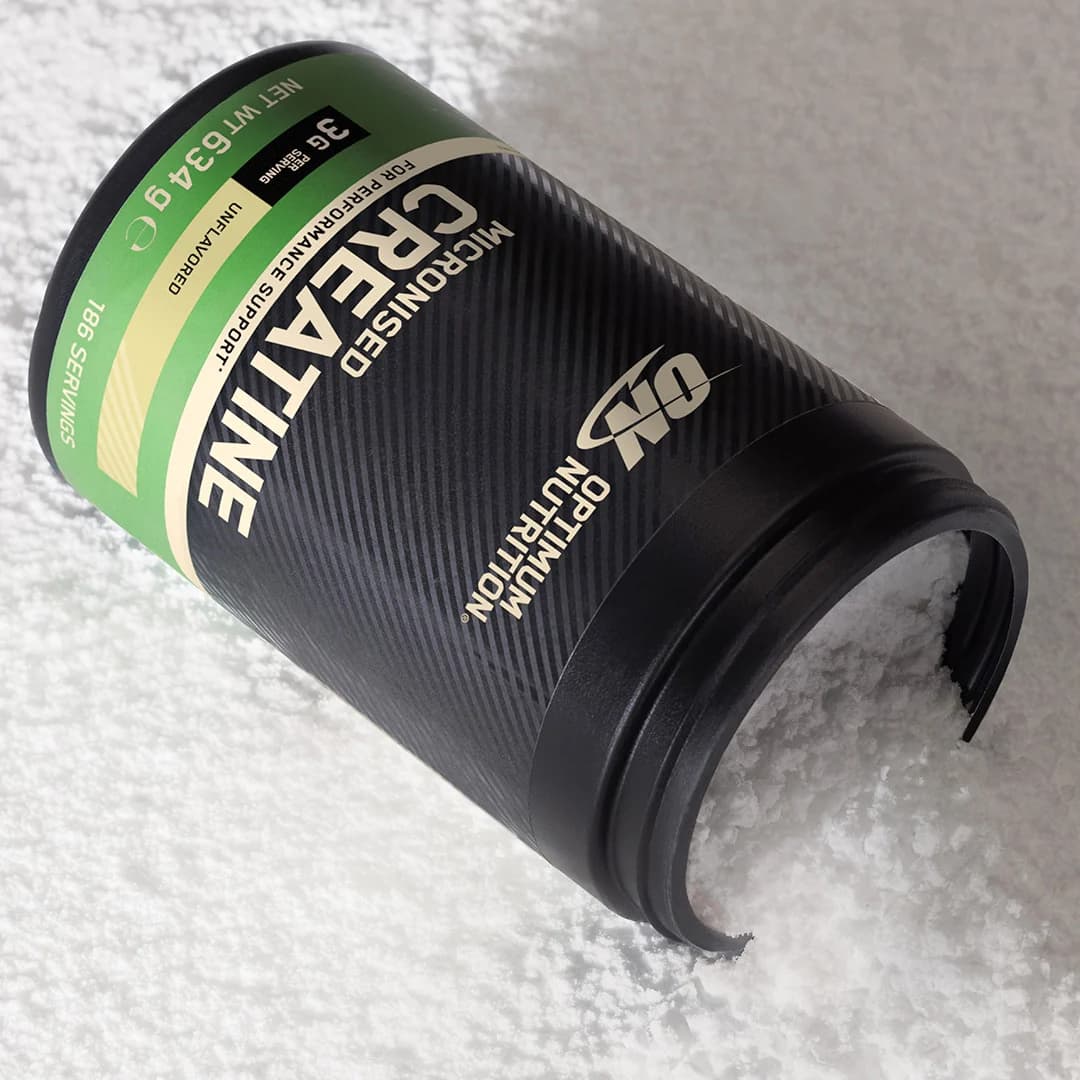
Optimum Nutrition Micronised Creatine Powder
The UK’s best-selling creatine, reviewed against what creatine research actually shows. The ingredient is about as well evidenced as supplements get and the dose is right — but the label contradicts itself on serving size, and a plain creatine can cost half as much.
Affiliate links: we may earn a commission at no extra cost to you. Prices and availability change — check the seller before buying.
Where to buy
Affiliate link: we may earn a commission at no extra cost to you.
Check the current priceYour questions, answered.
Is Bulk Creatine Monohydrate good?
Yes. It is plain creatine monohydrate at a stated 99.9 per cent purity, and at about £2.60 per 100 g it matches the cheapest creatine we have reviewed. The pack’s serving is larger than needed, so take 3 g of creatine a day instead.
How much Bulk creatine should I take?
About 3.4 g of powder a day, which gives 3 g of creatine — the amount the research and the label’s own claim are based on. The 500 g pack is listed as 100 servings, implying a 5 g scoop. That also works, but uses the pack faster.
Is Bulk creatine better than Myprotein creatine?
They are the same compound and will work the same. Bulk was slightly cheaper per 100 g at the lowest listing we saw; Myprotein’s serving matches the 3 g claim exactly and it claims Informed Choice testing. Buy whichever is cheaper on the day.
Is Bulk creatine Informed Sport certified?
The listings we read made no banned-substance testing claim for this product. If you are drug-tested, choose a creatine whose batch you can look up in a certifier’s database.
Do I need Creapure creatine?
No. Creapure is a brand of creatine monohydrate made in Germany, which some buyers prefer for traceability. The research was done on creatine monohydrate, not on a particular brand, so standard monohydrate works the same.
Community experiences
Reader submissions open once a page is published from the editorial database. This overview is maintained in code, so there is nothing to attach a submission to yet. If you have used this product, send it through the contact page and it will be considered when submissions open.
References
- Amazon.co.uk listing for Bulk Creatine Monohydrate Powder, unflavoured, 500 g — the micronised, vegan and 3 g label-claim details quoted here, read via search on 28 September 2026. amazon.co.uk
- Dolphin Fitness UK listing for Bulk Creatine Monohydrate Powder 500 g — the 100 servings per pack quoted here. dolphinfitness.co.uk
- PriceSpy UK search for Bulk creatine monohydrate — the lowest 500 g price quoted here, read via search on 28 September 2026. pricespy.co.uk
- Kreider et al. (2017), Journal of the International Society of Sports Nutrition. ISSN position stand: safety and efficacy of creatine supplementation in exercise, sport and medicine. pubmed.ncbi.nlm.nih.gov
- Lanhers et al. (2017), Sports Medicine. Systematic review and meta-analysis of creatine and upper-limb strength: 53 randomised studies. pubmed.ncbi.nlm.nih.gov
- Lanhers et al. (2015), Sports Medicine. Systematic review and meta-analyses of creatine and lower-limb strength performance. pubmed.ncbi.nlm.nih.gov
- Hultman et al. (1996), Journal of Applied Physiology. Muscle creatine loading in men: 3 g a day for 28 days and 20 g a day for six days both raised muscle creatine by about 20 per cent. pubmed.ncbi.nlm.nih.gov
- Antonio et al. (2021), Journal of the International Society of Sports Nutrition. Common questions and misconceptions about creatine supplementation. pubmed.ncbi.nlm.nih.gov
- Great Britain nutrition and health claims register — the authorised creatine claim and its condition of a 3 g daily intake. gov.uk
Page history
- First published for the UK market, as a full review of an alternative named in our creatine reviews. We could not open Bulk’s own product page, so the label details come from UK retailer listings read via search on this date, and the serving size is our calculation from the listed servings per pack. This is a desk review: nobody on our team has used this product.
- Scored 8.2 out of 10 against the five published product criteria. Plain creatine at the lowest price per 100 g we have seen. The marks lost are for a pack serving larger than the 3 g the claim and research use, an unnamed source and no banned-substance testing claim.
Compare it with
Side by side on the five scores, the dose against the studied amount, the cost per serving and what each label discloses.
- Bulk Creatine Monohydrate vs NOW Omega-3 Molecularly Distilled6.4/10
- Bulk Creatine Monohydrate vs Nature Made Vitamin D3 1000 IU7.4/10
- Bulk Creatine Monohydrate vs Optimum Nutrition Gold Standard 100% Whey7.0/10
- Bulk Creatine Monohydrate vs Myprotein Impact Whey Protein7.6/10
- Bulk Creatine Monohydrate vs Kinetica Whey Protein8.0/10
- Bulk Creatine Monohydrate vs Yu Sleep1.8/10
- Bulk Creatine Monohydrate vs Pendulum Akkermansia4.0/10
- Bulk Creatine Monohydrate vs Optimum Nutrition Micronised Creatine Powder7.4/10
- Bulk Creatine Monohydrate vs Optimum Nutrition Opti-Men5.0/10
- Bulk Creatine Monohydrate vs Optimum Nutrition Gold Standard 100% Casein Protein Powder6.6/10
- Bulk Creatine Monohydrate vs Optimum Nutrition Serious Mass5.8/10
- Bulk Creatine Monohydrate vs Myprotein Impact Creatine8.6/10
- Bulk Creatine Monohydrate vs Myprotein Impact Weight Gainer6.8/10
- Bulk Creatine Monohydrate vs Myprotein Slow-Release Casein7.6/10
- Bulk Creatine Monohydrate vs Mutant Mass6.4/10
- Bulk Creatine Monohydrate vs Vitabiotics Wellman Original5.4/10
- Bulk Creatine Monohydrate vs Tesco A–Z Multivitamins & Minerals6.0/10
- Bulk Creatine Monohydrate vs Myprotein Alpha Men5.2/10
- Bulk Creatine Monohydrate vs Optimum Nutrition Gold Standard 100% Plant Protein7.6/10
- Bulk Creatine Monohydrate vs Myprotein Impact Vegan Protein8.2/10
- Bulk Creatine Monohydrate vs Bulk Vegan Protein Powder7.4/10
Keep asking good questions.
Myprotein Impact Creatine
The UK’s value-brand creatine, reviewed against what creatine research actually shows. One ingredient, the right 3 g dose, a serving that adds up, and a banned-substance testing claim — at around half the price of the big-name tubs when it is on offer. The small high-street packs are the exception.
Optimum Nutrition Micronised Creatine Powder
The UK’s best-selling creatine, reviewed against what creatine research actually shows. The ingredient is about as well evidenced as supplements get and the dose is right — but the label contradicts itself on serving size, and a plain creatine can cost half as much.