Myprotein Slow-Release Casein review
The UK’s value-brand casein, reviewed against what the protein research actually shows. About 23 g of slow-digesting milk protein in a 30 g scoop, a short ingredient list and a price per gram of protein well below the big brands — but the bedtime benefit it is sold on is mostly just extra protein.

Our take: good casein at a fair price
Myprotein’s Slow-Release Casein is the own-brand answer to the big-name caseins, and on the basics it does everything right. A 30 g scoop gives about 23 g of protein, almost all of it micellar casein, with around 110 kcal and very little carbohydrate or fat. The ingredient list is short, and at typical offer prices it costs well under two-thirds as much per gram of protein as Optimum Nutrition’s Gold Standard Casein.
What it shares with every casein is the marketing. “Slow release” is true: casein does digest more slowly than whey. But when studies give people the same total protein across the day, taking casein at bedtime does not build more muscle than taking the same protein earlier. So this is a good way to add protein, not a way to make protein work harder.
This is a desk review. We have read the published label details, UK retailer listings and the research on casein and pre-sleep protein. We have not used this product, tested its contents or run a trial. We could not open Myprotein’s own product page while writing, so the next section says where each figure came from.
What exactly are you buying?
Slow-Release Casein is sold in 1 kg and 2.5 kg pouches, unflavoured and in flavours including chocolate, vanilla and strawberry. A serving is one 30 g scoop, so a 1 kg pouch holds about 33.
Per 30 g serving, listings give about:
- 23 to 24 g of protein, depending on flavour
- About 110 kcal
- About 2 g of carbohydrate and 1 g of fat
Micellar casein makes up about 91 to 95 per cent of the powder depending on flavour, with flavouring and sucralose making up most of the rest in the flavoured versions. That is a higher casein share than Optimum Nutrition’s 88 per cent, and a shorter ingredient list with no gums or enzyme blend. The unflavoured version is simply casein.
Listings note that it is made in a facility that also handles egg and gluten, which matters for anyone with a severe allergy.
What casein can realistically do
Slow protein is real protein
Casein is about 80 per cent of the protein in milk. It clots in the stomach, so its amino acids reach the blood more slowly and over a longer period than whey’s. Whey’s faster rise stimulates muscle protein synthesis more strongly after a workout — a 2009 study by Tang and colleagues found whey outperformed casein at rest and after resistance exercise — while casein’s advantage is duration. Both are complete, high-quality proteins.
What the bedtime studies show
In a 2012 Maastricht study, 40 g of casein taken before sleep after an evening workout was digested and absorbed overnight. In a 2015 trial, young men who drank 27.5 g of casein before bed during 12 weeks of training gained more muscle and strength — but they were also eating more protein in total than the placebo group.
When Joy and colleagues gave two groups the same 35 g of casein, one in the daytime and one at night, on diets matched for total protein, both gained muscle and strength equally over 10 weeks. The benefit of bedtime protein is mostly the protein.
How much protein do you need?
For people doing resistance training, a 2018 meta-analysis by Morton and colleagues found gains in fat-free mass levelled off at around 1.6 g of protein per kilogram of body weight a day — about 130 g for an 80 kg adult. Our protein calculator works out your figure. If you already reach it from food, a casein shake adds little.
Price: work it out per 100 g of protein
At about 23 g of protein per 30 g scoop, a 1 kg pouch holds about 767 g of protein and a 2.5 kg pouch about 1.9 kg. In listings read on 28 September 2026:
- 1 kg: £23.95 at one sports-nutrition retailer and £29.99 on offer elsewhere, with a price comparison site listing it at £41.99 — about £3.12, £3.91 and £5.48 per 100 g of protein respectively.
- 2.5 kg: £48.99 at the same sports-nutrition retailer — about £2.56 per 100 g of protein.
Against Optimum Nutrition Gold Standard Casein, which we priced at about £5.50 to £5.80 per 100 g of protein in its 924 g tub and £4.26 to £4.96 in the 1.8 kg, Myprotein is clearly cheaper except at full price. Myprotein runs frequent site-wide offers, and at full price it is rarely worth buying. We read these prices from listings rather than taking an order through checkout.
Best alternatives
The ones we have fully reviewed are linked, and appear in the comparison cards below this article. The others we name for comparison only: we have not reviewed them in full, so do not read their inclusion as a recommendation.
- Greek yoghurt, skyr or cottage cheese — the best alternative for most people. They are mostly casein, filling, and a 200 g pot gives roughly 15 to 25 g of protein before bed without a scoop.
- Optimum Nutrition Gold Standard 100% Casein (reviewed) — the big-brand casein, with slightly more protein per scoop but a longer ingredient list, two UK formulas in circulation and a higher price per gram.
- Myprotein Impact Whey (reviewed) — if timing does not matter to you, whey does the same job for daily protein, and mixes more easily; compare the price per 100 g of protein on the day.
- Kinetica Whey Protein (reviewed) — the better choice for drug-tested athletes, because of its batch-tested banned-substance claim.
- Milk — a pint of semi-skimmed milk gives about 20 g of protein, roughly 80 per cent of it casein, for well under a pound.
Who should skip it, and what to watch for
Casein is milk protein, so it is not suitable for anyone with a milk allergy, and it is not vegan. The facility also handles egg and gluten, so anyone with a severe allergy to either should take the cross-contact warning seriously.
Most people with lactose intolerance tolerate a scoop of casein powder, since the lactose content is low, but a large shake can still cause bloating in sensitive people. Casein mixes thick; if a shake before bed feels heavy, mix it thinner or take it an hour earlier.
If you are drug-tested, note that the listings we read made no batch-tested banned-substance claim for this product; choose one whose batch you can look up. Anyone with kidney disease should ask their GP or dietitian before increasing protein. Food supplements sold in Great Britain are not approved by a regulator for safety or effectiveness before sale, so the label is the manufacturer’s responsibility rather than a regulator’s endorsement.
Sources and shopping: our UK buying checklist
Before you order, check the flavour, the pack size, the delivered price and the seller. Work out the cost per 100 g of protein — price ÷ (servings × protein per serving) × 100 — and compare it with a whey and with Greek yoghurt. The 2.5 kg pack is the cheapest per gram if you will finish it before its best-before date.
When the pack arrives, check the seal, the batch code and the best-before date, and read the nutrition panel for your flavour.
Our commercial link for this product is our Myprotein Slow-Release Casein link. It earns us a commission at no extra cost to you, and it has no influence on the score above — which is a 7.6, the higher of the two caseins we have reviewed, held back by a timing claim that mostly reduces to “eat enough protein” and no batch-tested claim.
The fair summary is this. Myprotein Slow-Release Casein is a clean, cheaper-than-brand casein that does what protein does. Take it before bed if that is when protein fits your day — and buy it on offer.
Ingredient analysis
Micellar casein (milk)
strong evidenceA complete, high-quality milk protein. The evidence that enough total daily protein supports muscle gain with resistance training is strong. The evidence that taking it at bedtime specifically adds to that, when total protein is matched, is weak.
Sucralose (flavoured versions)
moderate evidenceAn approved sweetener used in small amounts. The unflavoured version contains none.
Who it’s for. What to consider.
Who it may suit
An adult who trains, is not reaching their daily protein target from food, and finds a thick, slow-digesting shake before bed or between meals the easiest way to add protein — ideally buying the 2.5 kg pack or the 1 kg on offer.
Who should avoid it
Anyone with a milk allergy, and vegans. Anyone with a severe egg or gluten allergy, given factory cross-contact. People who already reach their protein target from food. Anyone with kidney disease, unless their doctor or dietitian agrees. Competing athletes who need a batch-certified product.
What stands out
About 23 to 24 g of protein per 30 g scoop, with about 110 kcal
Micellar casein makes up 91 to 95 per cent of the powder, depending on flavour
Short ingredient list with no gums or enzyme blend
About £2.56 to £3.91 per 100 g of protein at typical offer prices
Worth considering
Studies that match total daily protein find no extra benefit from taking casein at bedtime
At full price, about £5.48 per 100 g of protein, no cheaper than the big brands
Contains milk; made in a facility that also handles egg and gluten
No batch-tested banned-substance claim on the listings we read
Score breakdown
Five criteria, each out of 10, averaged to the overall score. See how we score products.
How does it compare?
A closer look at the alternatives. Compare the ingredients and serving sizes, then explore the full review.
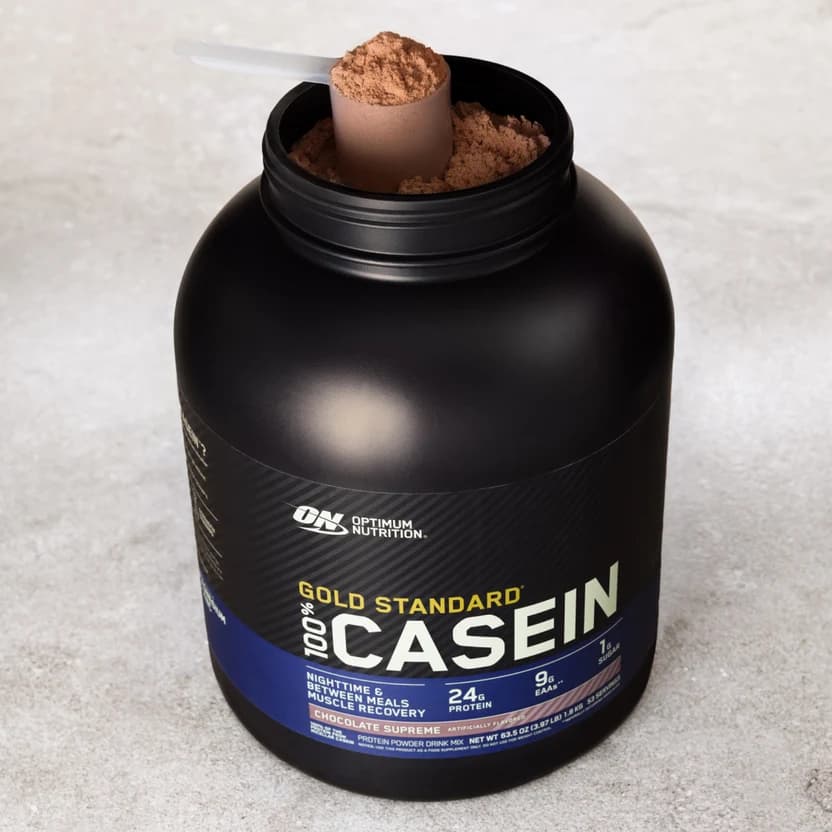
Optimum Nutrition Gold Standard 100% Casein Protein Powder
The best-known casein in the UK, reviewed against what the protein research actually shows. It is a clean, fully disclosed 24 g of slow-digesting milk protein — but the “nighttime recovery” case mostly comes down to eating more protein, which any protein does, and the price per gram only makes sense in the bigger tub.
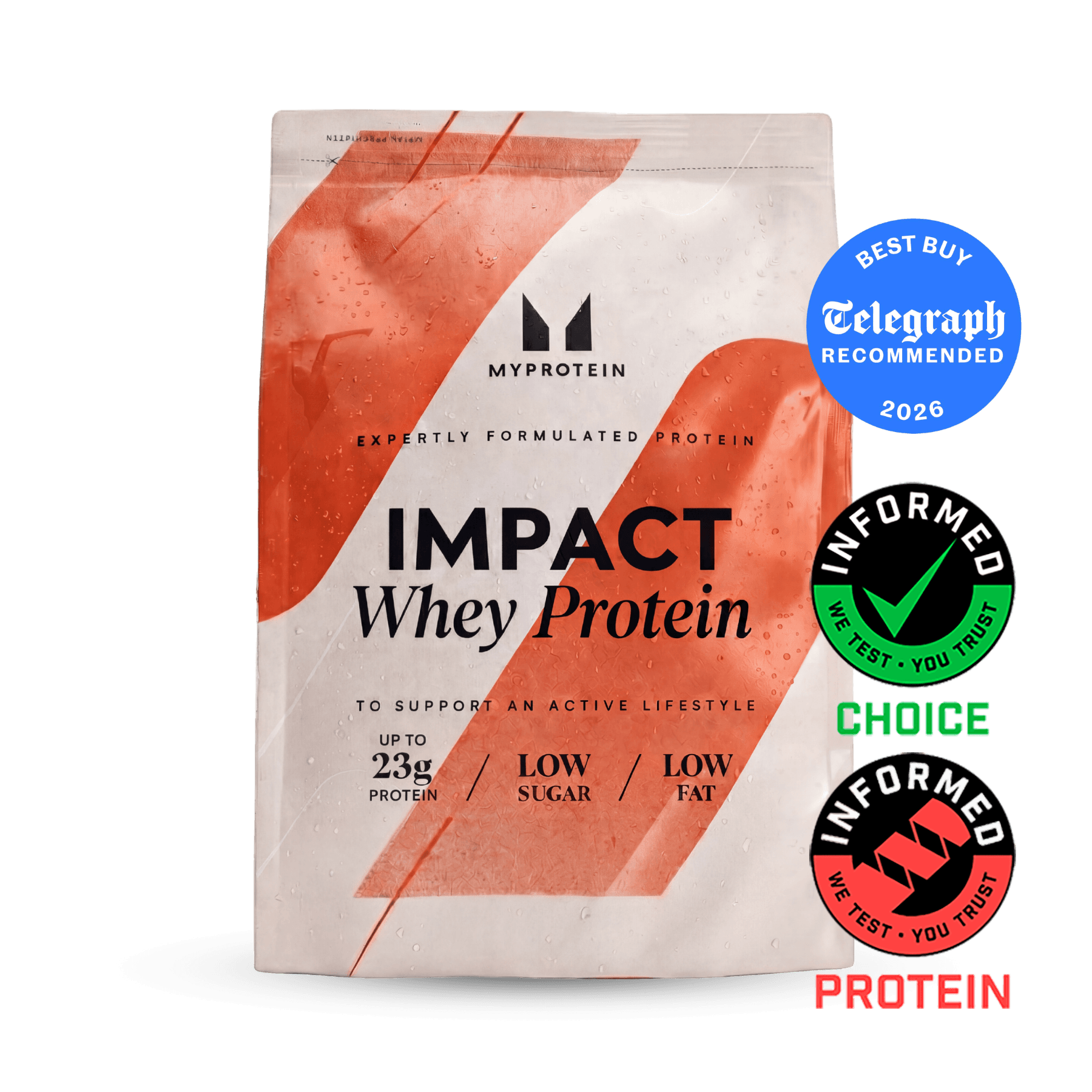
Myprotein Impact Whey Protein
The UK price benchmark for whey, and the number every other tub should be measured against. A three-item label, £1.10 a serving on the brand’s own page, and a protein-content certification most rivals do not carry — set against a headline figure that flatters the range.
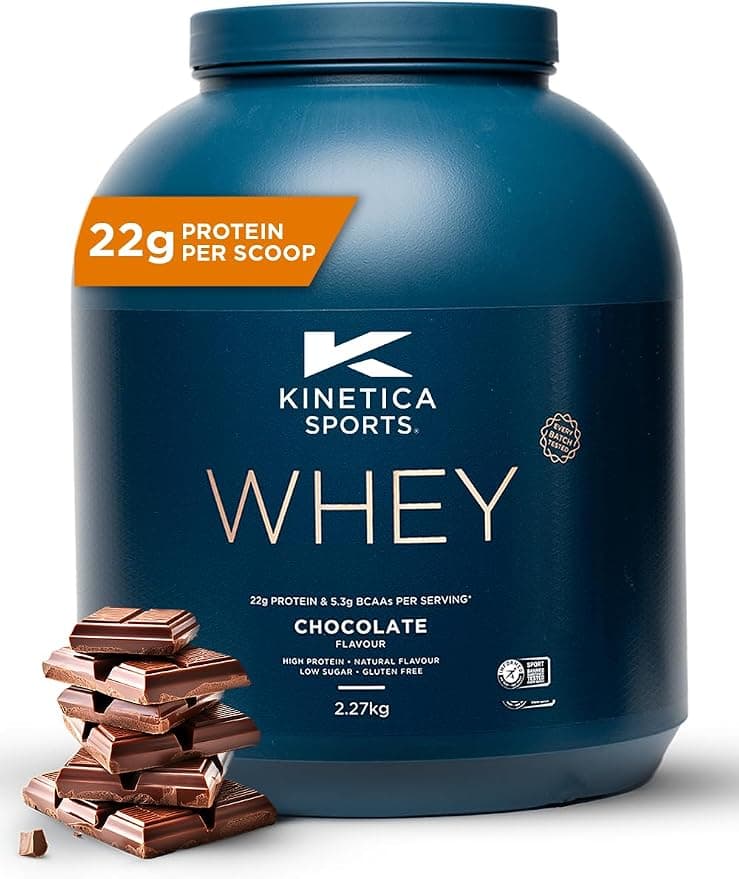
Kinetica Whey Protein
The most completely labelled whey we have looked at, and the one that makes the banned-substance claim the big brands only half-make. It publishes every macro and all nineteen amino acids per scoop — and charges about what the value brands do.
Affiliate links: we may earn a commission at no extra cost to you. Prices and availability change — check the seller before buying.
Where to buy
Affiliate link: we may earn a commission at no extra cost to you.
Check the current priceYour questions, answered.
Is Myprotein Slow-Release Casein good?
Yes, as a protein. A 30 g scoop gives about 23 g of mostly micellar casein, with a short ingredient list, at about £2.56 to £3.91 per 100 g of protein on offer. The bedtime benefit it is sold on is mostly just the extra protein.
Is it better than Optimum Nutrition Gold Standard Casein?
It is cheaper and has a shorter ingredient list, with a slightly higher casein share. Optimum Nutrition gives about 24 g of protein per 33 g scoop against Myprotein’s 23 g per 30 g. For most buyers, Myprotein is the better value unless it is at full price.
Does casein before bed build more muscle?
Only by adding protein. When a 2018 trial gave two groups the same casein and total protein, taking it at night or in the daytime made no difference to muscle or strength gains. Getting enough protein each day matters far more than timing.
How much protein is in a scoop?
About 23 to 24 g per 30 g scoop depending on flavour, with about 110 kcal, 2 g of carbohydrate and 1 g of fat. A 1 kg pouch holds about 33 scoops.
Can I take it if I am lactose intolerant?
Many people can, because casein powder contains little lactose. A large shake can still cause bloating in sensitive people, so start with half a scoop. If you have a milk allergy, rather than lactose intolerance, do not take it.
Community experiences
Reader submissions open once a page is published from the editorial database. This overview is maintained in code, so there is nothing to attach a submission to yet. If you have used this product, send it through the contact page and it will be considered when submissions open.
References
- Myprotein UK product page for Slow-Release Micellar Casein — the product described here; figures were read from retailer and nutrition-database listings of it via search on 28 September 2026. myprotein.com
- Dolphin Fitness UK listings for Myprotein casein 1 kg and 2.5 kg — the £23.95 and £48.99 prices quoted here. dolphinfitness.co.uk
- PriceSpy UK comparison for Myprotein Slow-Release Casein 1 kg — the £29.99 and £41.99 prices quoted here. pricespy.co.uk
- Tang et al. (2009), Journal of Applied Physiology. Ingestion of whey hydrolysate, casein or soy protein isolate: effects on mixed muscle protein synthesis at rest and following resistance exercise in young men. doi.org
- Res et al. (2012), Medicine & Science in Sports & Exercise. Protein ingestion before sleep improves postexercise overnight recovery. pubmed.ncbi.nlm.nih.gov
- Snijders et al. (2015), Journal of Nutrition. Protein ingestion before sleep increases muscle mass and strength gains during 12 weeks of resistance-type exercise training in healthy young men. doi.org
- Joy et al. (2018), Journal of the International Society of Sports Nutrition. Daytime and nighttime casein supplements similarly increase muscle size and strength in response to resistance training earlier in the day. tandfonline.com
- Morton et al. (2018), British Journal of Sports Medicine. Systematic review and meta-analysis of protein supplementation and resistance-training-induced gains in muscle mass and strength. pubmed.ncbi.nlm.nih.gov
Page history
- First published for the UK market, as a full review of an alternative named in our Optimum Nutrition casein review. We could not open Myprotein’s own product page, so the label details come from UK retailer and nutrition-database listings read via search on this date. This is a desk review: nobody on our team has used this product.
- Scored 7.6 out of 10 against the five published product criteria. A clean, well-priced casein. The marks lost are for a bedtime claim that mostly reduces to eating more protein, a serving a little under the studied doses, and no batch-tested claim.
Compare it with
Side by side on the five scores, the dose against the studied amount, the cost per serving and what each label discloses.
- Myprotein Slow-Release Casein vs NOW Omega-3 Molecularly Distilled6.4/10
- Myprotein Slow-Release Casein vs Nature Made Vitamin D3 1000 IU7.4/10
- Myprotein Slow-Release Casein vs Optimum Nutrition Gold Standard 100% Whey7.0/10
- Myprotein Slow-Release Casein vs Myprotein Impact Whey Protein7.6/10
- Myprotein Slow-Release Casein vs Kinetica Whey Protein8.0/10
- Myprotein Slow-Release Casein vs Yu Sleep1.8/10
- Myprotein Slow-Release Casein vs Pendulum Akkermansia4.0/10
- Myprotein Slow-Release Casein vs Optimum Nutrition Micronised Creatine Powder7.4/10
- Myprotein Slow-Release Casein vs Optimum Nutrition Opti-Men5.0/10
- Myprotein Slow-Release Casein vs Optimum Nutrition Gold Standard 100% Casein Protein Powder6.6/10
- Myprotein Slow-Release Casein vs Optimum Nutrition Serious Mass5.8/10
- Myprotein Slow-Release Casein vs Myprotein Impact Creatine8.6/10
- Myprotein Slow-Release Casein vs Myprotein Impact Weight Gainer6.8/10
- Myprotein Slow-Release Casein vs Bulk Creatine Monohydrate8.2/10
- Myprotein Slow-Release Casein vs Mutant Mass6.4/10
- Myprotein Slow-Release Casein vs Vitabiotics Wellman Original5.4/10
- Myprotein Slow-Release Casein vs Tesco A–Z Multivitamins & Minerals6.0/10
- Myprotein Slow-Release Casein vs Myprotein Alpha Men5.2/10
- Myprotein Slow-Release Casein vs Optimum Nutrition Gold Standard 100% Plant Protein7.6/10
- Myprotein Slow-Release Casein vs Myprotein Impact Vegan Protein8.2/10
- Myprotein Slow-Release Casein vs Bulk Vegan Protein Powder7.4/10
Keep asking good questions.
Optimum Nutrition Gold Standard 100% Casein Protein Powder
The best-known casein in the UK, reviewed against what the protein research actually shows. It is a clean, fully disclosed 24 g of slow-digesting milk protein — but the “nighttime recovery” case mostly comes down to eating more protein, which any protein does, and the price per gram only makes sense in the bigger tub.
Myprotein Impact Whey Protein
The UK price benchmark for whey, and the number every other tub should be measured against. A three-item label, £1.10 a serving on the brand’s own page, and a protein-content certification most rivals do not carry — set against a headline figure that flatters the range.
Kinetica Whey Protein
The most completely labelled whey we have looked at, and the one that makes the banned-substance claim the big brands only half-make. It publishes every macro and all nineteen amino acids per scoop — and charges about what the value brands do.