Myprotein Impact Whey Protein review
The UK price benchmark for whey, and the number every other tub should be measured against. A three-item label, £1.10 a serving on the brand’s own page, and a protein-content certification most rivals do not carry — set against a headline figure that flatters the range.

Our take: this is the price everything else has to beat
Most whey reviews start with the product. This one is more useful the other way round, because Impact Whey is less a product to be persuaded about than a number to measure other products against. If a tub costs meaningfully more per gram of protein than this one, the rest of the review is about whether the difference is worth it.
On the brand’s own UK page on 22 September 2026, the 900 g pack of 30 servings was £32.99, reduced from £34.99, which Myprotein itself states as £1.10 per serving. The Original version delivers 22 g of protein in a 30 g scoop, which works out at roughly £5.00 per 100 g of protein. That is the figure to carry around the rest of the category.
The formula is honest and plain: whey protein concentrate at 96 per cent of the mix, emulsifiers, flavouring, sweetener. Nothing exotic, nothing hidden behind a proprietary blend. What you are buying at this price is protein and a flavour, and the label does not pretend otherwise.
Two things stop this scoring higher. The front of the page advertises “up to 23 g of protein”, which is the best case across a range of more than forty flavours rather than what any particular tub contains — the vanilla we priced gives 22 g. And the page we could read published the protein figure and the protein percentage but not a full nutrition panel, so fat, carbohydrate, sugars and salt per serving are not in front of a shopper making the decision. That is a smaller sin than hiding a dose, but it is a gap.
This is a desk review of published label information and independent research. Nobody here has tasted this powder or measured its contents, and no flavour, texture or mixability claim on this page should be read as a test result.
What exactly are you buying?
The listing this page is built on is the 900 g pack, sold as 30 servings, in vanilla. Thirty servings out of 900 g means a 30 g scoop. Myprotein sells the same name in several pack sizes and several formats, so match what you are ordering: Impact Whey Isolate is a different, more filtered product advertised at 26 g per scoop, and the Milkshake and +Collagen versions are different formulas again.
The vanilla ingredient list is three items plus the protein base: Whey Protein Concentrate (Milk) at 96 per cent, containing the emulsifiers soya lecithin and sunflower lecithin, then flavouring and the sweetener sucralose. The product is marked suitable for vegetarians. Allergens are milk and soya, declared in bold as GB labelling requires.
Concentrate rather than isolate is the defining fact about this powder, and it explains most of the price difference against premium whey. Concentrate is filtered less, so it carries more of the fat, carbohydrate and lactose that came with the milk. Myprotein’s own figures put the Original version at 73 per cent protein by weight and 114 kcal per serving — against, for example, the roughly 80 per cent of an isolate-led blend. You are not getting a worse protein; you are getting a less concentrated one, and paying less for it.
The brand publishes its own range comparison, which is more candid than most: Original at 22 g of protein and 73 per cent, Milkshake at 20 g and 69 per cent, +Collagen at 20 g and 80 per cent. Read that table before choosing a format, because the differences are real and the front-of-page figure does not carry them.
What the protein evidence actually supports
The claim is well founded, and it is a claim about your diet
A 2018 systematic review and meta-analysis in the British Journal of Sports Medicine pooled 49 studies and 1,863 participants and found that protein supplementation meaningfully increased gains in muscle size and strength during prolonged resistance training. That is a solid body of evidence by supplement standards.
The part worth holding on to is what the same analysis found about dose and source. Benefit plateaued at roughly 1.6 g of protein per kilogram of body weight per day, and total daily protein mattered more than the timing of a shake or which protein it came from. That is good news for a budget product: the research gives no reason to think a more expensive whey does the job better at equal protein.
Whether you need it at all is the prior question
The British Nutrition Foundation puts the UK Reference Nutrient Intake at 0.75 g per kilogram of body weight per day — about 56 g for men and 45 g for women at reference weights — and records average UK intakes of 76.0 g a day for adults aged 19 to 64. It states plainly that most people here do not need extra protein from supplements.
The exception is the person this product is aimed at. The same source cites American College of Sports Medicine figures of 1.2 to 2.0 g per kilogram per day for people training hard. At 80 kg that is 96 to 160 g a day, and reaching the upper half of it from food alone takes planning. A 22 g scoop at £1.10 is a cheap, unglamorous way to close that gap — which is the whole case for this tub.
What a GB label is permitted to claim
Under the Great Britain nutrition and health claims register, the authorised protein claims are narrow: protein contributes to the growth and maintenance of muscle mass, and to the maintenance of normal bones. Anything past that wording is marketing rather than an approved claim, and the ASA’s guidance on sports supplements governs how it may be advertised.
Informed Protein: a certification worth understanding properly
Myprotein’s product page describes the range as “quality tested” and “certified by world leading labs” without naming a certifier, which on its own is the kind of phrase this site treats as marketing. There is, however, something concrete behind it.
In a July 2025 announcement from its parent company, Myprotein said Impact Whey Protein and Impact Whey Isolate had become the first of its products certified under Informed Protein, an independent programme run by the testing authority LGC. The announcement describes that certification as verifying true protein content free from amino acid spiking and fillers, product purity against contaminants and undeclared ingredients, and manufacturing standards.
That is a meaningful thing to hold in a category with a documented label-accuracy problem — the same announcement cites research finding only 27 per cent of protein powders contained their stated protein amount. If your worry is that a cheap whey is padded with free amino acids to inflate its protein number, this is the certification that addresses it directly.
What it is not is a banned-substance certification. Informed Protein and Informed Sport are different programmes with different purposes, even though LGC runs both. Informed Sport is the one that batch-tests for substances on the WADA list, and it is the one a drug-tested athlete needs. We have not verified a current Informed Sport batch listing for this product, so if you compete, check the certifier’s database for your specific batch rather than reading one certification as if it were the other. Our Kinetica Whey Protein review covers a product that makes the banned-substance claim explicitly.
Price: the arithmetic, and the trap in it
£32.99 divided by 30 servings is £1.10 a serving, which the brand states itself. Divide that by the 22 g of protein in a scoop and multiply by 100 and you get about £5.00 per 100 g of protein. Use that second figure, not the first, whenever you compare tubs: cost per serving flatters any product with a small scoop.
The trap is the flavour. If you choose a format delivering 20 g rather than 22 g at the same price, your cost per 100 g of protein rises to about £5.50 without the shelf price moving at all. Over a year of daily use that is a real amount of money for a difference the front of the page rounds away. Read the panel for the specific flavour and format, then do the division.
Larger packs generally reduce the per-serving figure, so the honest question is whether you will get through one. Whey has a finite shelf life once opened and flavour fatigue is real; a 900 g tub you finish beats a 2.5 kg sack you abandon. The pack size that is cheapest per gram is only cheapest if it is consumed.
For context on what a premium buys, our Optimum Nutrition Gold Standard review looks at the best-known whey in the UK against the same arithmetic, and finds no evidence that it produces a different result at equal protein.
Side effects, allergens and who should skip it
Contains milk and soya, both declared in bold. Anyone with a cow’s milk protein allergy should not use it. Anyone who is lactose intolerant should be more careful here than with an isolate-led product: concentrate retains more lactose, and at 96 per cent of the formula there is nothing else in the tub doing the work. Bloating, wind or loose stools in the first week are the signal to stop, and a large pack is a poor way to run that experiment.
For a healthy adult adding a scoop to an ordinary diet, whey is a food and the risk profile is close to drinking milk. Anyone with reduced kidney function, anyone on a protein-restricted diet for a medical reason, and anyone pregnant or breastfeeding should take the label to a GP, pharmacist or dietitian rather than reasoning from a product page. Children do not need protein supplements.
One regulatory point for UK readers: food supplements and sports nutrition products sold in Great Britain are not assessed and approved by a regulator for safety or effectiveness before sale. Responsibility for the accuracy of the label sits with the business selling it, which is exactly why a third-party protein-content certification is worth something.
Sources and shopping: what to check before you order
Before ordering, fix four things: the pack size, the specific flavour and format, the protein per serving on that variant’s own panel, and the delivered price including any shipping threshold. Then convert to cost per 100 g of protein. If a discount code or a multi-buy changes the price, redo the division — the ranking between products moves more often than people expect.
If banned-substance testing matters to you, do not treat the Informed Protein certification described above as covering it, and look the batch up in the appropriate certifier’s database. If it does not matter to you, this is a plain, well-priced, adequately documented whey, and the case against it is mostly that the front of the page is more generous with its protein figure than any individual tub is.
We have not published a commercial link for this product. Nothing on this page is affected either way: the score reflects the label, the price and the evidence, and the price is the reason it scores as well as it does.
Ingredient analysis
Whey protein concentrate (milk)
strong evidenceListed at 96 per cent of the formula. The evidence rating is for protein supplementation alongside resistance training generally, not for this brand. Concentrate is filtered less than isolate, which is why the powder is 73 per cent protein by weight and carries more lactose.
Full evidence on Whey protein blendEmulsifiers: soya lecithin, sunflower lecithin
none evidenceProcessing aids that help the powder wet and disperse rather than clump. Soya is a declared allergen alongside milk.
Flavouring
none evidenceVaries by flavour, and flavour is what moves the protein figure across the range. It is the reason the panel for your specific tub matters more than the number on the front of the page.
Sucralose (sweetener)
none evidenceAn artificial sweetener, present for taste. Relevant only if you prefer to avoid them; it has no bearing on protein content.
Who it’s for. What to consider.
Who it may suit
Someone training with resistance who needs to add protein to their day at the lowest defensible cost, is comfortable with a whey protein concentrate rather than an isolate, and will read the panel for the flavour they actually order.
Who should avoid it
Anyone with a cow’s milk protein allergy. Anyone who has reacted badly to whey concentrate before, since lactose is the likely culprit and this formula is 96 per cent concentrate. Drug-tested athletes relying on this page alone, because the certification it carries verifies protein content rather than banned substances.
What stands out
£1.10 per serving on the brand’s own page — about £5.00 per 100 g of protein, the UK benchmark other whey has to beat
A short, quantified ingredient list: whey protein concentrate at 96 per cent, with no proprietary blend
Impact Whey is named in an LGC Informed Protein certification, which verifies true protein content against amino acid spiking
The brand publishes its own range comparison, so the differences between Original, Milkshake and +Collagen are checkable
Worth considering
The headline “up to 23 g of protein” is the best case across more than forty flavours; the vanilla we priced gives 22 g
No full nutrition panel — fat, carbohydrate, sugars and salt per serving — on the page we could read, and no BCAA figure
Concentrate rather than isolate means more lactose, at 73 per cent protein by weight
Informed Protein is not Informed Sport: we did not verify a current banned-substance batch listing for this product
Score breakdown
Five criteria, each out of 10, averaged to the overall score. See how we score products.
How does it compare?
A closer look at the alternatives. Compare the ingredients and serving sizes, then explore the full review.
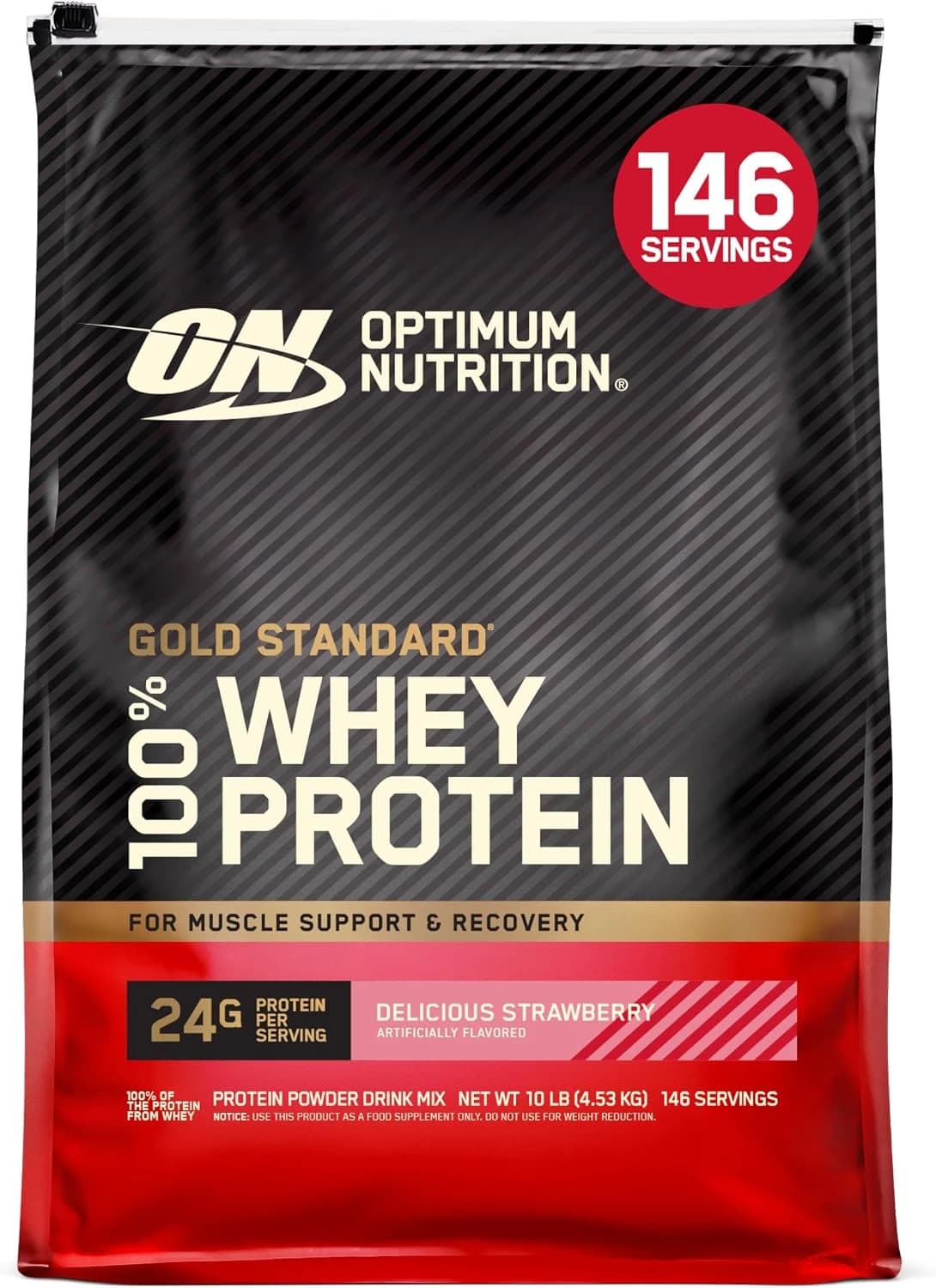
Optimum Nutrition Gold Standard 100% Whey
The best-selling whey protein in the UK, reviewed against what protein research actually shows. A fully disclosed 24 g serving and three years of daily use behind it — but the price, the testing claim and the question of whether you need it at all are worth settling first.
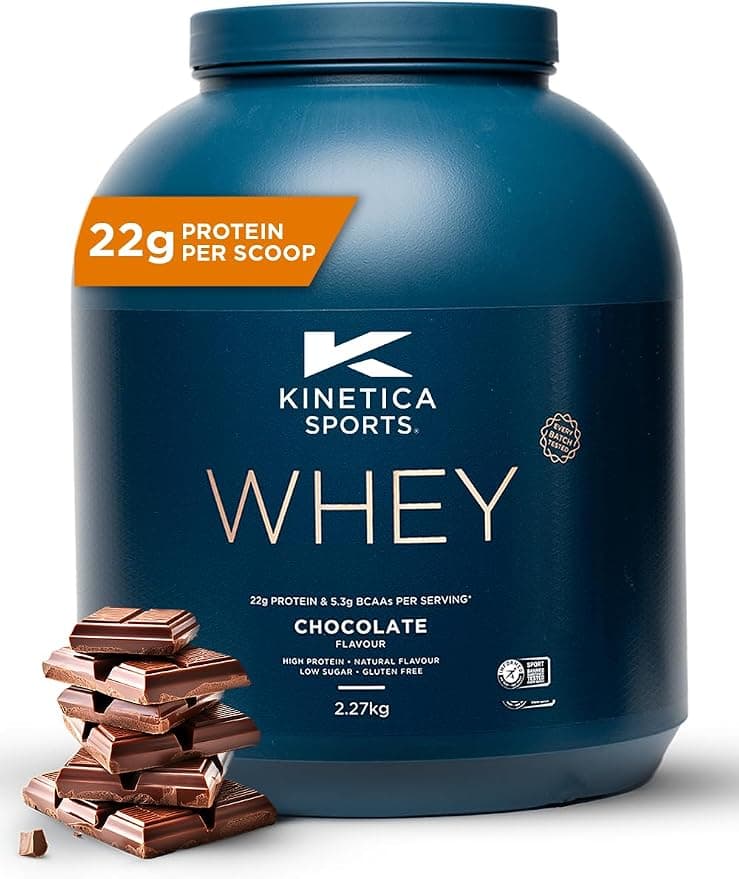
Kinetica Whey Protein
The most completely labelled whey we have looked at, and the one that makes the banned-substance claim the big brands only half-make. It publishes every macro and all nineteen amino acids per scoop — and charges about what the value brands do.
Affiliate links: we may earn a commission at no extra cost to you. Prices and availability change — check the seller before buying.
Where to buy
Sources and shopping optionsYour questions, answered.
Is Myprotein Impact Whey good value?
It is the value benchmark. On 22 September 2026 the brand listed 900 g of 30 servings at £32.99, which it states as £1.10 per serving, or about £5.00 per 100 g of protein at the 22 g the Original version provides. The useful way to use this page is to work out the same figure for any tub you are considering and see what the difference buys.
Why does the protein figure keep changing?
Because it varies by flavour and format. The page leads with “up to 23 g”, which is the best case across more than forty flavours. Myprotein’s own comparison gives the Original version 22 g and 73 per cent protein by weight, the Milkshake version 20 g, and the +Collagen version 20 g. Read the panel for the one you are buying.
Is it Informed Sport certified?
We did not verify that. What we did verify is different: in July 2025 Myprotein’s parent company announced that Impact Whey and Impact Whey Isolate were certified under Informed Protein, an LGC programme that verifies true protein content, purity and manufacturing standards. That addresses amino acid spiking, not banned substances. If you are drug tested, look your specific batch up in the appropriate certifier’s database rather than treating one certification as the other.
Concentrate or isolate — does it matter?
It matters for lactose and protein density, not for whether the protein works. Concentrate retains more of the milk’s fat, carbohydrate and lactose, which is why this powder is 73 per cent protein by weight where an isolate-led blend is nearer 80. If whey has upset your stomach before, the isolate version is the sensible upgrade. If it has not, the cheaper powder is doing the same job.
How does it compare with Optimum Nutrition Gold Standard?
Gold Standard is an isolate-led blend at 24 g of protein per 30 g scoop, against 22 g here, and it is the better-known brand. Neither the label nor the research establishes that it produces a different result at equal protein. The comparison therefore comes down to price per 100 g of protein, taste and mixability — and on the first of those this is the product to beat.
Do I actually need protein powder?
Most UK adults do not. The British Nutrition Foundation records average intakes of 76 g a day for adults aged 19 to 64 against a Reference Nutrient Intake near 56 g for men and 45 g for women, and says plainly that most people here do not need supplemental protein. It earns its place if you are training hard and aiming at 1.2 to 2.0 g per kilogram a day, where food alone takes real planning.
Community experiences
Reader submissions open once a page is published from the editorial database. This overview is maintained in code, so there is nothing to attach a submission to yet. If you have used this product, send it through the contact page and it will be considered when submissions open.
References
- Myprotein UK product page for Impact Whey Protein, 900 g — the source of the serving count, protein figure, protein percentage, ingredient list and price quoted here, read on 22 September 2026.
- THG (July 2025). Announcement that Impact Whey and Impact Whey Isolate are certified under Informed Protein, an LGC programme verifying true protein content, purity and manufacturing standards.
- Morton et al. (2018), British Journal of Sports Medicine. Meta-analysis of protein supplementation and resistance-training gains: 49 studies, 1,863 participants, benefit plateauing near 1.6 g/kg/day.
- British Nutrition Foundation. UK Reference Nutrient Intake for protein, average UK intakes, and the statement that most UK adults do not need extra protein from supplements.
- Great Britain nutrition and health claims register — the authorised wording a protein claim on a GB label must follow.
- ASA/CAP advice on advertising food, sports supplements and associated products in the UK.
Page history
- First published. Serving count, protein figure, protein percentage, ingredient list and the £32.99 price read from the brand’s own UK page on this date. Scored 7.6 out of 10: the value mark is the highest on the site so far, and the transparency mark reflects a headline protein figure taken from the best flavour in the range and a nutrition panel we could not read in full.
- Slug changed from myprotein-impact-whey to myprotein-impact-whey-review, matching the <product>-review convention. Nothing linked to the old address outside this repository, so no redirect was needed. Outbound links on this page are now nofollow, including the citations — they are here so a figure can be checked, not to pass ranking signal to the brands and organisations the page writes about.
Keep asking good questions.
Optimum Nutrition Gold Standard 100% Whey
The best-selling whey protein in the UK, reviewed against what protein research actually shows. A fully disclosed 24 g serving and three years of daily use behind it — but the price, the testing claim and the question of whether you need it at all are worth settling first.
Kinetica Whey Protein
The most completely labelled whey we have looked at, and the one that makes the banned-substance claim the big brands only half-make. It publishes every macro and all nineteen amino acids per scoop — and charges about what the value brands do.