Sleep Revive review
Sleep Revive reviews USA: a melatonin-free sleep capsule with magnesium glycinate, valerian, L-theanine, lemon balm and rutaecarpine — every dose on the label. The calming ingredients are sensibly chosen; the “BPA and phthalate detox” story rests on rat studies. Here is what works, what does not, and who should buy it.

Our take: a well-labeled sleep formula with an overblown backstory
If you are reading Sleep Revive reviews, you know the feeling. Lying awake at 2 a.m., mind racing. Dragging yourself through the next day on coffee. Maybe you have tried melatonin and woken up groggy. Bad sleep makes everything harder — your mood, your focus, your patience with the people you love. Wanting a better night is not a small thing.
Sleep Revive is a two-capsule nightly sleep supplement from Critical Nutrition Labs, presented by fitness YouTuber Zach Zenios. It contains magnesium glycinate, valerian root, L-theanine, lemon balm and an herbal compound called rutaecarpine. There is no melatonin.
Here is our honest verdict. Sleep Revive is one of the better-built sleep supplements we have reviewed. Every ingredient has its own dose on the label, and the calming ingredients — magnesium, L-theanine, valerian and lemon balm — are the ones with real, if modest, human evidence for sleep. L-theanine is at the exact dose used in trials.
Where we push back is the story it is sold on: that BPA and phthalates “break” your body clock, and that rutaecarpine flushes them out. That part rests on animal studies. Sleep Revive scores 6.0 out of 10 on our five published criteria — one of the higher scores we give a direct-sale supplement.
This is a desk review. Nobody on our team has taken Sleep Revive. We read the full label and the sales page, and checked each ingredient against published research.
What exactly are you buying?
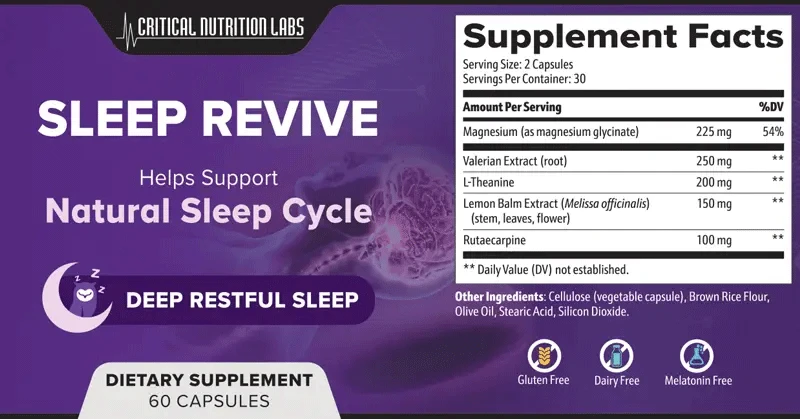
A bottle holds 60 vegetable capsules. You take two, 30 to 45 minutes before bed, so a bottle lasts a month. Per two-capsule serving, the Supplement Facts panel lists:
- Magnesium (as magnesium glycinate): 225 mg, 54% of the Daily Value
- Valerian root extract: 250 mg
- L-theanine: 200 mg
- Lemon balm extract (Melissa officinalis): 150 mg
- Rutaecarpine: 100 mg
Other ingredients are a cellulose capsule, brown rice flour, olive oil, stearic acid and silicon dioxide. The label says gluten-free, dairy-free and melatonin-free, and the brand says it is non-GMO and made in a GMP-certified facility in the USA.
The advantages: where Sleep Revive stands out
- Nothing hidden. Every ingredient has its own dose — no proprietary blend. That is rare in direct-sale sleep products.
- Melatonin-free. No morning grogginess from too much melatonin, and no hormone in the mix. A good fit for people who did not get on with melatonin.
- L-theanine at the trial dose. 200 mg is exactly what a four-week trial in healthy adults used to improve sleep quality.
- The right form of magnesium. Magnesium glycinate is gentle on the stomach and well absorbed — a better choice than the cheap magnesium oxide in many sleep products.
- A sensible calming stack. Valerian and lemon balm have been paired for sleep in trials, and both are traditional, well-tolerated herbs.
- Clear routine. Two capsules before bed, nothing else to change.
What the evidence shows
L-theanine (200 mg). An amino acid from tea. In a four-week randomized trial in healthy adults, 200 mg a night improved sleep quality and stress symptoms against placebo. The dose matches.
Magnesium glycinate (225 mg). In an eight-week trial in older adults with insomnia, 500 mg of magnesium a day improved how quickly people fell asleep and how well they slept. The evidence overall is limited and works best in people low in magnesium, which is common. 225 mg is about half the trial dose, but a sensible nightly amount.
Valerian root (250 mg). A 2006 meta-analysis in the American Journal of Medicine found valerian nearly doubled the chance of reporting better sleep — the sales page quotes this fairly. But the same review warned of possible publication bias, and later reviews have been mixed. Trials mostly used 300 to 900 mg, so 250 mg is at the low end.
Lemon balm (150 mg). A small, open-label 15-day study found most volunteers with stress and insomnia improved — the source of the sales page’s “85% of participants” figure. There was no placebo group, and it used a larger dose of a concentrated extract. 150 mg is modest.
Rutaecarpine (100 mg). This is the headline ingredient, and the weakest link. The studies showing it speeds up caffeine clearance, and changes the liver enzymes that process chemicals like BPA, were done in rats. We found no human trial of rutaecarpine for sleep, and no human study showing it removes BPA or phthalates.
The bottom line: Sleep Revive works — if it works for you — because of its calming ingredients, not because of a toxin detox. That is fine. Those ingredients are a reasonable, well-dosed combination for winding down.
The Dutch sleep story: what we would take with a pinch of salt
The sales page is built around a story: the Dutch are the world’s best sleepers because the Netherlands banned BPA and phthalates, and Americans sleep badly because they did not. It is a compelling story, but the pieces do not hold together.
- BPA and sleep. Studies have found an association between higher BPA levels and shorter sleep in US adults. An association is not proof that BPA causes poor sleep, and BPA restrictions in Europe have mostly applied to specific products, not a blanket ban.
- “97% of U.S. adults have unsafe levels.” CDC testing has found BPA is detectable in the urine of most Americans. Detectable is not the same as unsafe.
- “167% better sleep” and “sleep on demand”. We could not find any study of the Sleep Revive formula itself.
- “Only 100 left.” The pricing is presented as a limited offer. Judge it on the price you pay, not the countdown.
Cutting back on plastic food containers is a reasonable thing to do anyway. But you do not need a detox supplement to do it.
Safety
The calming ingredients in Sleep Revive are generally well tolerated, which is why it scores 6 out of 10 for safety. The caution is rutaecarpine.
- Medicines. In animal studies, rutaecarpine changes the liver enzymes (including CYP1A2) that clear caffeine and some medicines, such as theophylline, clozapine and some antidepressants. It has no human safety data at 100 mg a day. If you take any regular prescription, show the label to a pharmacist first.
- Sedatives and alcohol. Valerian, lemon balm and magnesium add to the effect of sleep medicines, anti-anxiety drugs and alcohol. Do not combine without medical advice.
- Driving. Take it only before bed, and see how you feel the next morning before driving.
- Kidney disease. Check with your doctor before taking magnesium supplements.
- Pregnancy and breastfeeding. Not studied; avoid.
Long-term insomnia, loud snoring, or stopping breathing at night (which a partner may notice) deserve a doctor’s visit. Sleep apnea is common and very treatable. The FDA does not approve supplements before sale, and no third-party test certificate is published.
Price and the 60-day guarantee
Where to buy Sleep Revive
Sleep Revive is sold only through its official website. It is not available on Amazon, Walmart, eBay or in any store, so any listing there is not genuine stock from the brand and is not covered by the money-back guarantee. To order the real product, use the official Sleep Revive website.
- 1 bottle (30 days): $59 plus $7.99 shipping — about $2.23 a day
- 3 bottles (90 days): $49 a bottle, $147 total — about $1.63 a day
- 6 bottles (180 days): $39 a bottle, $234 total, free shipping — about $1.30 a day
The sales page does not state the shipping charge on the three-bottle pack. Orders usually arrive in 5 to 7 business days.
The 60-day “Blissful Sleep” guarantee is simple as described: if you are not satisfied within 60 days of purchase, email support for a full refund. Ask support in writing whether bottles must be returned and who pays postage before you order a six-bottle pack — that is 180 days of product against a 60-day window.
Best alternatives
- NOW L-Theanine 100 mg (reviewed). Two capsules give you the same 200 mg of L-theanine for a fraction of the price.
- Dr Wilson’s Mighty Magnesium (reviewed). A magnesium supplement, if magnesium is the part you want.
- YU Sleep (reviewed). Another sleep formula; it scores much lower because its label leaves out key information.
- Sleep habits. A fixed wake-up time, morning daylight, a cool dark room and no caffeine after lunch remain the best-evidenced sleep aids — and cost nothing.
Who should skip it
Skip Sleep Revive if you take prescription medicines and have not checked with a pharmacist, especially sedatives, antidepressants, theophylline or clozapine. Skip it if you are pregnant or breastfeeding, have kidney disease, or drink alcohol most evenings. And see a doctor rather than a supplement if you snore loudly or have had insomnia for months.
Sources and shopping
Sleep Revive suits adults with ordinary trouble winding down who want a melatonin-free, fully labeled capsule with sensible doses of L-theanine and magnesium glycinate, and who are not on medicines that rutaecarpine could affect. If that is you, the six-bottle pack is the best value at about $1.30 a day.
Our commercial link is our Sleep Revive link. We earn a commission if you buy through it, at no extra cost to you. It has no bearing on the 6.0 out of 10 above, which is what our five published criteria give a transparent, sensibly dosed formula built around an unproven headline ingredient.
Ingredient analysis
L-theanine
moderate evidenceA four-week randomized trial in healthy adults found 200 mg a day improved sleep quality and stress symptoms. The dose matches.
Full evidence on L-theanineMagnesium (as magnesium glycinate)
moderate evidenceAn eight-week trial in older adults with insomnia found 500 mg a day improved sleep. Evidence is limited overall and strongest in people low in magnesium. Glycinate is a gentle, well-absorbed form.
Valerian root extract
weak evidenceA 2006 meta-analysis found it nearly doubled the chance of better sleep, with a warning about publication bias; later reviews are mixed. Trials mostly used 300 to 900 mg.
Lemon balm extract (Melissa officinalis)
weak evidenceA small, open-label 15-day study with no placebo found improvements in stress-related insomnia, using a larger dose of a concentrated extract.
Rutaecarpine
none evidenceThe headline ingredient. Its effects on caffeine clearance and on liver enzymes that process BPA were shown in rats. No human trials for sleep, and no human safety data at this dose.
Who it’s for. What to consider.
Who it may suit
US adults with everyday trouble winding down who want a melatonin-free, fully labeled nightly capsule with L-theanine at the trial dose and magnesium glycinate, and who take no regular prescription medicines.
Who should avoid it
Anyone on prescription medicines without a pharmacist’s check (especially sedatives, antidepressants, theophylline or clozapine), anyone who drinks alcohol most evenings, pregnant or breastfeeding women, people with kidney disease, and anyone with signs of sleep apnea.
What stands out
Every ingredient and dose is on the label, with no proprietary blend
Melatonin-free: no hormone and less risk of morning grogginess
L-theanine at 200 mg, the dose used in a sleep quality trial
Magnesium as glycinate, a gentle and well-absorbed form
Valerian and lemon balm, two traditional calming herbs with some human evidence
Single-bottle option available, plus a 60-day money-back guarantee
Worth considering
The headline “BPA and phthalate detox” claim for rutaecarpine comes from rat studies
Rutaecarpine has no human sleep trials or safety data at 100 mg a day
Rutaecarpine changes liver enzymes in animals, so medicine interactions are possible
Valerian (250 mg) and lemon balm (150 mg) are at or below the low end of studied doses
The ingredients cost much less bought separately
No third-party testing certificate is published
Score breakdown
Five criteria, each out of 10, averaged to the overall score. See how we score products.
How does it compare?
A closer look at the alternatives. Compare the ingredients and serving sizes, then explore the full review.
Yu Sleep
Nano-emulsified sleep drops built on a sensible idea — 0.9 mg of melatonin rather than the usual megadose — and sold on a 3,400-person study with no name, a 67 per cent weight-loss statistic with no source, and a formula containing 5-HTP with no warning of any kind attached to it.
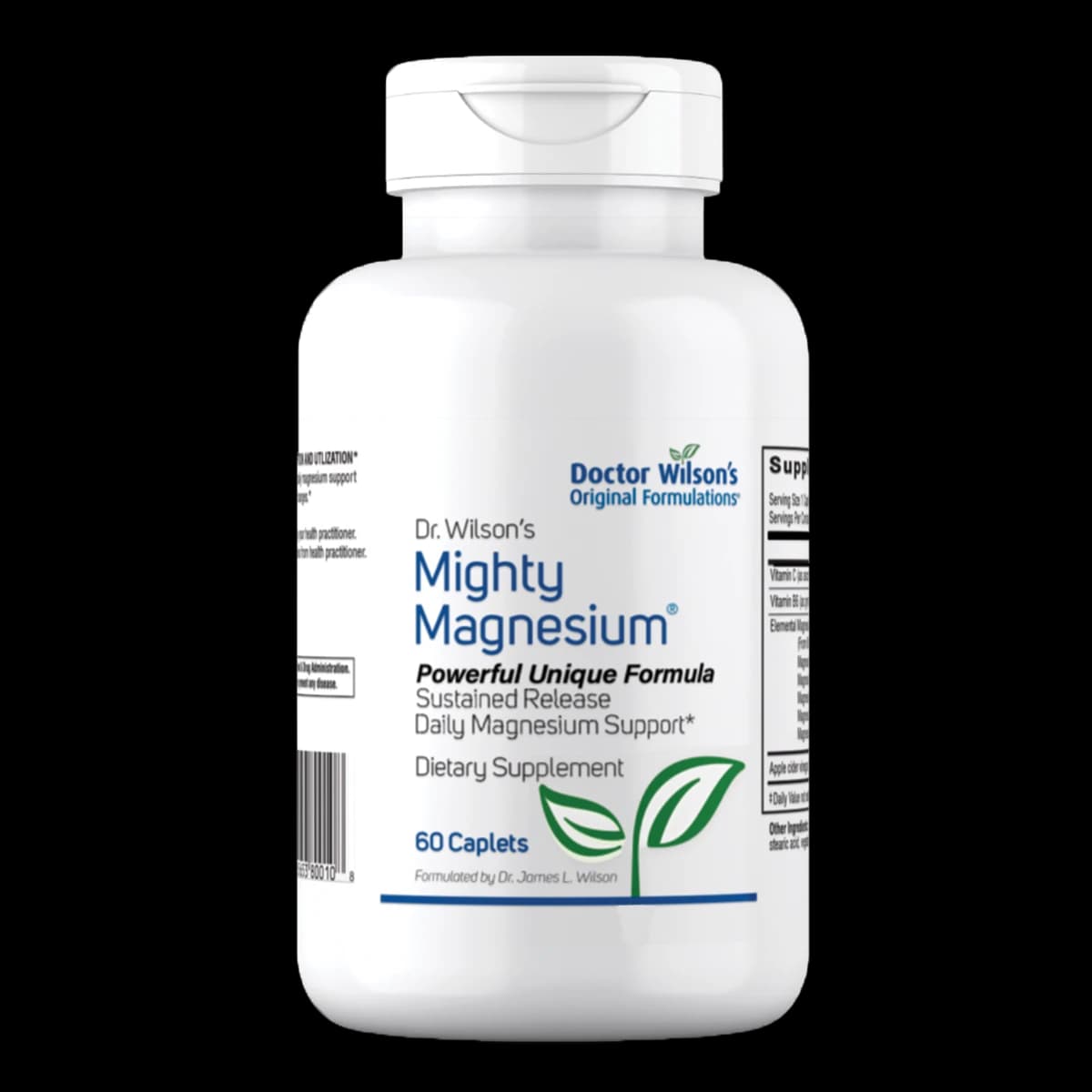
Dr. Wilson’s Mighty Magnesium
A one-a-day magnesium caplet, reviewed against the research. Each caplet gives 125 mg of magnesium from five well-absorbed forms, with vitamin B6 and vitamin C, in a sustained-release tablet. The forms are good; the dose is about half of what sleep and stress studies used, the blend hides how much of each form you get, the 15 mg of B6 is above the European safe upper limit for daily use, and it costs several times more than plain magnesium glycinate.

NOW L-Theanine 100 mg
One of the best-labelled products we have reviewed, and it is not quite the product its name describes: each capsule carries 100 mg of L-theanine alongside 250 mg of decaffeinated green tea extract — two and a half times as much of the thing not in the title.
Affiliate links: we may earn a commission at no extra cost to you. Prices and availability change — check the seller before buying.
Where to buy
Affiliate link: we may earn a commission at no extra cost to you.
Check the current priceYour questions, answered.
Does Sleep Revive work?
It may help you wind down. Its L-theanine is at the dose used in a sleep trial, and magnesium, valerian and lemon balm have modest human evidence for sleep. But the headline claim — that rutaecarpine detoxes BPA and phthalates to reset your body clock — comes from rat studies, not people.
What do Sleep Revive reviews in the USA say?
We found no independent, verifiable customer reviews. The sales page shows testimonials with first names and cities, which we could not verify. Our review is based on the full label, the sales page and published research.
What are the ingredients in Sleep Revive?
Per two capsules: magnesium (as glycinate) 225 mg, valerian root extract 250 mg, L-theanine 200 mg, lemon balm extract 150 mg and rutaecarpine 100 mg. It contains no melatonin.
Does Sleep Revive contain melatonin?
No. The label states it is melatonin-free.
Are there Sleep Revive side effects?
The calming ingredients are generally well tolerated, though some people feel drowsy the next morning. Rutaecarpine changes liver enzymes in animal studies, so check with a pharmacist if you take any prescription medicine, and do not combine it with alcohol or other sedatives.
What is rutaecarpine?
An alkaloid from the Evodia fruit, used in traditional Chinese medicine. Studies in rats show it speeds the breakdown of caffeine and changes liver enzymes. There are no human trials of rutaecarpine for sleep.
How do you take Sleep Revive?
Two capsules with water, 30 to 45 minutes before bed. One bottle lasts 30 nights.
Where can I buy Sleep Revive? Is it on Amazon or Walmart?
Sleep Revive is sold only through its official website. It is not available on Amazon, Walmart, eBay or in stores, and listings there are not covered by the money-back guarantee.
How much does Sleep Revive cost?
One bottle is $59 plus $7.99 shipping, three bottles are $147, and six bottles are $234 with free shipping. That is about $2.23, $1.63 or $1.30 a day.
Community experiences
Reader submissions open once a page is published from the editorial database. This overview is maintained in code, so there is nothing to attach a submission to yet. If you have used this product, send it through the contact page and it will be considered when submissions open.
References
- Sleep Revive official sales page and Supplement Facts label image — the source of every price, claim, ingredient, direction and guarantee term quoted here, read on 20 November 2026. sharpandlean.com
- Hidese S, et al. Effects of L-Theanine Administration on Stress-Related Symptoms and Cognitive Functions in Healthy Adults: A Randomized Controlled Trial. Nutrients. 2019;11(10):2362. pubmed.ncbi.nlm.nih.gov
- Abbasi B, et al. The effect of magnesium supplementation on primary insomnia in elderly: a double-blind placebo-controlled clinical trial. J Res Med Sci. 2012;17(12):1161-9. pubmed.ncbi.nlm.nih.gov
- Bent S, et al. Valerian for sleep: a systematic review and meta-analysis. Am J Med. 2006;119(12):1005-12. pubmed.ncbi.nlm.nih.gov
- Cases J, et al. Pilot trial of Melissa officinalis L. leaf extract in the treatment of volunteers suffering from mild-to-moderate anxiety disorders and sleep disturbances. Med J Nutrition Metab. 2011. pubmed.ncbi.nlm.nih.gov
- Time effect of rutaecarpine on caffeine pharmacokinetics in rats. Biochem Biophys Rep. 2021 — the animal study behind the “decaffeinator” claim. pubmed.ncbi.nlm.nih.gov
- Rutaecarpine effects on expression of hepatic phase-1, phase-2 metabolism and transporter genes as a basis of herb-drug interactions. J Ethnopharmacol. 2013. pubmed.ncbi.nlm.nih.gov
- Alteration of the pharmacokinetics of theophylline by rutaecarpine, an alkaloid of the medicinal herb Evodia rutaecarpa, in rats. J Pharm Pharmacol. 2005. pubmed.ncbi.nlm.nih.gov
Page history
- All product figures read from the official sales page and label image on this date. Product and label images are the brand’s own.
- First published. Scored 6.0 out of 10 against the five published criteria. Label transparency scores 9 because every ingredient has its own dose; dose scores 6 because L-theanine matches the trials and magnesium is sensible, while valerian and lemon balm are low and rutaecarpine has no human reference. Evidence and safety score 4 and 6 because the headline rutaecarpine claims rest on rat studies.
Compare it with
Side by side on the five scores, the dose against the studied amount, the cost per serving and what each label discloses.
Keep asking good questions.
Yu Sleep
Nano-emulsified sleep drops built on a sensible idea — 0.9 mg of melatonin rather than the usual megadose — and sold on a 3,400-person study with no name, a 67 per cent weight-loss statistic with no source, and a formula containing 5-HTP with no warning of any kind attached to it.
Dr. Wilson’s Mighty Magnesium
A one-a-day magnesium caplet, reviewed against the research. Each caplet gives 125 mg of magnesium from five well-absorbed forms, with vitamin B6 and vitamin C, in a sustained-release tablet. The forms are good; the dose is about half of what sleep and stress studies used, the blend hides how much of each form you get, the 15 mg of B6 is above the European safe upper limit for daily use, and it costs several times more than plain magnesium glycinate.
NOW L-Theanine 100 mg
One of the best-labelled products we have reviewed, and it is not quite the product its name describes: each capsule carries 100 mg of L-theanine alongside 250 mg of decaffeinated green tea extract — two and a half times as much of the thing not in the title.