NOW Psyllium Husk Powder review
A simple, unflavoured fibre powder with a clearly stated serving. Its appeal is the ingredient list; the real trade-offs are texture, preparation and how much you can verify about your bottle.

Our take: a straightforward fibre powder, with a texture trade-off
NOW Psyllium Husk Powder is the kind of product you might choose after getting tired of long ingredient lists. There is no flavour to pick and no complicated blend to decode. You are buying ground psyllium husk, measuring it, mixing it with enough liquid and drinking it promptly.
That simplicity is its main attraction. The part that needs more thought is whether you will enjoy—or at least tolerate—the routine. A plain fibre drink is a different proposition from a sweet orange-flavoured supplement. If texture usually puts you off, a low price will not make an unused bottle good value.
We think this is a reasonable option for someone who wants an unflavoured powder and can follow the preparation instructions. The ingredient has useful research behind it, particularly for regularity. We would be more cautious about buying it primarily for weight loss or assuming that the brand’s testing claims give you a complete laboratory report for the bottle in your hand.
This is a researched editorial review. We checked the product information, the Amazon listing, customer-feedback themes and published medical literature. We have not personally taste-tested the powder, commissioned chemical analysis or measured a reader’s health results. The product photograph is from the verified Amazon listing; the research graphic below summarises published findings.
Read the label: powder weight and fibre are different numbers
This review concerns the standard 12-ounce powder, Amazon product ID B007729DSE. It should not be confused with whole husks, capsules or NOW’s organic version. Packaging sizes and labels can change, so check the bottle you receive.
The manufacturer’s current product information lists one level tablespoon as a 9 g serving. That serving provides 7 g dietary fibre, of which 6 g is soluble and 1 g insoluble. The 12-ounce bottle is listed as approximately 38 servings. Its ingredient entry is psyllium seed husk.
These numbers answer different questions. Nine grams is the weight of the powder; seven grams is its dietary-fibre content. Using them interchangeably makes comparisons look cleaner than they really are. When another product advertises a smaller scoop, look at the fibre and psyllium amounts before deciding which is stronger or cheaper.
The label also notes possible traces of sesame and shared-facility processing. A short ingredient list is helpful, but it is not a reason to skip the allergen information. Check the current package if that matters to you.
What customers like—and what frustrates them
Across the retailer feedback we reviewed, two practical themes stood out: buyers appreciate a plain product without added sweetness, and they care a lot about how it mixes. Muscle & Strength reviewers often discussed regularity and fitting the powder into an existing routine. Walmart feedback included both appreciation for the fine powder and complaints about how quickly it thickens.
Amazon’s automated review summary also described mixed experiences with taste and dissolving, with clumping a recurring complaint. That summary is a machine-generated interpretation of customer comments, not a separate clinical finding. We did not treat it as proof that NOW is more effective than another brand.
The useful lesson is about expectations. “Unflavoured” does not mean that everybody will find the drink tasteless or pleasant. Psyllium also forms a gel, so it will not behave like a clear drink mix. Someone who wants a drink they can leave on a desk and sip slowly may find this inconvenient.
Customer experiences help identify these day-to-day frustrations. They cannot tell us what caused a change in cholesterol, whether a particular lot is free of contaminants, or whether you will get the same result. We have summarised the themes rather than turned individual testimonials into promises.
Results: what the clinical evidence actually supports
Constipation and regularity
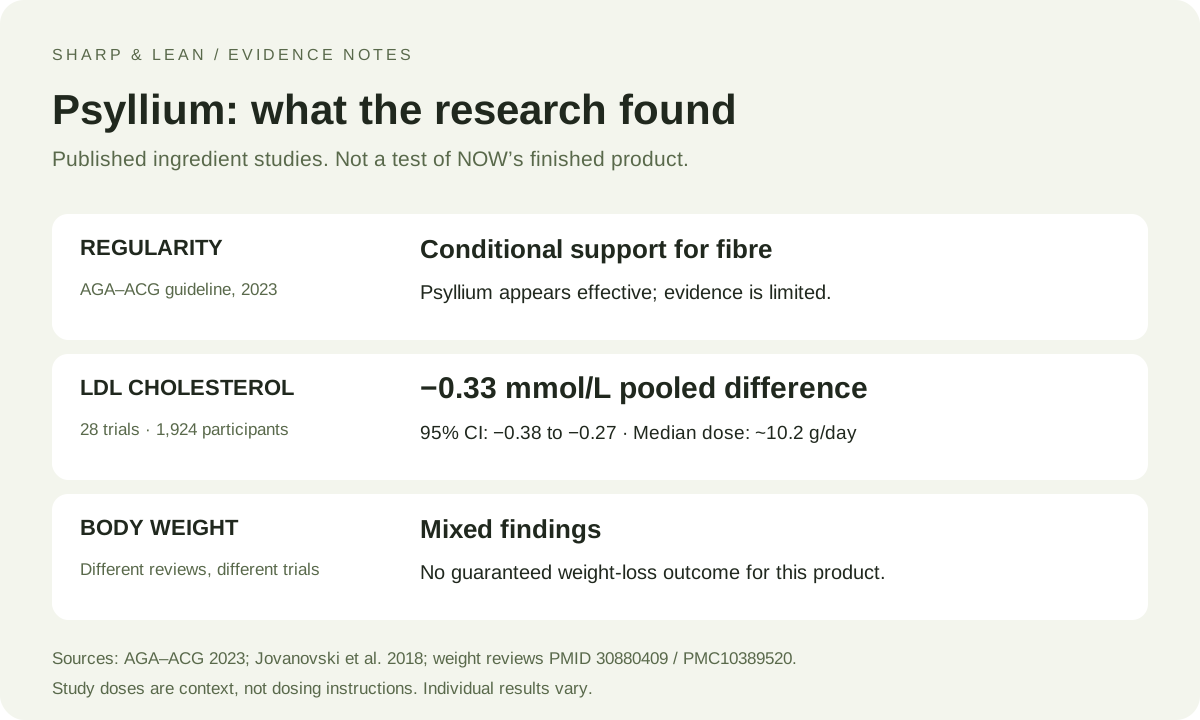
The 2023 joint AGA–ACG guideline conditionally recommends fibre supplementation for adults with chronic idiopathic constipation. Among the fibre supplements evaluated, psyllium appeared effective, although the evidence was limited and of low certainty. The guidance also stresses hydration and notes that flatulence can occur.
That is useful support for considering psyllium, but it is not a guarantee that it will solve every bowel complaint. A randomised study of 170 people found psyllium performed better than docusate on several constipation measures. The trial tested an ingredient regimen, not the NOW bottle reviewed here.
For someone shopping for fibre, the distinction is practical: there is a reason to consider the ingredient, while the choice of brand still depends on its label, preparation, cost and tolerability.
LDL cholesterol
A 2018 meta-analysis of 28 trials, involving 1,924 participants, found an average LDL-cholesterol reduction of 0.33 mmol/L with psyllium. The median daily dose was about 10.2 g, and the authors rated the LDL evidence as moderate quality.
The research graphic below shows that pooled finding. It is not a prediction for your blood test, a result from one NOW serving, or evidence that this brand outperforms another. Do not increase your servings to match a study dose without considering the label and advice from your clinician. Cholesterol management may involve more than a fibre supplement.
Weight management
Weight-loss findings are mixed. One systematic review found no significant overall change in body weight. A 2023 analysis using narrower inclusion criteria found a reduction averaging about 2.1 kg, with an average psyllium intake of 10.8 g daily over roughly 4.8 months.
Different study selections help explain the different conclusions. Neither result establishes a weight-loss outcome for NOW Psyllium Husk Powder. We would choose this product for its fibre content and practical fit, rather than treat the word “fibre” as a shortcut to a promised change on the scales.
Lab tests: what we could verify
NOW describes a company-wide testing program covering identity, potency, microorganisms, heavy metals and other contaminants. It reports using its own laboratories and outside laboratories for some verification work. Those are the manufacturer’s descriptions of its quality system, not independent measurements made for this review.
We did not obtain a lot-specific certificate of analysis for this 12-ounce psyllium powder. NOW has a public certificate lookup, but without a matching product report and lot number we cannot use it to assign lead, arsenic, cadmium or mercury results to the bottle you might buy. We have therefore not marked this product as independently batch-verified.
There are three separate questions here. Does the company operate a testing program? What did a laboratory measure in a particular lot? And does the finished product improve a health outcome? A quality-program description, a certificate of analysis and a clinical trial answer different questions.
If laboratory transparency is a deciding factor for you, ask for a report matching the lot on your bottle. Useful details include the laboratory name, sample identity, test date, methods, detection limits and numerical results with units. A generic “passed” badge gives you much less to assess. Keep the document with the lot information so you can tell which purchase it applies to.
We have not included invented test numbers or a stock laboratory photograph suggesting that we tested this product. The FDA’s consumer information also explains that dietary supplements are not approved for safety and effectiveness before sale. A manufacturing-quality claim should not be mistaken for FDA approval of a health benefit.
Mixing and use: the instructions matter
The Amazon directions we checked specify one level tablespoon mixed into at least 12 ounces of water or juice, followed by immediate consumption. That is approximately 355 mL of liquid. Read your current package for the complete instructions and do not swallow the powder dry.
Set up the drink before measuring the powder. Use a glass large enough for the stated liquid quantity and room to stir. The point is not to make the thickest mixture you can tolerate; it is to follow the preparation directions. Customer mixing tricks are not a substitute for those directions.
Some reviews discuss smoothies and baking. Those uses do not establish that a thick food mixture can replace the label’s liquid requirement when taking it as a fibre supplement. If you are unsure how to use it in your routine, ask a pharmacist rather than improvise from a testimonial.
For the first purchase, think about the routine as much as the bottle size. Will you prepare it where water is available? Do you want something unflavoured? Will you drink it promptly? Those small decisions can determine whether a straightforward product works for your day.
Side effects, medicines and reasons to get advice
Gas and bloating can make starting a fibre routine uncomfortable. Follow the package guidance and seek advice if symptoms are persistent or severe. More is not automatically better, and adding extra servings because the first day was disappointing is not a useful way to judge the product.
MedlinePlus advises discussing psyllium with a clinician if you have swallowing difficulty, intestinal blockage, rectal bleeding or relevant medical conditions. Medicines can interact with it; some require a three-hour separation. Ask a pharmacist about your own medicines instead of relying on a universal timing rule.
Difficulty breathing or swallowing after taking psyllium needs urgent help. Severe stomach pain or vomiting also warrants medical attention. MedlinePlus advises against self-treating constipation with psyllium for longer than one week unless a doctor recommends it. Persistent symptoms deserve assessment, even when the supplement is sold without a prescription.
Value: compare the cost of the routine
For the 12-ounce bottle, use approximately 38 labelled servings as your starting point. Divide the final purchase price by 38 to estimate cost per serving. For example, a hypothetical $15 bottle would cost about $0.39 per serving, before any additional charges. That is an illustration, not a current Amazon quote.
The Amazon session available during our check showed a price in Indian rupees with a separate international delivery charge. We have not converted that into a supposedly universal US price. Your destination, seller, package size and subscription choice can change the total.
Compare matching sizes and forms. Whole husks, fine powder and capsules may have different serving instructions. A bottle with hundreds of capsules is not necessarily hundreds of servings, and a large bag is only economical if it suits how you use the product.
Our value judgement is therefore deliberately practical: NOW is worth comparing if you want a simple unflavoured powder. We have not established that it is the cheapest option across every retailer. Check the current checkout total and decide whether the preparation routine is one you will maintain.
Alternatives: choose the format before the brand
ColonBroom Psyllium Fiber Powder is the more relevant alternative if you want a flavoured drink. It uses the same main fibre ingredient discussed here, but the formula and reported serving amount differ. Our review explains the label uncertainty and the saved price calculation so you can judge what the added convenience is worth to you.
NOW Glucomannan 575 mg offers capsules, but changes the ingredient to konjac-derived fibre. Its labelled serving is three capsules. It belongs in a format comparison, not as evidence that all fibre ingredients deliver the same results. Do not transfer the psyllium research to it.
Both alternatives below have real product photos and Amazon buying links. We have not declared either an overall winner: the useful choice depends on whether you prioritise a plain ingredient list, a flavoured drink or a capsule format, and whether that ingredient is appropriate for you.
Sources and shopping: what to check before ordering
Confirm the listing says standard psyllium husk powder, 12 ounces, if you want the product covered here. Check the seller, delivery cost and return conditions. When the bottle arrives, compare its ingredient panel and directions with the listing, and retain the lot number if you plan to request testing information.
Our conclusion is uncomplicated: the short ingredient list and clear serving information make NOW an easy product to evaluate. Its drawbacks are equally concrete—an unflavoured texture, preparation that needs attention and a gap between general testing claims and a batch report we can inspect. If those trade-offs work for you, it belongs on your shortlist.
Ingredient analysis
Psyllium husk powder
moderate evidenceThe manufacturer lists psyllium seed husk as the ingredient. Evidence varies by outcome: constipation guidance is conditional, LDL findings are encouraging, and weight-loss findings are mixed. This grade is not a laboratory purity score or a trial result for NOW’s finished product.
Full evidence on Psyllium huskWho it’s for. What to consider.
Who it may suit
Adults considering a plain fibre powder who are comfortable measuring, mixing and drinking it promptly. Its simple formula may appeal if you do not want added flavour or sweetness. Confirm it is appropriate for your health needs and medicines first.
Who should avoid it
Get medical advice before use with swallowing difficulty, intestinal blockage, unexplained rectal bleeding or relevant health conditions. Anyone unable to follow the liquid instructions should not improvise a dry or concentrated serving.
What stands out
One listed ingredient, with separate figures for powder weight and dietary fibre
Unflavoured format for people who prefer to avoid a sweetened fibre drink
Published psyllium research supports considering it for regularity, with limitations
Clear liquid and preparation directions on the listing checked
Worth considering
Customer feedback is mixed on texture and mixing; clumping is a recurring theme
Must be mixed with the stated liquid quantity and consumed promptly
No matching lot-specific independent lab report verified for this review
Ingredient studies do not establish brand-specific weight-loss results
How does it compare?
A closer look at the alternatives. Compare the ingredients and serving sizes, then explore the full review.
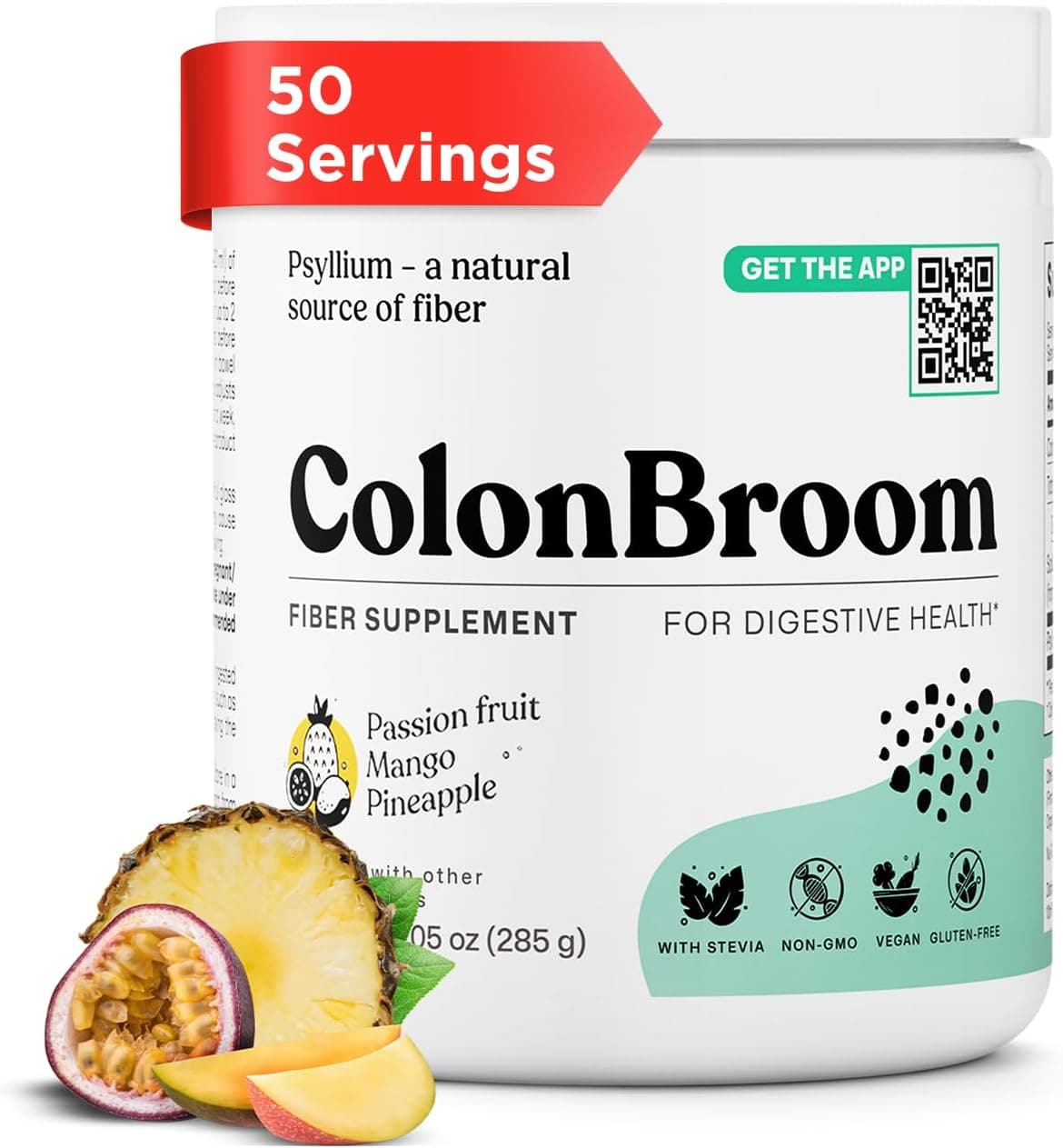
ColonBroom Psyllium Fiber Powder
ColonBroom puts a familiar fibre ingredient into a flavoured daily drink. We look at what psyllium can do, what a serving costs, and the label details to check before you buy.
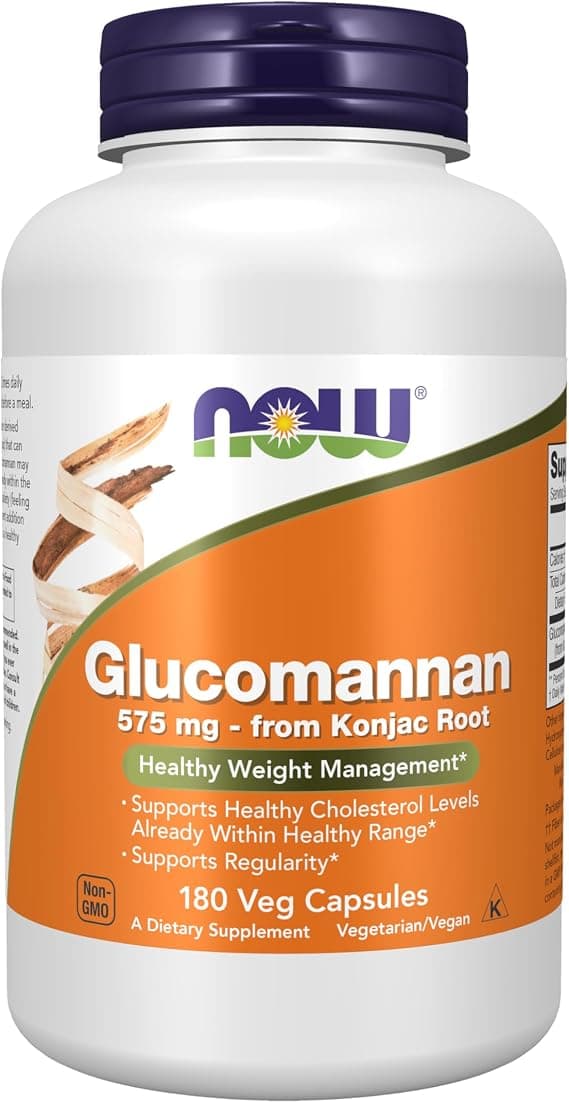
NOW Glucomannan 575 mg
An honest fibre capsule with a complete label, sold under a weight-management headline the trials do not support. The 575 mg on the front is one capsule; the serving is three, and at the label’s upper dose a 180-capsule bottle lasts a month, not six.
Affiliate links: we may earn a commission at no extra cost to you. Prices and availability change — check the seller before buying.
Where to buy
Sources and shopping optionsYour questions, answered.
Is NOW Psyllium Husk Powder the same as whole psyllium husks?
It is a more finely ground form. Do not assume the same spoonful has the same weight or that a recipe can swap the two without adjustments. Use the serving and preparation directions for the specific package.
How much fibre is in a serving?
The product information checked lists 7 g dietary fibre in a 9 g serving of powder, including 6 g soluble and 1 g insoluble fibre. The 12-ounce bottle contains approximately 38 servings. Check your current label for changes.
Does it taste good?
We have not taste-tested it. Customer feedback varies: some people appreciate the plain taste, while others dislike the texture or clumping. Unflavoured is not a promise that you will find it tasteless.
Is it independently lab tested?
NOW describes internal and external testing within its wider quality program. We did not verify a lot-specific independent certificate for this powder, so cannot publish contaminant results or label it batch-verified. Ask for a report matching your lot number.
Does it contain lead?
We do not have a verified result for a specific lot and cannot give a concentration or claim it is lead-free. A brand’s general testing statement does not supply that number. A matching laboratory report with methods, units and detection limits is needed.
Will it lower my cholesterol?
Research on psyllium shows an average LDL reduction across trials, but individual results vary. Those studies do not predict what one serving of this product will do for you. Discuss the label and your treatment goals with your clinician.
Can I use it to lose weight?
Weight-loss studies of psyllium have reached different conclusions. This review does not establish a weight-loss result for NOW powder. Its clearest practical appeal is adding fibre in a simple format.
How should I compare the price?
Divide your final bottle price by the labelled serving count, approximately 38 for the 12-ounce size checked here. Include delivery and compare the same form and size. Do not assume that a capsule count is a serving count.
Community experiences
Reader submissions open once a page is published from the editorial database. This overview is maintained in code, so there is nothing to attach a submission to yet. If you have used this product, send it through the contact page and it will be considered when submissions open.
References
- AGA–ACG (2023). Clinical practice guideline on chronic idiopathic constipation: conditional recommendation for fibre. pmc.ncbi.nlm.nih.gov
- McRorie et al. (1998). Randomised trial comparing psyllium and docusate in chronic constipation. pubmed.ncbi.nlm.nih.gov
- Jovanovski et al. (2018). Meta-analysis of 28 psyllium trials and lipid outcomes. pubmed.ncbi.nlm.nih.gov
- Systematic review of psyllium supplementation, body weight and waist circumference. pubmed.ncbi.nlm.nih.gov
- 2023 meta-analysis of psyllium for weight loss with narrower study-selection criteria. pmc.ncbi.nlm.nih.gov
- MedlinePlus. Psyllium: use, precautions and interactions. medlineplus.gov
- FDA. Consumer information on dietary supplements and premarket approval. fda.gov
Page history
- Added ColonBroom and NOW Glucomannan to the comparison cards, matching the two alternatives the text already recommends.
- Expanded after search-result, retailer, manufacturer and clinical-source research. Verified the Amazon 12-ounce product and photograph. Added a research-results graphic and laboratory-transparency discussion; no physical testing or lot-specific lab analysis performed.
- First published as a short product-label overview.
Compare it with
Side by side on the five scores, the dose against the studied amount, the cost per serving and what each label discloses.
Keep asking good questions.
ColonBroom Psyllium Fiber Powder
ColonBroom puts a familiar fibre ingredient into a flavoured daily drink. We look at what psyllium can do, what a serving costs, and the label details to check before you buy.
NOW Glucomannan 575 mg
An honest fibre capsule with a complete label, sold under a weight-management headline the trials do not support. The 575 mg on the front is one capsule; the serving is three, and at the label’s upper dose a 180-capsule bottle lasts a month, not six.