NOW Glucomannan 575 mg review
An honest fibre capsule with a complete label, sold under a weight-management headline the trials do not support. The 575 mg on the front is one capsule; the serving is three, and at the label’s upper dose a 180-capsule bottle lasts a month, not six.

Our take: a good fibre sold for the wrong reason
There is nothing hidden in this bottle. Glucomannan from konjac root, 575 mg a capsule, three capsules a serving, a vegetable capsule and four named excipients. The manufacturer gives the botanical species, the water volume, the timing before meals and a real choking warning. On label quality alone this is well above what we usually review in this category.
The problem is the headline. The product page leads with "Healthy Weight Management", and that is the claim with the weakest support behind it. A meta-analysis of eight randomised trials found no statistically significant weight difference between glucomannan and placebo, and the NIH Office of Dietary Supplements concludes it has little to no effect on weight loss. The other two claims on the same page, regularity and cholesterol, are the ones the evidence supports better. That is the reverse of the order the page puts them in.
Then the arithmetic. The front says 575 mg, but the serving is three capsules. The panel says 60 servings, but the directions allow up to two servings a day, and at that rate the 180-capsule bottle lasts 30 days. Neither number is false, but a shopper who takes them at face value will be out by a factor of three or six.
It scores 5.8. If you want a capsule fibre for cholesterol or regularity and will drink the water, it is a sensible buy at a fair price. If you are buying it to lose weight, the trials suggest you will be disappointed.
This is a desk review of a published label and the research behind the ingredient. Nobody here has taken this product.
What is in the capsule, and what the label tells you
The Supplement Facts panel lists a serving of three veg capsules providing 1,725 mg of glucomannan from konjac root (Amorphophallus konjac), 2 g of dietary fibre, 2 g of total carbohydrate and 5 calories. The bottle holds 180 capsules, which the panel counts as 60 servings.
The other ingredients are hypromellose (the cellulose capsule), hydroxypropyl cellulose, silicon dioxide, microcrystalline cellulose and stearic acid from a vegetable source. These are standard fillers and flow agents, and all of them are named. The product is marked vegan, non-GMO, kosher and halal, and made without gluten, soy, dairy, eggs or nuts. It is produced in a facility that also handles those allergens.
The directions are more specific than most: "Take 3 capsules 1 to 2 times daily with at least 8 oz. of water 30 - 45 minutes before meal." The water volume is a safety requirement, and the timing before meals is how the satiety trials were run. Both are in the right place.
The numbers on the front, and what they cost
There are two gaps between what the bottle appears to say and what it means in use.
575 mg is one capsule, not one dose. The serving is 1,725 mg. A shopper comparing this with a product that states its strength per serving is comparing one third of a dose with a whole one.
60 servings is not 60 days at the upper dose. The directions allow one or two servings a day. At one serving the bottle lasts 60 days. At two, which is six capsules and 3,450 mg a day, it lasts 30.
At the manufacturer's price of $26.99 a capsule costs 15 cents, a serving costs 45 cents, and a day costs 45 to 90 cents depending on which end of the directions you follow. That is roughly $13.50 to $27 a month. For a capsule that is a fair price. It is not the cheapest way to buy soluble fibre, because a capsule format costs more per gram than a loose powder. What you are paying for is convenience.
To be clear, NOW is not hiding anything. The serving and the servings per container are both printed where the law requires them, and the dosing range is in the directions. But the product is sold on the front of the bottle, and that is where 575 mg sits.
The evidence, claim by claim
Glucomannan is one of the few ingredients where the research is reasonably clear, and it points in different directions for the three claims on this bottle. We grade each claim on its own, and our glucomannan evidence page sets out the grades.
Weight management: weak
The mechanism is plausible. Glucomannan absorbs many times its weight in water and forms a thick gel in the stomach, which adds bulk and slows emptying. The idea is that you feel fuller and eat less. Plausible mechanisms are cheap, though, and the outcome is what counts.
A 2014 systematic review and meta-analysis by Onakpoya and colleagues in the Journal of the American College of Nutrition pooled eight randomised trials. It found a weight difference against placebo of −0.22 kg, with a confidence interval running from −0.62 to +0.19 kg. That is not statistically significant, and it is small even at the optimistic end. A 2019 randomised controlled trial in children and adolescents with overweight, published in the Journal of Pediatrics, found no effect on weight at all.
The one authority that sounds more positive is the European Food Safety Authority. It approved the claim that glucomannan "in the context of an energy-restricted diet contributes to weight loss", with conditions: at least 3 g a day, split into three 1 g doses, each taken with one or two glasses of water before a meal. Look at what that claim actually covers. It applies to people who are already cutting calories, it describes a contribution rather than a cause, and it needs a dosing schedule this bottle's directions do not follow. It supports the ingredient as a minor aid to a diet, not as a weight-management product in its own right.
Cholesterol: moderate, and the best case for buying it
This is where glucomannan does best. A 2017 meta-analysis by Ho and colleagues in the American Journal of Clinical Nutrition pooled randomised trials in adults. It found that konjac glucomannan lowered LDL cholesterol by about 0.35 mmol/L, roughly 10 per cent, and non-HDL cholesterol by about 7 per cent, at around 3 g a day. EFSA separately accepts that glucomannan contributes to normal blood cholesterol at 4 g a day.
Those are real, modest effects, much like the other viscous fibres. NOW phrases the claim carefully: it "may also help to maintain serum lipid levels already within the healthy range". That is a structure–function claim, and it deliberately avoids promising to treat high cholesterol. It should not replace treatment where treatment is indicated.
Regularity: reasonable
As a bulk-forming soluble fibre, glucomannan does what fibre does, and that fits this use best. The evidence base is thinner than for psyllium, which has guideline support for chronic constipation. Our NOW Psyllium Husk Powder review covers that comparison in detail.
Is the dose right?
Partly. The label's daily range is 1,725 to 3,450 mg. At the upper end that clears the ~3 g used in the LDL meta-analysis, so for cholesterol the dose is reasonable if you take the full two servings.
It falls short in two ways. It never reaches the 4 g EFSA ties to its cholesterol claim, because that would take seven capsules and the label stops at six. And the directions give the dose as two large doses rather than three smaller ones before each meal, which is how EFSA's weight condition was framed. You could take the same six capsules as two before each of three meals and stay within the label's daily total. That would be your adjustment, though, not the label's instruction, and it would mean opening a bottle three times a day with 8 oz of water each time.
Safety: the choking warning is not a formality
Glucomannan swells fast. If it is taken with too little liquid, it can expand in the throat or oesophagus before it reaches the stomach. This has happened: Australia has banned glucomannan in tablet form since 1985 after a run of oesophageal obstruction cases. Capsules and powders are still sold there. Capsules dissolve differently from compressed tablets, but they carry the same basic risk if taken dry.
NOW's caution is clear and prominent: "Without drinking enough liquid the product may swell in the throat, causing blockage or choking. Avoid use if you ever had esophageal narrowing or swallowing difficulties." We would add three things the label does not spell out:
- Space it away from medication. A viscous gel can slow or reduce how other medicines are absorbed. A gap of at least an hour or two is standard advice, and a pharmacist can say exactly how long for what you take.
- Take care with diabetes medication. Viscous fibres slow how fast carbohydrate is absorbed. If you use glucose-lowering drugs, raise this with your prescriber before starting.
- Start low. Bloating, wind and cramping are common in the first weeks of any fibre. Starting at one serving a day and building up is kinder than starting at six capsules.
The label restricts the product to adults and asks anyone pregnant, nursing, on medication or with a medical condition to consult a physician first.
What buyers report
The Amazon listing shows 4.2 stars from 3,918 ratings, with more than a thousand bought in the past month. For a plain fibre capsule that is a solid rating on a large sample. Marketplace ratings measure satisfaction, not efficacy. They mix delivery, price and taste with everything else, and a high rating for a product bought mainly for weight loss says nothing about whether the weight came off because of it.
Who this is actually for
It makes sense for someone who wants to add a few grams of soluble fibre a day in capsule form, whether to nudge LDL cholesterol or to help with regularity, and who will reliably drink a full glass of water with every dose. For that person it is a clean, fully disclosed product at a fair price.
It makes less sense for someone who can manage a powder. Psyllium or plain glucomannan powder delivers the same grams of fibre for less money. It makes little sense as a weight-loss product, because the pooled trials do not show one. And it is not suitable for anyone who has trouble swallowing, has had oesophageal narrowing or bowel obstruction, or tends to take tablets with a sip of water.
Sources and shopping: what to check
Before ordering, decide which dose you will actually take and divide 180 by it. At three capsules a day the bottle lasts two months. At six it lasts one. Budget from that, not from the capsule count.
If you are comparing fibre products, compare grams of fibre per day and cost per gram, not milligrams on the front or bottles per price. Our psyllium powder review and ColonBroom review go through two alternatives: a plain powder and a flavoured psyllium drink.
The Amazon button on this page is an affiliate link. It earns a commission at no extra cost to you and has not moved the 5.8 above. That score is held down by one thing above all: the product's own headline claim is the one its evidence supports least.
Ingredient analysis
Glucomannan (from konjac root)
weak evidenceA highly absorbent soluble fibre from Amorphophallus konjac that forms a gel in the stomach. The evidence differs by claim. For weight, a 2014 meta-analysis of eight RCTs found −0.22 kg against placebo, not significant, and NIH ODS concludes little to no effect. For LDL cholesterol, a 2017 AJCN meta-analysis found about a 10 per cent reduction at roughly 3 g a day. For regularity, it behaves as a bulk-forming fibre. Rated weak because the weak claim is the one this product leads with.
Full evidence on GlucomannanHypromellose, hydroxypropyl cellulose, microcrystalline cellulose, silicon dioxide, stearic acid
none evidenceThe vegetable capsule plus standard binders and flow agents. None is an active ingredient and none needs an amount. All are named on the label, which is all a reader can ask.
Full evidence on Hypromellose, microcrystalline cellulose, L-leucine and silicaWho it’s for. What to consider.
Who it may suit
Someone who wants a few grams of soluble fibre a day in capsule form — to support LDL cholesterol or regularity — who prefers capsules to powders and will reliably drink at least 8 oz of water with every dose.
Who should avoid it
Anyone with swallowing difficulty, a history of oesophageal narrowing or bowel obstruction. Anyone who takes medication and cannot space doses an hour or two apart. Anyone on glucose-lowering medication without first asking their prescriber. Anyone buying it chiefly to lose weight, since pooled trials show no significant effect.
What stands out
Complete panel: 1,725 mg glucomannan per serving, the botanical species named, every excipient listed, no proprietary blend
Directions specify water volume (at least 8 oz) and timing (30 to 45 minutes before meals), matching how the ingredient has been studied
A clear, prominent choking warning in plain language
At the upper label dose, about 3.45 g a day, it covers the ~3 g associated with a roughly 10 per cent LDL reduction in a 2017 meta-analysis
Vegan, non-GMO, kosher and halal, in a recycled-plastic bottle
Fair price for a capsule: 45 cents a serving
Worth considering
Sold under a "Healthy Weight Management" headline; a meta-analysis of eight trials found no significant weight difference against placebo
The front reads 575 mg, but that is one capsule; the serving is three
The panel says 60 servings, but at the label’s upper dose of two servings a day the bottle lasts 30 days
Never reaches the 4 g a day EFSA ties to its cholesterol claim without exceeding the label’s six-capsule maximum
Capsules cost more per gram of fibre than a loose powder
Choking risk if taken with too little liquid, and it can slow absorption of other medicines
Score breakdown
Five criteria, each out of 10, averaged to the overall score. See how we score products.
How does it compare?
A closer look at the alternatives. Compare the ingredients and serving sizes, then explore the full review.
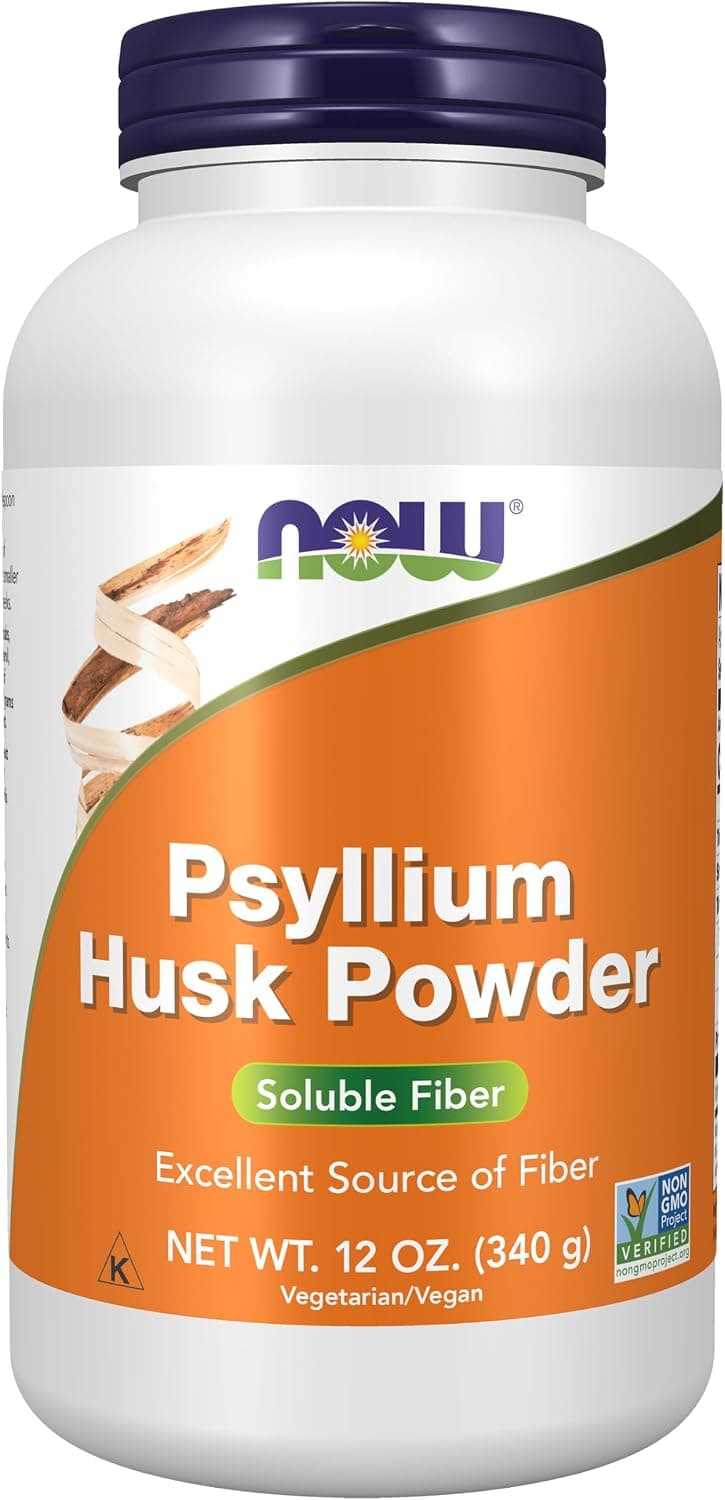
NOW Psyllium Husk Powder
A simple, unflavoured fibre powder with a clearly stated serving. Its appeal is the ingredient list; the real trade-offs are texture, preparation and how much you can verify about your bottle.
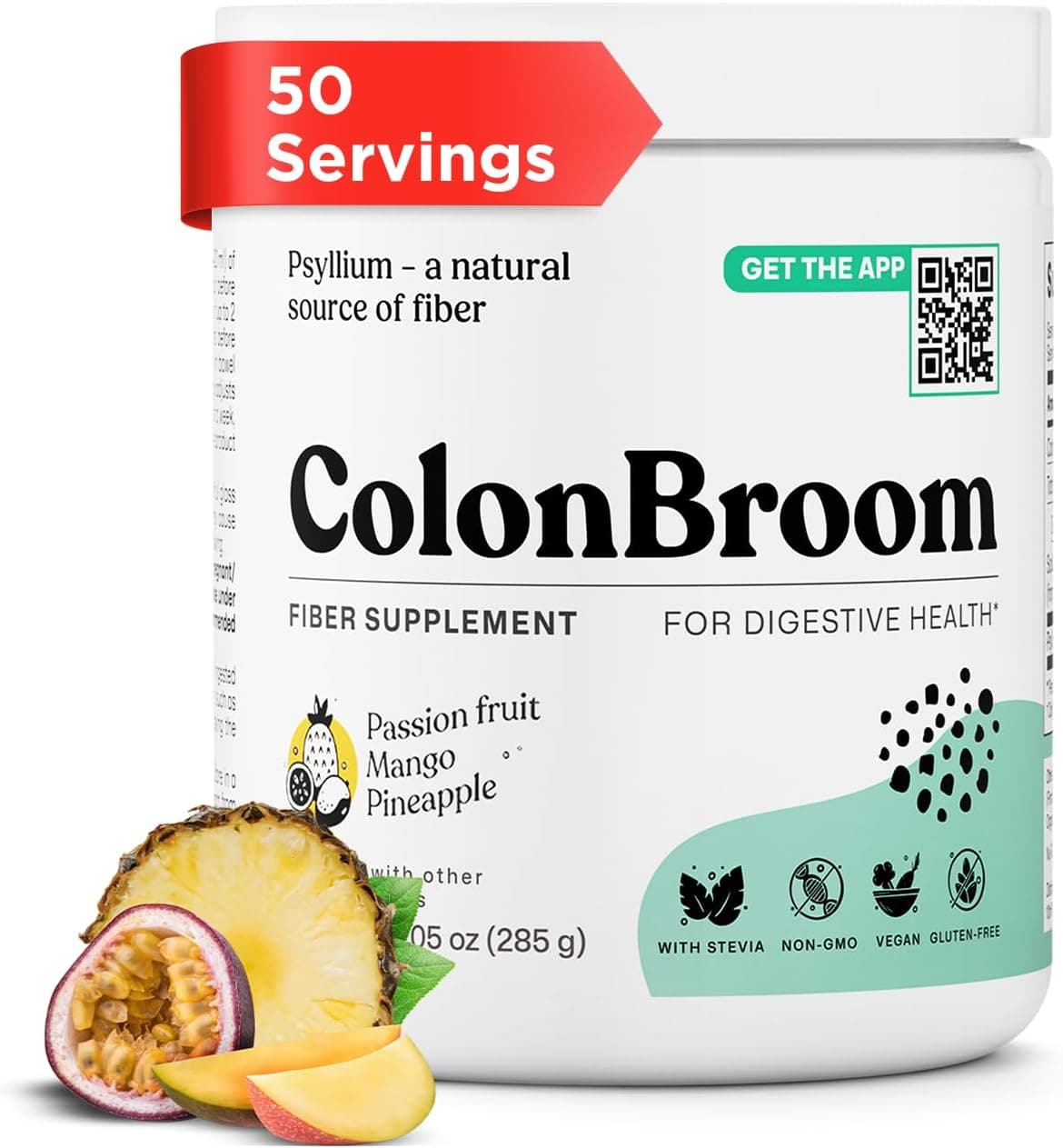
ColonBroom Psyllium Fiber Powder
ColonBroom puts a familiar fibre ingredient into a flavoured daily drink. We look at what psyllium can do, what a serving costs, and the label details to check before you buy.
Affiliate links: we may earn a commission at no extra cost to you. Prices and availability change — check the seller before buying.
Where to buy
Sources and shopping optionsYour questions, answered.
Does NOW Glucomannan help with weight loss?
Not by much, on the pooled evidence. A 2014 meta-analysis of eight randomised trials found a difference of −0.22 kg against placebo, which was not statistically significant, and the NIH Office of Dietary Supplements concludes glucomannan has little to no effect on weight loss. EFSA accepts a narrower claim: it contributes to weight loss when you are already on an energy-restricted diet and take at least 3 g a day in three doses before meals. That makes it a minor aid to a diet, not a weight-loss product.
Why does the label say 575 mg if a serving is 1,725 mg?
Because 575 mg is one capsule and the serving is three. Both figures are accurate, but only the serving tells you what you take. Always work from the Supplement Facts panel rather than the number on the front.
How long does a 180-capsule bottle last?
Between one and two months. The directions say three capsules once or twice a day. At once a day the 180 capsules last 60 days; at twice a day, 30. That puts the daily cost at 45 to 90 cents at the manufacturer’s $26.99 price.
Does it lower cholesterol?
This is its strongest use. A 2017 meta-analysis in the American Journal of Clinical Nutrition found konjac glucomannan lowered LDL cholesterol by about 10 per cent at roughly 3 g a day, which this product reaches at its upper dose of six capsules. It is a modest effect, like other viscous fibres, and not a substitute for treatment where treatment is indicated.
How much water do I need to take it with?
At least 8 oz with every three-capsule serving, as the label says, and more is better. This is a safety instruction. Glucomannan swells quickly and can block the throat or oesophagus if taken with too little liquid, which is why Australia has banned it in tablet form since 1985.
Can I take it with my medication?
Not at the same time. A viscous fibre gel can slow or reduce how other medicines are absorbed, so take it an hour or two apart and ask a pharmacist about the specific spacing for what you take. If you take glucose-lowering medication, talk to your prescriber before starting, because fibre also slows carbohydrate absorption.
Is glucomannan better than psyllium?
They do different jobs well. Both are bulk-forming soluble fibres. Psyllium has stronger guideline support for constipation, and glucomannan has good meta-analytic support for LDL cholesterol at about 3 g a day. Neither is established for weight loss. Our NOW Psyllium Husk Powder review covers the other side of the comparison.
Community experiences
Reader submissions open once a page is published from the editorial database. This overview is maintained in code, so there is nothing to attach a submission to yet. If you have used this product, send it through the contact page and it will be considered when submissions open.
References
- NOW Foods. Glucomannan 575 mg Veg Capsules — the Supplement Facts panel, other ingredients, directions, caution text and $26.99 price, read on 23 September 2026. nowfoods.com
- Onakpoya I, Posadzki P, Ernst E (2014). The efficacy of glucomannan supplementation in overweight and obesity: a systematic review and meta-analysis of randomized clinical trials. Journal of the American College of Nutrition 33(1):70-78 — eight RCTs, mean difference −0.22 kg (95% CI −0.62 to 0.19), not significant. tandfonline.com
- No effect of glucomannan on body weight reduction in children and adolescents with overweight and obesity: a randomized controlled trial. Journal of Pediatrics, 2019. jpeds.com
- Ho HVT et al. (2017). A systematic review and meta-analysis of randomized controlled trials of the effect of konjac glucomannan, a viscous soluble fiber, on LDL cholesterol and the new lipid targets non-HDL cholesterol and apolipoprotein B. American Journal of Clinical Nutrition 105(5):1239-1247 — about 3 g a day associated with roughly 10 per cent lower LDL and 7 per cent lower non-HDL cholesterol. ajcn.nutrition.org
- EU-authorised glucomannan health claims (EFSA opinions 2009-2010): weight loss in the context of an energy-restricted diet, at least 3 g a day in three 1 g doses with 1-2 glasses of water before meals; maintenance of normal blood cholesterol at 4 g a day. Summarised with its critics in trade reporting at the time. nutraingredients.com
- NIH Office of Dietary Supplements. Dietary Supplements for Weight Loss — Fact Sheet for Health Professionals, glucomannan section. ods.od.nih.gov
- Australian Competition and Consumer Commission. Glucomannan in tablet form ban — a permanent ban in force since 1985 because of the risk of oesophageal obstruction. productsafety.gov.au
- NOW Supplements Glucomannan 575 mg, 180 Veg Caps — Amazon.com listing, 4.2 stars from 3,918 ratings, read on 23 September 2026. amazon.com
Page history
- Rewritten from a label overview into a full review and scored 5.8 out of 10. The page previously recorded the per-capsule and per-serving figures without assessing the product. The panel was re-read from the manufacturer on this date and is unchanged: 1,725 mg glucomannan per three-capsule serving, 60 servings. New to the page: the one-to-two-servings-a-day directions, which make the bottle last 30 days at the upper dose rather than the 60 previously stated as the only figure; the $26.99 price and cost per day; the claim-by-claim evidence, including the cholesterol meta-analysis and the EFSA conditions; and the Australian tablet ban. The slug is deliberately unchanged, because the old address is published and linked.
- First published as a manufacturer-label overview.
Compare it with
Side by side on the five scores, the dose against the studied amount, the cost per serving and what each label discloses.
Keep asking good questions.
NOW Psyllium Husk Powder
A simple, unflavoured fibre powder with a clearly stated serving. Its appeal is the ingredient list; the real trade-offs are texture, preparation and how much you can verify about your bottle.
ColonBroom Psyllium Fiber Powder
ColonBroom puts a familiar fibre ingredient into a flavoured daily drink. We look at what psyllium can do, what a serving costs, and the label details to check before you buy.