Optimum Nutrition Essential Amino Energy review
The UK’s best-known “anytime energy” powder, reviewed against the research. The 100 mg of caffeine does what the tub says — about as much as a mug of instant coffee — but the 5 g amino acid blend is too small and too vague to add anything, and you pay several times the price of coffee for it.

Our take: a coffee’s worth of caffeine, sold as something more
Essential Amino Energy has been on gym shelves for more than a decade, and the tub makes four promises: anytime energy, improved focus, support for your amino acid intake and zero sugars. Three of those are true in a narrow sense. The one that matters — energy and focus — comes almost entirely from 100 mg of caffeine.
That caffeine is well chosen. A 100 mg dose reliably makes people more alert and better at sustaining attention, and it is modest enough that most healthy adults tolerate it well. It is also about the same amount as a mug of instant coffee, which is the comparison that decides whether this product is worth buying.
The amino acids are the part the name is built on, and the part we can find least reason to pay for. Five grams of mixed amino acids, most of them without stated amounts, is a small fraction of the protein in a normal meal, and there is no good evidence that drinking them between meals improves training, recovery or focus.
This is a desk review. We have read the published label details, UK retailer listings and the research on caffeine and amino acids. We have not drunk this product, tested its contents or run a trial. We could not open the brand’s own GB product page while writing, so the next section says where each figure came from.
What exactly are you buying?
The tub in our photo is the 270 g Fruit Fusion pack, which makes 30 servings. UK retailer listings give the directions as two level scoops (9 g) in 330 ml of cold water, taken before training, sipped during it or used as an afternoon alternative to coffee.
Each 9 g serving, according to those listings, provides:
- 5 g of amino acids, of which 2 g are branched-chain amino acids (BCAAs: leucine, isoleucine and valine)
- 100 mg of caffeine, from green tea extract, green coffee extract and natural caffeine
- 24 mg of vitamin C, 30 per cent of the reference intake
- Around 28 to 31 kcal, depending on flavour, with no sugar
A UK retailer’s transcription of the ingredient list starts with the amino acid blend — L-glutamine, L-leucine, taurine, L-arginine, L-isoleucine, L-valine, beta-alanine, L-tyrosine, L-histidine and L-lysine, with sunflower lecithin — followed by food acids (citric, malic and tartaric), flavouring, colours from beetroot, turmeric and carotenes, inulin, thickeners, anti-caking agents, green tea leaf extract, natural caffeine, the sweeteners sucralose and acesulfame K, and vitamin C.
The blend is the part the label does not explain
Only two numbers describe the 5 g blend: the total and the 2 g of BCAAs. Nothing on the listings we read says how much glutamine, taurine, arginine, beta-alanine or tyrosine you are getting. Ingredients are listed by weight, so we know glutamine is the largest and that beta-alanine, which comes after valine, must be well under a gram. Beyond that, it is guesswork — and that is the reason this page loses marks for transparency. Our guide to what a supplement label hides explains why blends are the first thing to check.
Does it deliver energy and focus?
Yes — because of the caffeine
Caffeine is one of the best-studied substances in food. The European Food Safety Authority’s 2011 assessment found good evidence that 75 mg of caffeine increases alertness and attention, and 100 mg per serving clears that bar. If you feel more awake and focused after a serving, that is real, and it is the caffeine doing it.
What caffeine does not do at this dose is add much to exercise performance. The International Society of Sports Nutrition’s 2021 position stand concluded that caffeine consistently improves performance at 3 to 6 mg per kilogram of body weight — 240 to 480 mg for an 80 kg adult. At 100 mg, Amino Energy is a “feel more awake” dose rather than a “lift more” dose. That is not a criticism, as long as you know which one you are buying.
The amino acids add little
The case for drinking BCAAs is that leucine switches on muscle protein synthesis. But building muscle needs all the essential amino acids, not just three, and a 2017 review by Robert Wolfe found no human studies showing that BCAAs taken on their own produce a meaningful rise in muscle protein synthesis. Two grams of BCAAs is less than you get from a pint of milk or a small chicken breast. If you eat enough protein across the day — our protein calculator will work out your figure — the extra amino acids here are redundant.
The rest of the blend is too small or too vague to assess. Glutamine has little evidence of benefit for healthy people who train. Beta-alanine does work for high-intensity efforts lasting one to four minutes, but only at 3.2 to 6.4 g a day taken for several weeks, and this blend contains a small fraction of that. Tyrosine and taurine have been studied in doses of grams, and nothing on the label suggests you are getting those amounts.
What the GB label is allowed to say
Health claims on food supplements in Great Britain must come from the nutrition and health claims register. UK listings tie the “energy” wording to vitamin C, which is authorised to contribute to normal energy-yielding metabolism and the reduction of tiredness and fatigue when a serving supplies at least 15 per cent of the reference intake. At 24 mg, or 30 per cent, this product qualifies.
That claim is legal, and it is not why you feel alert. Almost everyone in the UK already gets enough vitamin C from food, and 24 mg would not change how awake you feel. We could not read what the asterisk against “improved focus” refers to on the GB tub. The honest explanation for any focus effect is the caffeine.
Caffeine: how much is too much?
A serving contains 100 mg. For context, the Food Standards Agency puts a mug of instant coffee at about 100 mg, a mug of filter coffee at about 140 mg and a can of cola at about 40 mg. EFSA’s 2015 safety opinion found that healthy adults can take up to 400 mg a day, and single doses of up to 200 mg, without safety concerns; for pregnancy and breastfeeding, the limit is 200 mg a day.
The risk with an “anytime” product is stacking. Two servings, two coffees and a pre-workout can take you past 400 mg without much effort. Caffeine also lingers — its half-life in adults is typically around five hours — so a serving at 5pm can still be affecting your sleep at bedtime. If your evening training session is followed by poor sleep, this is the first thing to cut.
Because the made-up drink contains more than 150 mg of caffeine per litre, the label must carry a high-caffeine warning, and UK listings repeat that it is not recommended for children or pregnant women. The same care applies to anyone breastfeeding, and to people with heart rhythm problems, high blood pressure, anxiety or panic disorder, who should check with their GP before using caffeine products regularly.
Third-party testing: what the brand does and does not claim
This matters mainly if you compete under anti-doping rules. As we set out in our Micronised Creatine review, Optimum Nutrition’s customer-service page on Informed Sport names only three products as Informed Sport registered: Gold Standard 100% Whey England Rugby, Gold Standard 100% Plant and the Optimum Bar. Amino Energy is not among them.
Caffeine itself is not a banned substance under the current World Anti-Doping Agency list, but a multi-ingredient powder is exactly the kind of product where contamination has caused positive tests. If you are drug-tested, buy a batch-tested product you can look up in the certifier’s database.
Price: what does a serving cost?
Search listings for UK retailers on 28 September 2026 showed the 270 g Fruit Fusion tub at £19.75 at one sports-nutrition retailer and £26.83 at another, against a quoted recommended retail price of £32.00. A price comparison site listed a lowest price of £8.99; that is far below every other listing we saw, so check the seller, stock and best-before date before relying on it. We read these prices from search listings rather than taking an order through checkout.
At £19.75 to £26.83, a serving costs roughly 66p to 89p. A mug of instant coffee with a similar 100 mg of caffeine costs a few pence to make at home. Put another way, most of what you pay for is the flavour, the convenience of a cold drink and the amino acids — and we do not think the amino acids do anything useful at this dose.
That can still be a fair trade. If you do not like coffee, want something cold during a session or want to avoid a sugary energy drink, Amino Energy is a sugar-free option with a sensible caffeine dose. Just price it against what it replaces.
Who should skip it, and what to watch for
Skip it if you are under 18, pregnant or breastfeeding, sensitive to caffeine, or already drinking several coffees or energy drinks a day. Anyone with a heart condition, high blood pressure or an anxiety disorder, or taking medicines that interact with caffeine, should ask a GP or pharmacist first.
The sweeteners are sucralose and acesulfame K, both approved for use in the UK. Some people find large amounts of sweetened drinks upset their stomach, and the inulin in the formula can cause wind in sensitive people. The colours are from beetroot, turmeric and carotenes rather than synthetic dyes.
Our green tea extract page covers the rare liver problems linked to high-dose extract supplements. The amount here is not stated, and in a 100 mg caffeine drink it is very unlikely to be in that range, but it is worth knowing if you also take a green tea fat burner.
Food supplements sold in Great Britain are not approved by a regulator for safety or effectiveness before sale, so the label is the manufacturer’s responsibility rather than a regulator’s endorsement.
Amino Energy, coffee, or nothing?
If what you want is to feel more alert, a mug of coffee or tea delivers the same active ingredient for far less. If you want caffeine with fewer jitters, some research suggests pairing it with L-theanine, which occurs naturally in tea; our L-theanine page sets out the evidence.
If what you want is better training, the evidence points elsewhere: enough protein from food or a whey protein, and creatine, which has a much stronger evidence base than any amino acid drink. A larger caffeine dose of 3 to 6 mg per kilogram before training does improve performance for many people, but it is a dose to build up to cautiously, not one to reach with several scoops of this.
And if you mostly drink Amino Energy because you like it — a cold, fruit-flavoured, sugar-free drink with a gentle lift — that is a reasonable reason to buy it, as long as you know that is what you are paying for.
Best alternatives
The ones we have fully reviewed are linked, and appear in the comparison cards below this article. The others we name for comparison only: we have not reviewed them in full, so do not read their inclusion as a recommendation.
- A mug of coffee or tea — the best alternative for most people. A mug of instant coffee has about the same 100 mg of caffeine for a few pence, and tea brings its own L-theanine.
- NOW L-Theanine 100 mg (reviewed) — for anyone who finds caffeine makes them jittery, pairing a coffee with L-theanine is the combination with the best evidence for calm focus. Our review explains what else is in the capsule.
- Plain caffeine tablets (not yet reviewed) — the cheapest measured dose of caffeine, useful if you want an exact amount before training without sweeteners or flavourings. Start low and count every other source of caffeine that day.
- Optimum Nutrition Micronised Creatine (reviewed) — if you bought Amino Energy hoping to train better, creatine has far stronger evidence for strength and power than any amino acid drink.
Sources and shopping: our UK buying checklist
Before you order, check the flavour and tub size, the delivered price and the seller. Divide the price by 30 to get the cost per serving, and compare it with what you would otherwise drink. Counterfeit sports nutrition is a documented problem on marketplaces, and a verifiable seller is the simplest protection. Be wary of listings far below the going rate, which can be short-dated stock.
When the tub arrives, check that the seal is intact, that the label is in English with a GB or EU address for the responsible business, and that the batch code and best-before date are legible. Read the caffeine figure on the panel, and add it to everything else you drink that day.
Our commercial link for Optimum Nutrition in the UK is our UK Optimum Nutrition link. It earns us a commission at no extra cost to you, and it has no influence on the score above — which is a 5.4, earned by a sensible caffeine dose and held back by an undisclosed amino blend and a price many times that of coffee.
The fair summary is this. Amino Energy gives you a mug of coffee’s worth of caffeine in a sugar-free fruit drink, and the caffeine works. The amino acids are what the name sells, and they are the part we would not pay for.
Ingredient analysis
The active ingredient for energy and focus. Good evidence that 75 mg or more improves alertness and attention. Performance benefits are consistent at 3–6 mg per kg of body weight, well above this dose. EFSA considers up to 400 mg a day safe for healthy adults.
Full evidence on Green tea extractBranched-chain amino acids (L-leucine, L-isoleucine, L-valine)
weak evidenceLeucine signals muscle protein synthesis, but building muscle needs all the essential amino acids. No human studies show BCAAs alone meaningfully increase muscle protein synthesis. Redundant for anyone eating enough protein.
Rest of the amino blend (L-glutamine, taurine, L-arginine, beta-alanine, L-tyrosine, L-histidine, L-lysine)
weak evidenceBeta-alanine works at 3.2–6.4 g a day over weeks; this blend holds a small fraction of that. Glutamine, taurine and tyrosine lack good evidence at small doses in healthy adults. Without amounts, there is nothing to assess.
Vitamin C
moderate evidenceCarries the authorised claim for normal energy-yielding metabolism. Most people in the UK already get enough vitamin C from food, so it adds little in practice.
Who it’s for. What to consider.
Who it may suit
A healthy adult who wants a modest caffeine lift in a cold, sugar-free drink instead of coffee or a sugary energy drink, keeps total daily caffeine in view, and accepts paying a premium for flavour and convenience.
Who should avoid it
Anyone under 18, pregnant or breastfeeding. People sensitive to caffeine or who already take several caffeinated drinks a day. Anyone with a heart condition, high blood pressure or an anxiety disorder without checking with a GP. Anyone training late in the evening who sleeps badly. Competing athletes who need a batch-certified product.
What stands out
100 mg of caffeine per serving, a well-evidenced dose for alertness and attention
A modest dose that is easier to fit within the 400 mg daily limit than most pre-workouts
No sugar and around 30 kcal per serving
Colours from beetroot, turmeric and carotenes rather than synthetic dyes
Carries a clear high-caffeine warning
Worth considering
The 5 g amino blend gives individual amounts only for the 2 g of BCAAs
No good evidence that BCAAs or the rest of the blend add anything for people who eat enough protein
About 66p to 89p a serving, against a few pence for a mug of coffee with the same caffeine
Below the 3–6 mg/kg caffeine dose shown to improve exercise performance
“Anytime” use makes it easy to stack with coffee and pre-workouts
Not one of the products Optimum Nutrition names as Informed Sport registered
Score breakdown
Five criteria, each out of 10, averaged to the overall score. See how we score products.
How does it compare?
A closer look at the alternatives. Compare the ingredients and serving sizes, then explore the full review.

NOW L-Theanine 100 mg
One of the best-labelled products we have reviewed, and it is not quite the product its name describes: each capsule carries 100 mg of L-theanine alongside 250 mg of decaffeinated green tea extract — two and a half times as much of the thing not in the title.
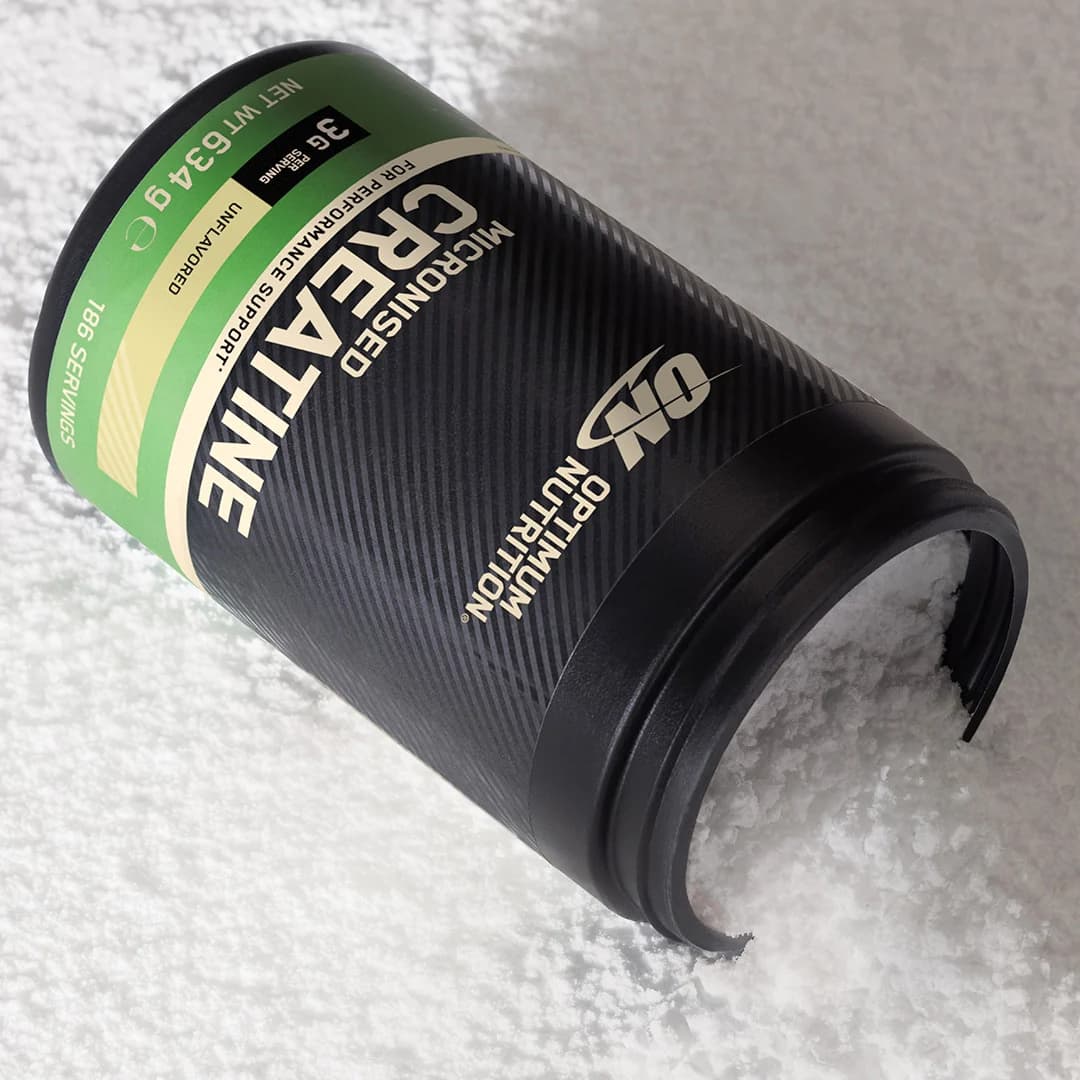
Optimum Nutrition Micronised Creatine Powder
The UK’s best-selling creatine, reviewed against what creatine research actually shows. The ingredient is about as well evidenced as supplements get and the dose is right — but the label contradicts itself on serving size, and a plain creatine can cost half as much.
Affiliate links: we may earn a commission at no extra cost to you. Prices and availability change — check the seller before buying.
Where to buy
Affiliate link: we may earn a commission at no extra cost to you.
Check the current priceYour questions, answered.
How much caffeine is in Optimum Nutrition Amino Energy?
100 mg per 9 g serving, from green tea extract, green coffee extract and natural caffeine. That is about the same as a mug of instant coffee. Healthy adults can take up to 400 mg a day from all sources, so count coffee, tea and energy drinks too.
Is Amino Energy a pre-workout?
It can be used as one, but it is a mild one. Caffeine improves exercise performance at 3 to 6 mg per kg of body weight — 240 to 480 mg for an 80 kg adult. At 100 mg, Amino Energy will make you feel more alert rather than noticeably stronger.
Is Amino Energy worth it in the UK?
Only if you value the drink itself. At about 66p to 89p a serving, you are paying several times the price of a mug of coffee for the same caffeine. The amino acids are unlikely to add anything if you eat enough protein.
Do the BCAAs in Amino Energy help build muscle?
Not in any meaningful way. Muscle needs all the essential amino acids, and a 2017 review found no human studies showing that BCAAs alone meaningfully raise muscle protein synthesis. Two grams of BCAAs is less than a pint of milk provides.
Can I drink Amino Energy every day?
Most healthy adults can, as long as total caffeine stays within 400 mg a day and it does not affect sleep. Avoid it in the late afternoon or evening if you sleep badly, and do not use it if you are pregnant, breastfeeding or under 18.
Does Amino Energy contain sugar?
No. It is sweetened with sucralose and acesulfame K and contains around 28 to 31 kcal per serving, depending on flavour. Some people find sweeteners or the added inulin upset their stomach in larger amounts.
Is Amino Energy Informed Sport certified?
Not on the brand’s own list. Optimum Nutrition names only Gold Standard 100% Whey England Rugby, Gold Standard 100% Plant and the Optimum Bar as Informed Sport registered. If you are drug-tested, use a batch-tested product you can look up.
Community experiences
Reader submissions open once a page is published from the editorial database. This overview is maintained in code, so there is nothing to attach a submission to yet. If you have used this product, send it through the contact page and it will be considered when submissions open.
References
- Discount Supplements UK listing for Optimum Nutrition Amino Energy 270 g — the source of the 5 g amino acid, 2 g BCAA and 100 mg caffeine figures, the directions and the caffeine warning, read via search on 28 September 2026. discount-supplements.co.uk
- Protein Package UK listing for Optimum Nutrition Amino Energy 270 g — the source of the ingredient order quoted here. proteinpackage.co.uk
- Fitness Superstore UK listing for Optimum Nutrition Amino Energy 270 g — the 24 mg vitamin C figure and the energy-yielding metabolism claim. fitness-superstore.co.uk
- EFSA Panel on Dietetic Products, Nutrition and Allergies (2011), EFSA Journal. Scientific opinion on caffeine and increased alertness and attention, among other claims. efsa.europa.eu
- EFSA Panel on Dietetic Products, Nutrition and Allergies (2015), EFSA Journal. Scientific opinion on the safety of caffeine: up to 400 mg a day for healthy adults and 200 mg a day in pregnancy. efsa.europa.eu
- Guest et al. (2021), Journal of the International Society of Sports Nutrition. ISSN position stand: caffeine and exercise performance, including the 3–6 mg/kg effective dose range. pubmed.ncbi.nlm.nih.gov
- Wolfe (2017), Journal of the International Society of Sports Nutrition. Branched-chain amino acids and muscle protein synthesis in humans: myth or reality? pubmed.ncbi.nlm.nih.gov
- Great Britain nutrition and health claims register — the authorised vitamin C claims for energy-yielding metabolism and the reduction of tiredness and fatigue. gov.uk
- Optimum Nutrition customer service. Which products are Informed Sport registered, and the distinction between the Informed-Sport registered Middlesbrough site and product-level certification. service.optimumnutrition.com
- PriceSpy UK comparison for Optimum Nutrition Amino Energy 270 g — the lowest listed price quoted here, read via search on 28 September 2026. pricespy.co.uk
Page history
- First published for the UK market. We could not open Optimum Nutrition’s GB product page, so the label figures, directions and warning come from UK retailer listings read via search on this date, and prices from search listings. This is a desk review: nobody on our team has used this product. No other energy drink powder on the site has a full review yet, so the comparison block shows our L-theanine and creatine reviews, and the other options are compared in a best-alternatives section.
- Scored 5.4 out of 10 against the five published product criteria. The caffeine dose is sound and the product is sugar-free. The marks lost are for an amino blend without individual amounts, amino acids with little evidence of benefit, and a cost per serving several times that of coffee.
Compare it with
Side by side on the five scores, the dose against the studied amount, the cost per serving and what each label discloses.
Keep asking good questions.
NOW L-Theanine 100 mg
One of the best-labelled products we have reviewed, and it is not quite the product its name describes: each capsule carries 100 mg of L-theanine alongside 250 mg of decaffeinated green tea extract — two and a half times as much of the thing not in the title.
Optimum Nutrition Micronised Creatine Powder
The UK’s best-selling creatine, reviewed against what creatine research actually shows. The ingredient is about as well evidenced as supplements get and the dose is right — but the label contradicts itself on serving size, and a plain creatine can cost half as much.