Optimum Nutrition Gold Standard 100% Whey review
The best-selling whey protein in the UK, reviewed against what protein research actually shows. A fully disclosed 24 g serving and three years of daily use behind it — but the price, the testing claim and the question of whether you need it at all are worth settling first.


Our take: a good whey, sold at a brand price
Most people looking at this tub are asking one of two questions. Either they have started training and want to know whether protein powder is worth buying, or they have already decided to buy some and want to know whether the famous one is better than the cheap one. Those are different questions and the packaging answers neither.
Gold Standard 100% Whey is, on the label, a straightforward product: 24 g of protein in a 30 g scoop, from a blend led by whey protein isolate, with a four-item ingredient list on the unflavoured version and no proprietary blend hiding anything. That is a better disclosure than most of the supplement aisle manages, and it is the main reason this page scores as well as it does.
What the label does not establish is that this whey works better than a supermarket own-brand whey at the same protein content. The research behind protein supplementation is research about how much protein you eat in a day, not about whose tub it came from. Our view is that you are paying for consistency, mixability, flavour range and a brand that has been made in the same Middlesbrough plant for years — real things, but not pharmacological ones.
This page is unusual for this site in one respect: one of us used this product daily for three years and says so under his own name. That section is clearly marked, and it is about what using the product is like. It is not evidence that it works.
Three years on Gold Standard: what daily use was actually like
These notes come from Pankaj Singh, who drank Gold Standard almost every training day for roughly three years while training in India, across several tubs and several flavours. They are one person’s experience of tubs bought in the Indian market. They are not a clinical result, they are not a controlled test, and the UK tub he is describing is not literally the tub he drank.
The practical verdict from that time is boring in the way a good staple should be. It dissolved in a shaker with water in about ten seconds and did not leave the gritty sediment at the bottom that cheaper powders often do. Mixed with water it was thin; with milk it was closer to a milkshake and considerably sweeter. The scoop buries itself in the powder in transit, and you will be digging for it on the first use of every tub.
Two honest complaints. First, the flavoured versions are sweet — noticeably so if you do not normally drink sweetened drinks, and that is the single thing most likely to decide whether you finish the tub. Second, the tub arrives with obvious headspace, which is normal for powder that settles but still feels like less product than the container implies.
On tolerance: he had no digestive trouble with it over three years, which is worth stating precisely because it is the most common reason people abandon a whey. It also tells you nothing about how you will react. Whey is a dairy product and lactose tolerance varies enormously between people; one person’s three good years is not a prediction about your stomach.
The limit that matters most here is the market. Supplement formulas, flavour lists, pack sizes and labelling requirements differ by country, and counterfeit sports nutrition is a documented problem in several markets including India. Three years of good experience with tubs bought there is a reason to take the brand seriously. It is not a guarantee about a specific tub you order in the UK, which is why the shopping checklist at the end of this page is about verifying what arrives.
What exactly are you buying?
The figures on this page were read from the Amazon.co.uk listing for the 900 g unflavoured tub, which states 30 servings and 24 g of protein per serving. The directions are one scoop, 30 g, mixed with 180–240 ml of water, milk or another drink. Optimum Nutrition sells the same name in several sizes and in an Isolate version with a different formula, so match the pack you are actually ordering. The photograph at the top of this page shows a large flavoured bag rather than the 900 g unflavoured tub the figures come from: same product line, different pack.
The ingredient list on that unflavoured listing is short: a protein blend from milk, made up of whey protein isolate, whey protein concentrate and hydrolysed whey protein isolate, with soy lecithin as an emulsifier. Isolate is named as the first ingredient, which means it is the largest component of the blend. Flavoured versions add cocoa or flavourings, sweeteners and usually a little salt, so the list you get depends on the flavour you choose.
One gap worth naming. The front of the listing advertises naturally occurring BCAAs and glutamine, but the ingredient panel we could read does not quantify either, and no full nutrition table appeared in readable text on the page — the detailed figures are published as an image. Those amino acids are not added ingredients; they are simply part of whey protein, and every whey on the shelf contains them. Treat them as a description of dairy protein rather than as a feature this product has and others lack.
We also could not read the brand’s own GB product page. From our connection, optimumnutrition.com redirects to the company’s India store, so the GB page, its current price and its full nutrition panel were not available to us for this update. We have therefore cited the retailer listing as the source of the label figures and said so rather than quietly presenting a figure we did not verify.
What 24 g of whey can realistically do
The evidence is strong — and it is about total protein
This is one of the few supplement claims with a genuinely solid body of evidence behind it. A 2018 systematic review and meta-analysis in the British Journal of Sports Medicine, pooling 49 studies and 1,863 participants, found that protein supplementation significantly increased gains in muscle strength and size during prolonged resistance training in healthy adults.
The detail that matters for a shopper is what that analysis concluded about dose. The benefit plateaued at roughly 1.6 g of protein per kilogram of body weight per day; intakes above that did not produce further gains in the pooled data. Total daily protein mattered more than the timing of a shake or the source of the protein. In other words, the finding supports eating enough protein. It does not identify a brand, and it does not establish that a shake beats the equivalent protein from food.
Most UK adults are not short of protein
The British Nutrition Foundation puts the UK Reference Nutrient Intake at 0.75 g of protein per kilogram of body weight per day — about 56 g a day for men and 45 g a day for women at reference body weights. Average UK intakes are 76.0 g a day for adults aged 19 to 64 and 67.0 g a day for those 65 and over, which comfortably exceeds the RNI. The same page states plainly that most people in the UK do not need extra protein from supplements.
That is the honest starting point for anyone buying their first tub. It also flags who the genuine exceptions are: the same source notes that people training hard may need more, citing American College of Sports Medicine figures of 1.2 to 2.0 g per kilogram per day. Someone at 80 kg training seriously might be aiming for 96 to 160 g of protein a day, and hitting the upper half of that from food alone takes real planning. A scoop of whey is a convenient 24 g towards it — that is the actual, unglamorous case for buying this.
What the GB label is allowed to say
A UK reader has a useful shortcut available. Under the Great Britain nutrition and health claims register, only authorised claims may appear on a food label, and the authorised protein claims are narrow: protein contributes to the growth and maintenance of muscle mass, and to the maintenance of normal bones. Anything beyond that wording — fat loss, recovery time, performance — is marketing language rather than an approved claim, and the ASA’s guidance on sports supplements covers the advertising side of the same rule.
So when the listing says the product supports muscle growth and repair, that is an authorised claim about protein, which this product certainly is. It is not a claim that has been assessed about this formula specifically, and it applies just as much to a supermarket whey, a pint of milk or a chicken breast delivering the same protein.
Third-party testing: read this part carefully if you compete
This is where reviews of Optimum Nutrition most often go wrong, so it is worth being precise. The company’s own customer-service page states that its powders, bars and supplements are manufactured at its Glanbia Performance Nutrition facility in Middlesbrough, England, and that this site is Informed-Sport registered. Site registration covers manufacturing controls, inspections and facility swabbing.
The same page then names which products are Informed Sport registered: Gold Standard 100% Whey England Rugby, Gold Standard 100% Plant and the Optimum Bar. The standard retail Gold Standard 100% Whey reviewed here is not in that list. Other Gold Standard products are described as tested through the parallel Informed Choice programme, and the page directs coaches and athletes who need batch-tested product to a separate custom LGC batch-tested range.
The practical translation: a registered site is a meaningful quality signal for an ordinary buyer, and it is not the same thing as a batch certificate for the tub in your hand. If you are subject to anti-doping testing, strict liability means the certificate is the point, and you should be buying a product whose specific batch you can look up in the certifier’s database. There is a listing for a Gold Standard 100% Whey (EU) entry in the Informed Choice directory, but that directory returned a bot-verification page when we tried to open it for this review, so we have not confirmed its current status or batch coverage ourselves and are not going to assert it.
For everyone else — the large majority of people buying whey — this is a product made in a registered British facility by a company with three decades in the category. That is a reasonable answer to the contamination question without being the strongest possible one.
It is worth seeing what the strongest answer looks like, because both alternatives on this page make a claim this tub does not. Kinetica states that every batch is batch tested under Informed Sport against the WADA list — the run your tub came from, not the building it was made in. Myprotein Impact Whey carries an LGC Informed Protein certification, which verifies that the protein content on the label is real and not inflated with free amino acids. Three products, three different claims, and only one of the three is about the powder in your kitchen.
Price: there is no single UK number, so here is the arithmetic
We are not quoting a GBP price on this page, because we could not verify one. The brand’s store redirected away from its GB site from our connection, and the retailer listing we could read priced in the wrong currency for a UK buyer. Publishing a plausible-looking figure we had not checked would be worse than publishing none.
What we can give you is the calculation that actually decides this purchase. Take the checkout price, divide by the servings on the tub, and you have cost per serving. Then divide that by 24 and multiply by 100, and you have cost per 100 g of protein — the only figure that compares one whey with another honestly. A 900 g tub at 30 servings contains about 720 g of protein; a 2.27 kg tub contains roughly two and a half times that, which is why the large tub is almost always cheaper per gram if you will realistically get through it.
Two traps in UK whey pricing. A price per kilogram of powder is not a price per kilogram of protein: a 900 g tub delivering 24 g per 30 g scoop is about 80 per cent protein by weight, and a cheaper powder at 70 per cent is not the bargain the shelf price suggests. And a flavoured tub and an unflavoured tub of the same brand can differ in both protein percentage and price, so compare the specific variant rather than the product name.
We do have one verified UK comparator to hold it against. On 22 September 2026, Myprotein listed its Impact Whey Protein at £32.99 for a 900 g tub of 30 servings, a figure the brand's own page states as £1.10 per serving. At the 22 g of protein per scoop that page gives for the Original version, that is about £5.00 per 100 g of protein, in a pack that lines up serving-for-serving with the Gold Standard tub reviewed here. Whatever Gold Standard costs on the day you look, that is the number to beat.
Kinetica Whey Protein gives a second data point from the same day: £1.19 a serving in its 2.27 kg pack and £0.98 in its 4.5 kg, which at 23 g a scoop is about £5.17 and £4.26 per 100 g of protein. That is a batch-tested product costing roughly what the value brand costs, which is worth knowing before you assume a premium buys anything.
If Gold Standard comes out meaningfully more expensive per 100 g of protein, you are paying for taste, mixability and brand confidence. Those can be worth paying for — a tub you enjoy and finish beats a cheaper one that sits in the cupboard — but you should know that is what the premium buys, because it is not buying a different physiological effect.
Who should skip it, and what to watch for
The allergens are the main issue and the label declares them in capitals: this contains milk and soy. Anyone with a cow’s milk protein allergy should not use it. Anyone who is lactose intolerant may still do fine, because whey protein isolate is low in lactose, but the blend also contains concentrate, which carries more — so tolerance is genuinely individual and a large tub is a poor way to find out. Bloating, wind or loose stools in the first week are the usual signals to stop.
Protein powder is a food, not a medicine, and for a healthy adult adding one scoop a day to an ordinary diet, the risk profile is close to that of drinking milk. That said, anyone with reduced kidney function, anyone on a protein-restricted diet for a medical reason, and anyone who is pregnant or breastfeeding should take the label to their GP, pharmacist or dietitian rather than reasoning from a product page. Children do not need protein supplements.
One regulatory point UK readers should hold on to: food supplements and sports nutrition products sold in Great Britain are not assessed and approved by a regulator for safety or effectiveness before they go on sale. Responsibility for the label sits with the business selling it. A confident claim on a tub is not a guarantee that anyone checked it, which is the reason this site reads panels rather than packaging.
Gold Standard, supermarket whey, or just food?
The nearest price comparison is Myprotein Impact Whey Protein, the UK value benchmark. Its 900 g tub holds the same 30 servings, but the scoop is whey protein concentrate at 96 per cent of a three-item formula, giving 22 g of protein and 73 per cent protein by weight against Gold Standard's 24 g and roughly 80 per cent. You are comparing a concentrate against an isolate-led blend, which is a real difference in lactose content and protein density — and a much smaller one than the price gap usually implies.
If third-party testing is what you care about, the more instructive comparison is Kinetica Whey Protein. It gives 23 g of protein per 30 g scoop from a similar milk-protein blend, and the brand states the retail product is Informed Sport approved and batch tested against the WADA list. That is the product-level claim Gold Standard's standard retail tub does not make, and for a tested athlete it is worth more than any difference in taste.
The second comparison is food, and it deserves more respect than review pages usually give it. Around 600 ml of milk, a 150 g tin of tuna plus a couple of eggs, or a large chicken breast all deliver protein in the same region as a scoop, with other nutrients attached. Powder wins on speed, portability and cost per gram of protein against most animal foods; it loses on satiety and on being an actual meal. If you are not currently short of protein, the honest recommendation is to fix the diet before buying a tub.
The third option is Gold Standard 100% Isolate, the brand’s more expensive line. It is a different formula with a higher isolate content and lower lactose, which is a reasonable choice if the standard blend upsets your stomach and an unnecessary expense if it does not. Do not buy the upgrade pre-emptively.
Sources and shopping: our UK buying checklist
Before you order, confirm four things: the exact variant and pack size, the servings and protein per serving on that specific listing, the final delivered price, and the seller. On marketplaces, check that the seller is the brand or an authorised retailer rather than an unfamiliar third party — the counterfeit problem in sports nutrition is real, and buying from a verifiable seller is the single most effective thing a shopper can do about it.
When the tub arrives, check that the seal is intact, that the label is in English with a GB or EU address for the responsible business, and that the batch code and best-before date are legible and match the packaging. If you compete, do not rely on the site-level registration described above: look the specific batch up in the certifier’s database, or buy from the batch-tested range.
Our commercial link for this product is our UK Optimum Nutrition link. It earns us a commission at no extra cost to you, and it has no influence on the score above — which is a 7, held down by a price we think is a brand premium and a testing claim that is weaker than the marketing implies, not by any doubt about what is in the tub.
The fair summary is this. Gold Standard 100% Whey is a well-made, clearly labelled, pleasant-tasting whey that does exactly what a whey should do, from a company that has been doing it for a long time. Whether you should buy it depends on two things a review cannot answer for you: whether you are actually short of protein, and what the tub costs per 100 g of protein on the day you look.
Ingredient analysis
The whole product. The evidence rating here is for protein supplementation alongside resistance training, where the pooled trial data is genuinely strong — not for this brand specifically. Isolate is listed first, so it is the largest part of the blend. Contains milk.
Full evidence on Whey protein blendNaturally occurring BCAAs
weak evidenceThese are not an added ingredient. Branched-chain amino acids are an intrinsic part of whey protein and are present in every whey on the shelf. Research on isolated BCAA supplements is a separate and much weaker literature that does not transfer to this listing.
Naturally occurring glutamine
none evidenceAlso intrinsic to dairy protein rather than added. Without a disclosed amount there is nothing to compare against research, and glutamine supplementation in healthy trained adults has not established a benefit worth paying extra for.
Soy lecithin (emulsifier)
none evidenceA processing aid that helps the powder disperse rather than an active ingredient. It is a declared allergen: the label lists soy in capitals alongside milk.
Who it’s for. What to consider.
Who it may suit
Someone already training with resistance and struggling to reach a protein target from food alone, who has compared the price per 100 g of protein against a supermarket whey and decided the taste and mixability are worth the difference.
Who should avoid it
Anyone with a cow’s milk protein allergy. Anyone whose protein intake is already adequate, which the British Nutrition Foundation says describes most UK adults. Competing athletes who need a batch-certified product, since the standard retail tub is not named among the Informed Sport registered products.
What stands out
A fully disclosed label with no proprietary blend: 24 g of protein in a 30 g scoop, with whey protein isolate named as the first ingredient
The dose matches the research — one scoop lands inside the per-meal range used in the trials, with no need for extra scoops
Made at a Glanbia Performance Nutrition site in Middlesbrough that the company states is Informed-Sport registered
Three years of near-daily use by one of our contributors without digestive trouble, and it mixes cleanly in water
Worth considering
We could not verify a current UK price, because the brand’s store redirected away from its GB site from our connection
The standard retail tub is not among the products the company names as Informed Sport registered — only the England Rugby version is
Advertised BCAA and glutamine amounts are not quantified on the ingredient panel we could read, and the full nutrition table was published as an image
A brand premium over supermarket and own-brand whey with no demonstrated difference in effect at equal protein
Flavoured versions are distinctly sweet, and the tubs arrive with noticeable headspace
Score breakdown
Five criteria, each out of 10, averaged to the overall score. See how we score products.
How does it compare?
A closer look at the alternatives. Compare the ingredients and serving sizes, then explore the full review.
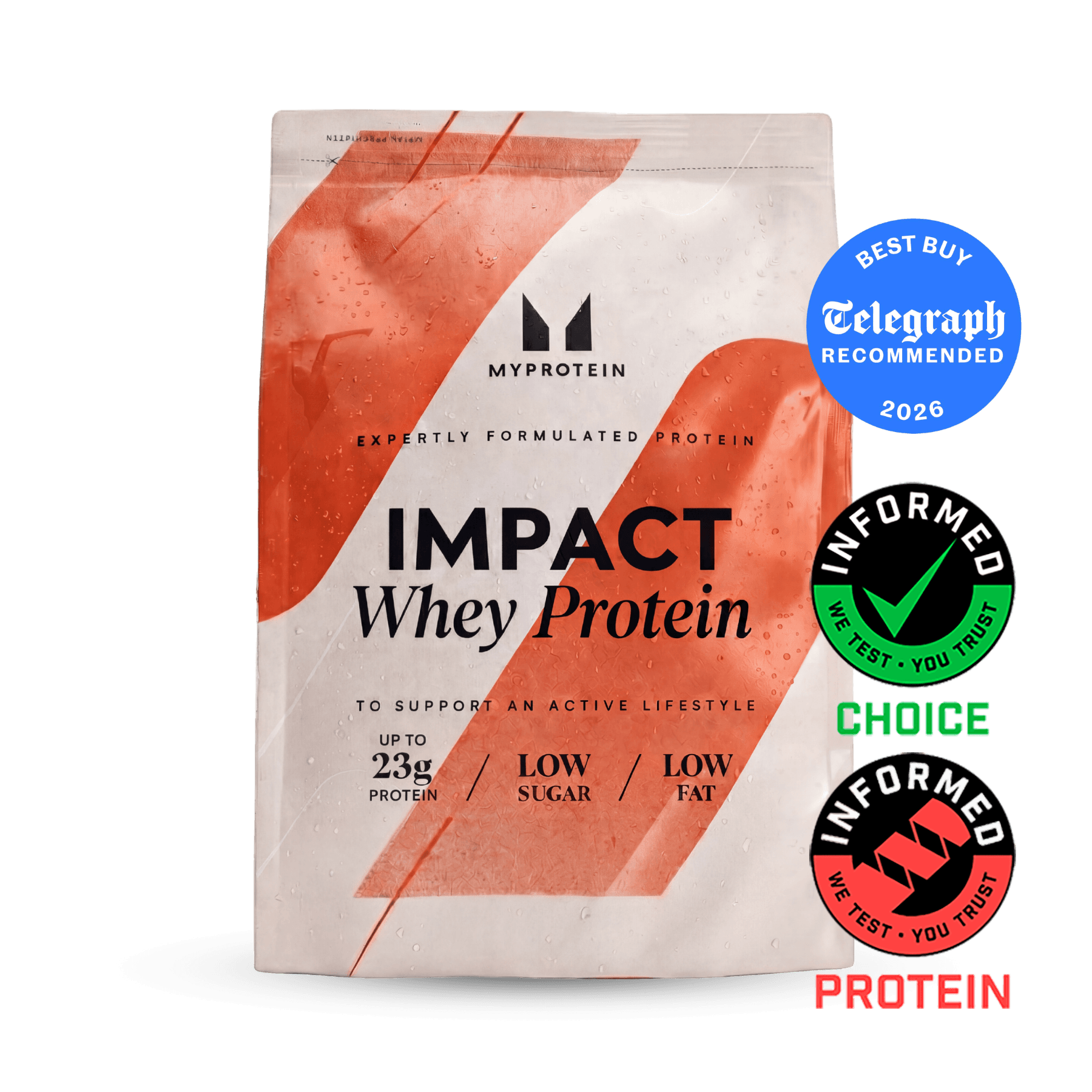
Myprotein Impact Whey Protein
The UK price benchmark for whey, and the number every other tub should be measured against. A three-item label, £1.10 a serving on the brand’s own page, and a protein-content certification most rivals do not carry — set against a headline figure that flatters the range.
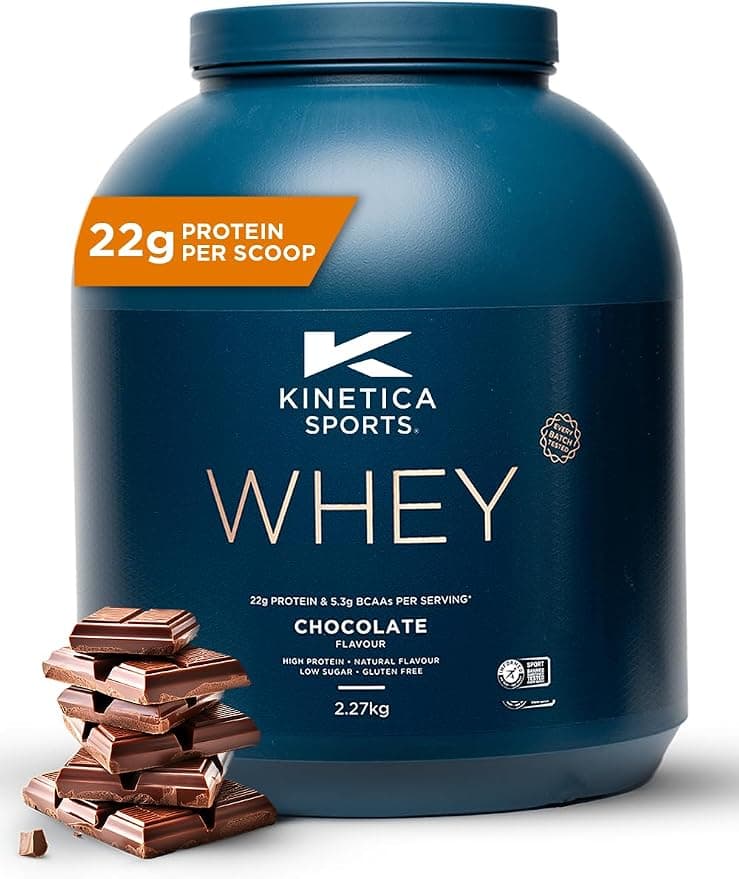
Kinetica Whey Protein
The most completely labelled whey we have looked at, and the one that makes the banned-substance claim the big brands only half-make. It publishes every macro and all nineteen amino acids per scoop — and charges about what the value brands do.
Where to buy
Affiliate link: we may earn a commission at no extra cost to you.
Check the current priceYour questions, answered.
Is Optimum Nutrition Gold Standard whey worth it in the UK?
It is a well-made, clearly labelled whey, and the label figures hold up. Whether it is worth the money depends on the price per 100 g of protein on the day you look, compared with a supermarket or own-brand whey. We found no evidence that it produces a different result at equal protein, so the premium buys taste, mixability and brand consistency rather than a stronger effect.
Do I actually need protein powder?
Probably not, if you are an average UK adult. The British Nutrition Foundation puts average intakes at 76 g a day for adults aged 19 to 64 against a Reference Nutrient Intake of about 56 g for men and 45 g for women, and states that most people here do not need extra protein from supplements. It becomes genuinely useful if you are training hard and aiming at the 1.2 to 2.0 g per kilogram range, where food alone takes real planning.
Is Gold Standard 100% Whey Informed Sport certified?
Not the standard retail tub, on the company’s own account. Optimum Nutrition states that its Middlesbrough manufacturing site is Informed-Sport registered, and separately names Gold Standard 100% Whey England Rugby, Gold Standard 100% Plant and the Optimum Bar as Informed Sport registered products. If you are drug-tested, use the batch-tested range or verify a specific batch in the certifier’s database rather than relying on site registration.
How much protein is in one scoop?
The 900 g unflavoured listing states 24 g of protein in a 30 g scoop, with 30 servings per tub. That is about 80 per cent protein by weight, which is a useful benchmark when comparing against another tub. Flavoured versions can differ slightly, so read the panel for the variant you are buying.
How do I mix it?
The label directs one 30 g scoop into 180–240 ml of water, milk or another drink. With water it is thin and mixes in seconds in a shaker; with milk it is thicker, sweeter and higher in calories. Neither is more correct — it changes the taste and the calorie count, not the protein.
Can I take it if I am lactose intolerant?
Possibly, but not certainly. Whey protein isolate is low in lactose and is the first ingredient, but the blend also contains whey protein concentrate, which carries more. Tolerance varies a great deal between individuals. If you have reacted to whey before, try the smallest pack, or consider an isolate-only product. Anyone with a cow’s milk protein allergy should avoid it entirely.
Why does this review not give a price?
Because we could not verify one. From our connection the brand’s site redirects away from its GB store, and the retailer listing we could read did not price in pounds. We would rather publish the arithmetic — price divided by servings, then converted to cost per 100 g of protein — than a GBP figure we had not actually checked.
Has this product ever been the subject of legal complaints?
In the United States, yes, historically. Optimum Nutrition settled a class action over marketing claims for the enzyme Aminogen covering purchases between 2008 and 2012, denying wrongdoing, and a separate 2015 US class action concerned empty space in the packaging. Both are American matters, both are old, and neither is a finding about the current GB formula or label. We mention them because they are on the public record, not because they bear on what is in the tub today.
Community experiences
Reader submissions open once a page is published from the editorial database. This overview is maintained in code, so there is nothing to attach a submission to yet. If you have used this product, send it through the contact page and it will be considered when submissions open.
References
- Amazon.co.uk listing for Gold Standard 100% Whey, 900 g unflavoured — the source of the serving size, protein amount, ingredient list and mixing directions quoted here, read on 22 September 2026.
- Morton et al. (2018), British Journal of Sports Medicine. Systematic review, meta-analysis and meta-regression of protein supplementation and resistance-training gains: 49 studies, 1,863 participants, benefit plateauing near 1.6 g/kg/day.
- British Nutrition Foundation. UK Reference Nutrient Intake for protein, average UK intakes, and the statement that most UK adults do not need extra protein from supplements.
- Optimum Nutrition customer service. Which products are Informed Sport registered, and the distinction between the Informed-Sport registered Middlesbrough site and product-level certification.
- Great Britain nutrition and health claims register — the authorised wording a protein claim on a GB label must follow.
- ASA/CAP advice on advertising food, sports supplements and associated products in the UK.
Page history
- First published for the UK market. Label figures read from the Amazon.co.uk listing for the 900 g unflavoured tub; the brand’s GB store and the Informed Choice product directory could not be opened from our connection, and both gaps are stated in the body rather than filled with an assumption. No GBP price is published because none was verified. Hands-on use notes supplied by Pankaj Singh, covering roughly three years of near-daily use of tubs bought in India.
- Scored 7.0 out of 10 against the five published product criteria. The marks lost are for the brand premium over equivalent whey and for a label whose full nutrition table we could only find as an image, not for any doubt about the disclosed protein content.
- Added a product photograph, and replaced the automatic same-category comparisons with two named whey alternatives: Myprotein Impact Whey for price and Kinetica Whey Protein for batch testing. The earlier comparison block offered fish oil and vitamin D, which compared nothing a reader of this page could use. Both alternatives are now full reviews in their own right, and their verified UK prices anchor the cost section here.
- Outbound links are now nofollow, including the citations and the manufacturer source. The links stay so any figure on this page can be checked; what they no longer do is pass ranking signal to the brands, retailers and organisations the page writes about. The commercial link carries sponsored as well.
Keep asking good questions.
Myprotein Impact Whey Protein
The UK price benchmark for whey, and the number every other tub should be measured against. A three-item label, £1.10 a serving on the brand’s own page, and a protein-content certification most rivals do not carry — set against a headline figure that flatters the range.
Kinetica Whey Protein
The most completely labelled whey we have looked at, and the one that makes the banned-substance claim the big brands only half-make. It publishes every macro and all nineteen amino acids per scoop — and charges about what the value brands do.