Rebaudioside A (stevia)
DWeak evidenceAt a glance
- Sweetness
- 200–400× sugarWhich is why the amount used is measured in milligrams, and why it is almost never disclosed on a panel.
- Calories and blood glucose
- NeitherSteviol glycosides are not metabolised for energy and do not raise blood glucose. This part of the pitch is accurate.
- What is actually permitted
- ≥95% pure glycosidesThe FDA does not permit whole stevia leaf or crude extracts in food, and blocks their import for that use. "Leaf extract" is an industrial purification.
- Acceptable daily intake
- 4 mg/kg body weightExpressed as steviol equivalents — about 280 mg a day for a 70 kg adult. EFSA reviewed this again in 2024 and declined to raise it.
- For weight control
- WHO advises againstA 2023 conditional recommendation covering all non-sugar sweeteners, stevia included, after a review found no long-term benefit for body fat.
- Why it is in your supplement
- PalatabilityIt makes an unpleasant powder drinkable. That is a real job, and it is not a nutritional one.
What is Rebaudioside A (stevia)?
Stevia rebaudiana is a South American shrub whose leaves contain a family of intensely sweet compounds called steviol glycosides. Rebaudioside A is the one most commonly isolated, usually alongside smaller amounts of stevioside, rebaudioside D and rebaudioside M. The important distinction, and the one the marketing works hardest to blur, is between the leaf and the molecule. What reaches a supplement is the product of extraction, filtration and crystallisation, ending at a powder that is at minimum 95 per cent steviol glycosides. The FDA has raised no objection to GRAS conclusions for those high-purity preparations, but it has been explicit that whole stevia leaf and crude stevia extracts are not GRAS, and their import for use as sweeteners is not permitted. A label reading "stevia leaf extract" therefore describes the origin of a purified compound, not a botanical preparation — which is the opposite of the impression the words create.
How it works
Steviol glycosides bind the sweet taste receptor on the tongue, the same T1R2/T1R3 heterodimer that sucrose activates, but far more tightly, which is the entire basis of the several-hundred-fold sweetness. At higher concentrations they also engage bitter receptors, which is why stevia carries the liquorice-like aftertaste that formulators spend so much effort masking. Metabolically the molecule behaves quite differently from sugar: the glycosides pass through the small intestine largely intact, are hydrolysed by colonic bacteria to the steviol backbone, absorbed, conjugated in the liver and excreted in urine. Nothing in that path yields usable energy, which is why the ingredient is non-caloric, and nothing in it involves insulin, which is why it does not raise blood glucose. Whether the same colonic step has meaningful effects on the gut microbiome is an open question rather than a settled harm.
What the research actually shows
Evidence strength varies by what is being claimed, so each use is graded separately against the published criteria rather than averaged into one reassuring letter.
For sweetness without sugar or calories
AStrong evidenceThis is the claim the ingredient actually delivers on, and it is closer to a physical property than a health effect. Steviol glycosides are 200 to 400 times sweeter than sucrose by weight, contribute no usable energy, and are permitted for this use by regulators in the US, EU and elsewhere following repeated safety evaluations. If the question is whether a sweetener can replace sugar in a formulation without adding calories, the answer is yes and it is not seriously disputed.
Sources: US Food and Drug Administration
For weight control
DWeak evidenceThe WHO issued a guideline in 2023 recommending against the use of non-sugar sweeteners — naming stevia and stevia derivatives explicitly — to control body weight or reduce the risk of noncommunicable disease. Its systematic review found no long-term benefit for body fat in adults or children, and raised the possibility of undesirable long-term associations with type 2 diabetes, cardiovascular disease and mortality. The grade is D rather than F because the picture genuinely contradicts itself: short-term trials where a sweetener displaces sugar do tend to show small reductions in weight, while longer observational data point the other way. WHO classed its own recommendation as conditional for exactly this reason, noting the observed links may be confounded by who chooses to use these products and how.
Sources: World Health Organization
For blood glucose and use in diabetes
BModerate evidenceSteviol glycosides are not metabolised to glucose and do not provoke an insulin response, so substituting them for sugar lowers the glycaemic load of whatever they are sweetening. This is the one area the WHO guideline deliberately carved out: its recommendation does not apply to people who already have diabetes and use these sweeteners to manage blood sugar. The grade sits at B rather than A because the benefit is a consequence of removing sugar rather than an effect of stevia itself, and because the long-term outcome data in this population are thinner than the mechanism suggests.
Sources: World Health Organization
Because it is natural, being derived from a leaf
FNot supportedThis is a framing rather than a testable benefit, and on the facts it does not survive. The permitted ingredient is at least 95 per cent purified steviol glycosides; the leaf itself and crude extracts of it are not GRAS in the United States and cannot be imported for use as sweeteners, because the FDA considers the toxicological data on them insufficient. So the regulator has permitted the industrially purified molecule and declined to permit the botanical the marketing evokes. That is not an argument that Reb A is unsafe — the evidence supports the opposite — but "natural because it comes from a plant" is precisely backwards as a description of why it is allowed in your drink.
Sources: US Food and Drug Administration
Effective dosage
There is no beneficial dose of a sweetener to target, only a ceiling not to cross. JECFA set an acceptable daily intake of 0 to 4 mg per kilogram of body weight per day, expressed as steviol equivalents, and EFSA reviewed the question again in 2024 — rejecting an industry request to raise the figure to 6 or 16 mg/kg on the grounds of insufficient justification. For a 70 kg adult the ADI works out at roughly 280 mg of steviol equivalents daily. Because the compound is several hundred times sweeter than sugar, the quantities needed to sweeten a drink are measured in tens of milligrams, so ordinary use sits comfortably below that ceiling. An ADI is a conservative lifetime-exposure threshold built with a hundred-fold safety factor, not a line beyond which harm begins.
Where products diverge from the research. The gap here is disclosure rather than quantity. Steviol glycosides are almost always listed among the other ingredients with no amount attached, because at these weights they are a flavouring rather than a nutrient and no regulation compels a figure. That is defensible for what the ingredient does — but it means a reader cannot reconstruct their intake against the ADI from the panel, and it means a product can lean on the word stevia in its marketing while declining to say how much is in it. If you want to know, the honest answer is that nobody outside the manufacturer does.
Safety, side effects and interactions
High-purity steviol glycosides have been through repeated regulatory evaluation and come out the other side: the FDA has not objected to GRAS conclusions for preparations of at least 95 per cent purity, and the JECFA acceptable daily intake has held at 4 mg/kg body weight as steviol equivalents through successive reviews, most recently EFSA in 2024. At the amounts used in food and supplements, no consistent pattern of harm has been established. Two caveats are worth stating plainly. The first is that the colonic bacteria which cleave steviol glycosides are themselves being acted on, and the longer-term consequences for the gut microbiome are an open research question rather than a resolved one. The second is the WHO signal: observational data associate long-term non-sugar sweetener use with type 2 diabetes, cardiovascular disease and mortality, and while WHO itself flagged confounding as a likely explanation and graded the recommendation conditional, it did not dismiss the finding. Whole stevia leaf and crude extracts are a separate matter and are not permitted in US food at all. Tolerance is generally good; the most common complaint is the bitter or liquorice-like aftertaste, which is a palatability issue rather than a safety one.
None of this is medical advice. See the medical disclaimer for what that means before you act on anything here.
Products we have covered containing Rebaudioside A (stevia)
Every label overview on this site whose Supplement Facts panel lists Rebaudioside A (stevia), with the amount each one discloses.
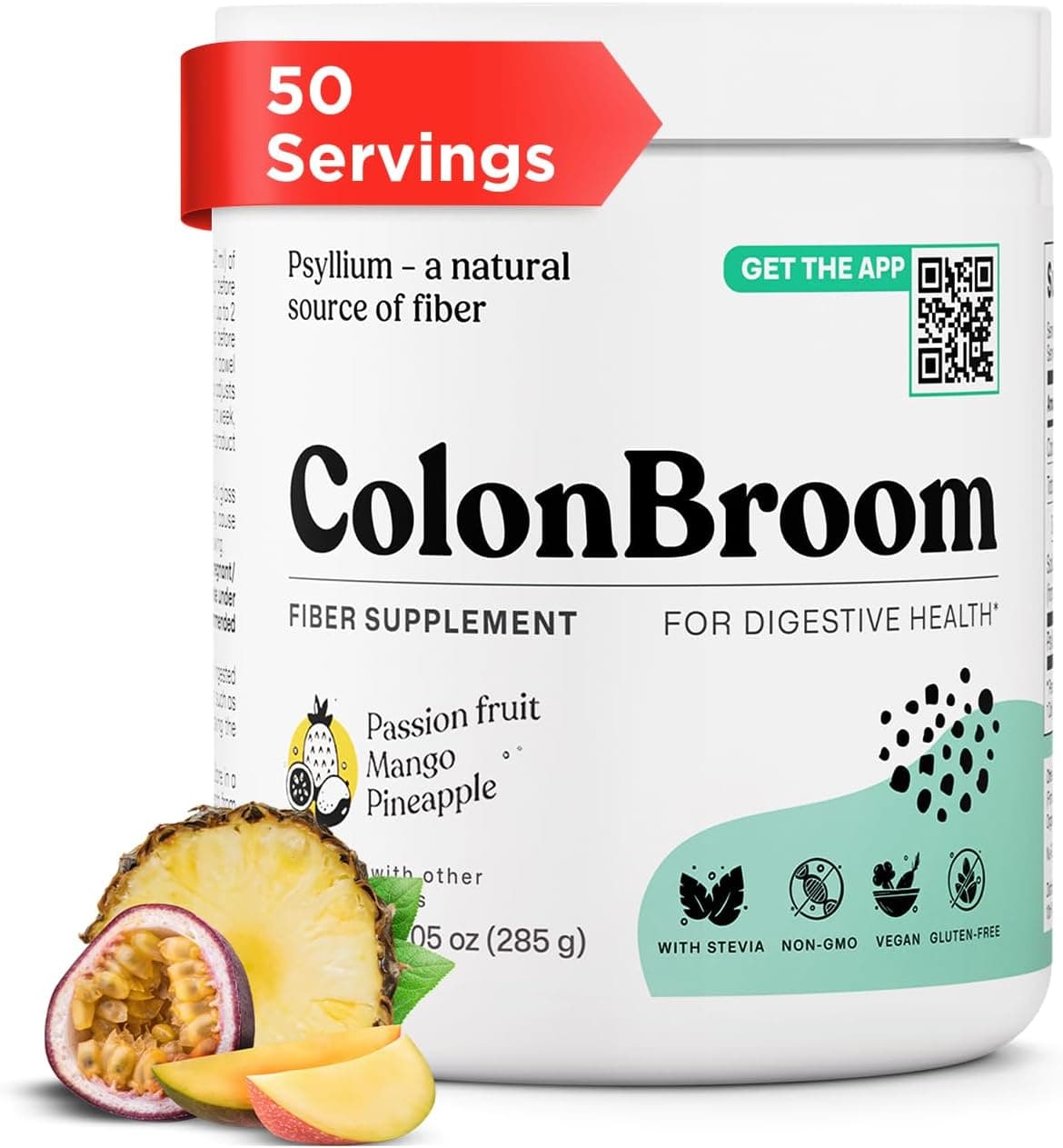
ColonBroom Psyllium Fiber Powder
ColonBroom puts a familiar fibre ingredient into a flavoured daily drink. We look at what psyllium can do, what a serving costs, and the label details to check before you buy.
Common questions
Is stevia safe?
The purified form used in food has a good safety record and has cleared repeated regulatory review. The FDA has raised no objection to GRAS conclusions for steviol glycosides of at least 95 per cent purity, and the acceptable daily intake has stayed at 4 mg per kilogram of body weight as steviol equivalents, with EFSA declining in 2024 to raise it. Whole stevia leaf and crude extracts are a different product and are not permitted in US food.
Does stevia help you lose weight?
The WHO advised against using non-sugar sweeteners, stevia included, for weight control in 2023, after a review found no long-term benefit for body fat. Replacing sugar with a sweetener can reduce calories in the short term, and trials show small effects, but longer-term data do not show the benefit persisting. WHO graded its recommendation conditional because the evidence genuinely conflicts.
Does stevia raise blood sugar or insulin?
No. Steviol glycosides are not broken down into glucose and do not trigger an insulin response. WHO specifically excluded people with existing diabetes from its recommendation against non-sugar sweeteners, on the basis that managing blood sugar is a different question from managing weight.
Is stevia leaf extract natural?
Less than the phrase suggests. What is permitted in food is at least 95 per cent purified steviol glycosides, produced by extraction and crystallisation. The whole leaf and crude extracts — the things most people picture — are not GRAS in the United States and cannot be imported for use as sweeteners. The purified molecule is the version regulators have judged safe.
How much stevia is too much?
The acceptable daily intake is 4 mg per kilogram of body weight per day as steviol equivalents, roughly 280 mg for a 70 kg adult. Because the compound is 200 to 400 times sweeter than sugar, normal use falls well below that. An ADI already includes a hundred-fold safety margin, so exceeding it occasionally is not the same as being harmed.
Why does stevia have an aftertaste?
Because steviol glycosides activate bitter taste receptors as well as sweet ones, more noticeably at higher concentrations. Rebaudioside A is used in preference to stevioside partly because it is cleaner in this respect, and formulators often blend glycosides or add salt and flavouring to mask what remains.
References
- US Food and Drug Administration. Aspartame and Other Sweeteners in Food — high-purity steviol glycosides at 95 per cent minimum purity, the 200 to 400 times sweetness figure, and the exclusion of whole stevia leaf and crude extracts from food use.
- World Health Organization. WHO advises not to use non-sugar sweeteners for weight control, 15 May 2023 — the conditional recommendation, the sweeteners named including stevia, and the exclusion of people with existing diabetes.
- EFSA Panel on Food Additives and Flavourings. Scientific opinion on steviol glycosides (E 960a–d) and the acceptable daily intake for steviol. EFSA Journal, 2024 — maintained the ADI at 4 mg/kg body weight per day and rejected a request to raise it.
Page history
- First published with per-claim evidence grades. Purity, sweetness and permitted-form details from the FDA; the weight-control position from the 2023 WHO guideline; the acceptable daily intake from the 2024 EFSA opinion.
Related ingredients
Compiled by SNL Team