Supergut Prebiotic Bars review
Supergut’s snack bar, reviewed against the research. Each bar gives 10 g of fibre and 10 g of protein for about 140 to 150 kcal with almost no sugar — a genuinely filling snack. But it is sold on GLP-1 and cravings the evidence does not support, it is sweetened with erythritol and allulose, and per gram of fibre it costs more than any other Supergut product.

Our take: a good snack wearing the wrong label
Supergut’s Prebiotic Bars pack a lot into a small bar: about 10 g of fibre and 10 g of protein for 140 to 150 kcal, with under 2 g of sugar. That combination is genuinely filling, and 10 g is about a third of a typical adult’s daily fibre target in one snack. As snack bars go, the nutrition is better than most.
The problem is how the bars are sold. Some listings call them “GLP-1 boosting” and market them for craving control. As our GLP-1 Daily Support review and Supergut guide explain, the company’s trial did not measure GLP-1 or appetite, and a small rise in GLP-1 from fibre does not reliably mean eating less. The fullness these bars give you comes from fibre and protein, which any high-fibre, high-protein food provides.
They are also the most expensive way to buy Supergut’s fibre, and they rely on erythritol and allulose for sweetness, which some people’s guts do not enjoy — especially alongside 10 g of new fibre.
This is a desk review. We have read the published label details, retailer listings and the research on the ingredients. Nobody on our team has eaten these bars, so we say nothing about taste or texture. We could not open Supergut’s product page while writing, so the next section says where each figure came from.
What exactly are you buying?
Supergut sells the bars in three flavours, in boxes of 12 (and 10 at some US retailers). Per bar, listings give:
| Flavour | Energy | Fibre | Protein | Sugar | Allergens |
|---|---|---|---|---|---|
| Chocolate Brownie | 140 kcal | 10 g | 10 g | 1 g | Milk, tree nuts |
| Peanut Butter Chocolate | 150 kcal | 10 g | 10 g | Under 2 g | Milk, peanuts, tree nuts (almond) |
| Strawberry Almond | Not confirmed | 10 g | 10 g | 2 g | Milk, tree nuts (almond) |
A Chocolate Brownie bar weighs 1.62 oz, about 46 g. The Peanut Butter Chocolate panel lists 6 g of fat. The Strawberry Almond wrapper gives a net weight of 51 g and 2 g of sugar, and carries the same “Boost GLP-1, control cravings” badge. We could not confirm its energy figure, so we leave it out rather than guess.
The ingredients are built in blends:
- Supergut Resistant Starch Fiber Blend: soluble vegetable fibre (maize), green banana resistant starch, oat beta-glucan and resistant potato starch — the same four fibres as GLP-1 Daily Support, in undisclosed amounts.
- Protein blend: whey protein crisps and milk protein concentrate.
- Dark chocolate coating: sweetened with erythritol, with palm kernel oil, soluble corn fibre and cocoa.
- Sweetener blend: allulose and rebaudioside M (a stevia-derived sweetener), with nut butters in the flavours that name them.
Listings describe the bars as gluten-free, soy-free, non-GMO and “third-party tested”. We did not find a published certificate of analysis.
What the evidence shows
The fullness is real, and it is the fibre and protein
Protein and fibre are the two nutrients most consistently linked to feeling full, and a bar with 10 g of each will keep most people going longer than a sugary snack of the same calories. That is a real benefit, and it does not need a GLP-1 explanation.
Fibre in general is well supported. A 2019 series of meta-analyses in The Lancet found people eating 25 to 29 g of fibre a day had lower rates of heart disease, stroke, type 2 diabetes and bowel cancer. Guidance is similar around the world: the World Health Organization advises at least 25 g a day, and US dietary guidelines advise about 14 g per 1,000 kcal, roughly 25 to 34 g for most adults. One bar is about a third of that.
The GLP-1 claim is not
Supergut’s 2023 randomised trial tested a fibre-enriched meal-replacement shake in people with type 2 diabetes and lowered HbA1c by 0.64 points against placebo. It did not test these bars, and it did not report GLP-1 or appetite. A 2026 scoping review of 52 studies found fibre-driven GLP-1 rises showed only a non-significant tendency towards feeling fuller. And the resistant-starch trial that produced weight loss used 40 g a day — four times a bar’s total fibre, of which resistant starch is only part.
Sweeteners and tolerability
The bars get their sweetness from erythritol, allulose and a stevia extract rather than sugar. That keeps the sugar under 2 g, but it has trade-offs.
Erythritol and allulose are both poorly absorbed, and in larger amounts can cause wind, bloating and loose stools. Combined with 10 g of fermentable fibre, a first bar can be a lot for a gut that is not used to it. Starting with half a bar, or one a day, is sensible.
Erythritol also carries an open question. A 2023 study in Nature Medicine found higher blood erythritol levels were associated with a greater risk of heart attack and stroke, and that erythritol made platelets more reactive in the laboratory. It was an observational association, not proof of harm, and the amount in one bar is not stated. It is reasonable for people with heart disease or a high clotting risk to prefer snacks without it.
The bars contain milk, and peanuts or tree nuts depending on the flavour, so they are not suitable for vegans or anyone with those allergies. Fibre can slow the absorption of some medicines taken at the same time.
Price: per bar and per gram of fibre
In listings read on 28 September 2026, a box of 12 was $40.00 on Supergut’s store and $39.99 at GNC — about $3.33 a bar — and Amazon.com offered $26.99 on a first subscription order, about $2.25 a bar. That is roughly $0.23 to $0.33 per gram of fibre.
Supergut’s own Foundational Daily Fiber works out at about $0.21 to $0.25 per gram, so the bars cost more for the same fibre — you are paying for the protein, the chocolate and the convenience. Fibre from food, such as oats, beans or lentils, costs a fraction of either.
Supergut is sold across the US — on its own store, Amazon.com and at retailers including Walmart, Target, GNC and Vitamin Shoppe. Outside the US, its help centre says it ships to most countries with some products restricted, and some local retailers stock part of the range in other countries. If you are ordering from abroad, add international postage and any import charges to the dollar price before comparing it with fibre products sold where you live. We read the US prices from listings rather than taking an order through checkout.
Best alternatives
The ones we have fully reviewed are linked, and appear in the comparison cards below this article. The others we name for comparison only: we have not reviewed them in full, so do not read their inclusion as a recommendation.
- A high-fibre snack from food — an apple with a handful of almonds, or Greek yoghurt with oats, gives fibre and protein together for much less, with no sugar alcohols.
- Supergut Foundational Daily Fiber (reviewed) — the same idea as a powder, with honest claims and a lower price per gram of fibre. Our pick from the Supergut range.
- Supergut GLP-1 Daily Support (reviewed) — the same four fibres as a powder, with the same unsupported GLP-1 framing.
- Supergut Prebiotic Shakes (reviewed) — a shake with 15 to 20 g of fibre and 15 g of protein, the format closest to the product in Supergut’s own trial, and a lower price per gram of fibre than the bars.
Who should skip it
Skip the bars if you have a milk, peanut or tree nut allergy, are vegan, or know sugar alcohols upset your stomach. People with heart disease or a high clotting risk may prefer to avoid erythritol given the open question above. Anyone on regular medication should check spacing with a pharmacist.
And skip them if you are buying for GLP-1 or weight loss: the fullness is real, but it comes from fibre and protein that cheaper foods provide.
Claims on snack foods and supplements are the manufacturer’s responsibility; regulators in most countries, including the US FDA, do not approve them for effectiveness before sale.
Sources and shopping: our checklist
Before you buy, check the allergens for your flavour, the delivered price per bar, and whether a fibre powder or ordinary food would do the same job for less. If you try them, start with one bar a day and give your gut a week or two to adjust.
Our commercial link for this product is our Supergut Prebiotic Bars link. It earns us a commission at no extra cost to you, and it has no influence on the score above — which is a 4.6, held back by a GLP-1 framing the evidence does not support, an undisclosed fibre blend, sugar-alcohol sweeteners and the highest price per gram of fibre in the Supergut range.
The fair summary is this. Supergut’s bars are a filling, low-sugar snack with a useful dose of fibre. Buy them for that, if the price suits you — not for GLP-1.
Ingredient analysis
Supergut Resistant Starch Fiber Blend (soluble maize fibre, green banana resistant starch, oat beta-glucan, resistant potato starch)
moderate evidenceFermentable fibres that feed gut bacteria. Fibre in general is well supported for health and fullness; the GLP-1 and weight claims made for this blend are not.
Complete milk proteins. Protein is among the most filling nutrients, which is most of what makes the bar satisfying.
Full evidence on Whey protein blendErythritol
weak evidenceA sugar alcohol in the chocolate coating. Can cause digestive upset in larger amounts. A 2023 observational study linked high blood levels to cardiovascular events; causation is not established.
Allulose and rebaudioside M
none evidenceLow-calorie sweeteners that keep sugar under 2 g. Allulose can cause wind and loose stools in larger amounts.
Full evidence on Rebaudioside A (stevia)Who it’s for. What to consider.
Who it may suit
An adult who wants a convenient, low-sugar snack with 10 g of fibre and 10 g of protein, tolerates sugar alcohols, has no milk or nut allergy, and is happy to pay a premium for the format.
Who should avoid it
Anyone with a milk, peanut or tree nut allergy, and vegans. Anyone whose gut reacts to sugar alcohols. People with heart disease or a high clotting risk who prefer to avoid erythritol. Anyone buying for GLP-1 or weight loss.
What stands out
About 10 g of fibre and 10 g of protein a bar for 140 to 150 kcal
Under 2 g of sugar
The same four prebiotic fibres as Supergut’s powders
A genuinely filling snack compared with most bars of the same calories
Three flavours, widely stocked in the US and available from some retailers abroad
Worth considering
Marketed on some listings as GLP-1 boosting and for craving control, which the evidence does not support
The fibre blend has no individual amounts
Sweetened with erythritol and allulose, which can cause wind and loose stools
An observational study links high blood erythritol to heart attack and stroke risk
About $0.23 to $0.33 per gram of fibre, the most expensive way to buy Supergut’s fibre
Contains milk, and peanuts or tree nuts depending on flavour
Score breakdown
Five criteria, each out of 10, averaged to the overall score. See how we score products.
How does it compare?
A closer look at the alternatives. Compare the ingredients and serving sizes, then explore the full review.
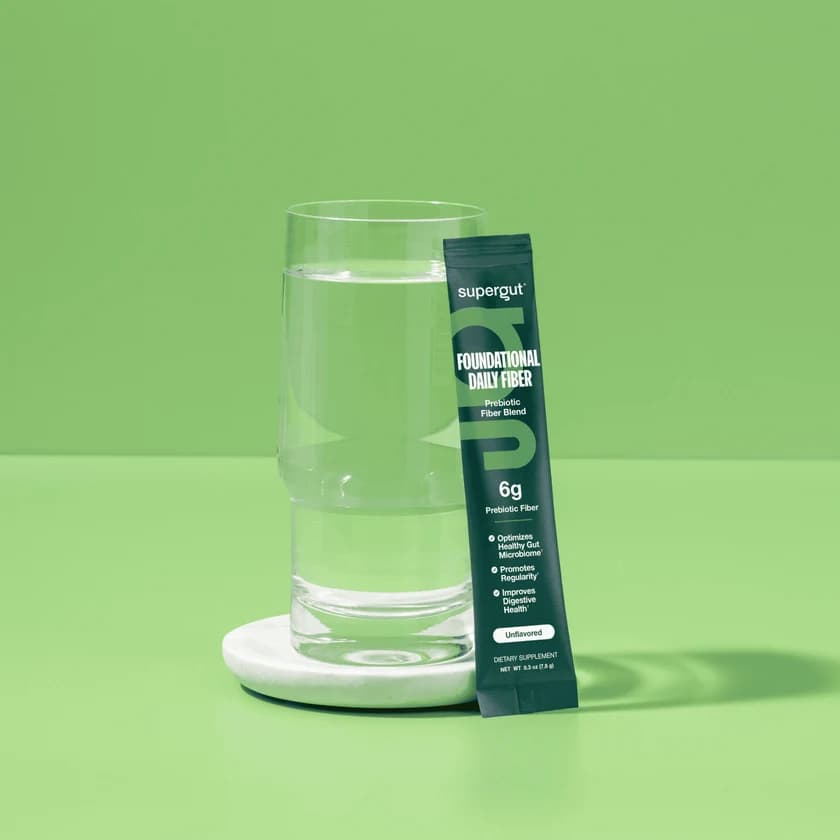
Supergut Foundational Daily Fiber
Supergut’s everyday fibre powder, reviewed against the research. Four low-FODMAP prebiotic fibres, 6 g a scoop, sensible claims about regularity and gut health — and about $10 a tub cheaper than the company’s GLP-1 powder. The weak spots are a blend with no individual amounts and a price per gram well above plain fibre.
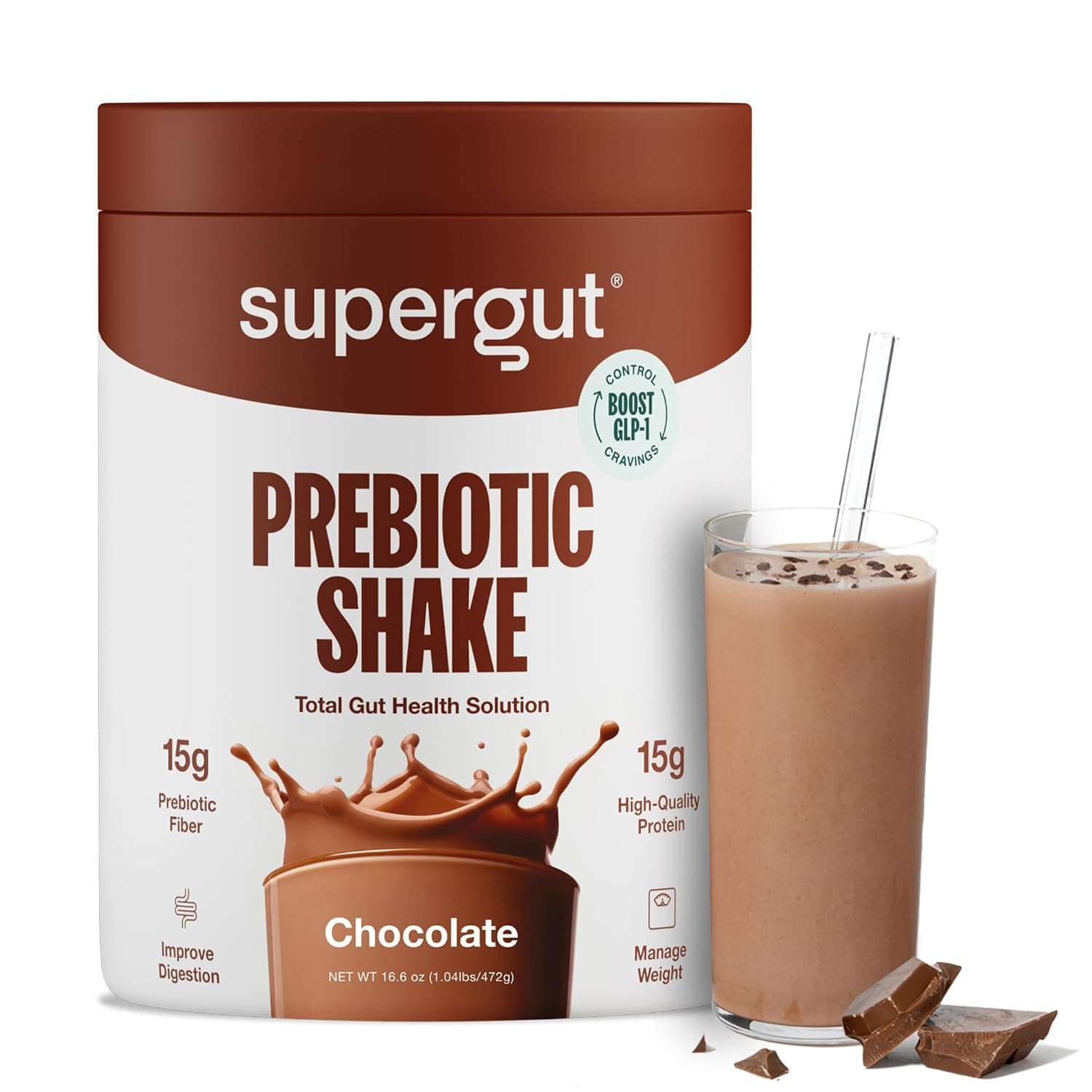
Supergut Prebiotic Shakes
Supergut’s meal-replacement shake — also sold as GLP-1 Boosting Prebiotic Shakes — reviewed against the research. Each serving gives 15 g of prebiotic fibre (20 g in Mocha Latte) and 15 g of protein with about 1 g of sugar, and it is the format closest to the product in Supergut’s own diabetes trial. But it is sold on GLP-1 claims that trial never measured, the fibre blend is undisclosed, and at about 90 kcal a serving it is too light to replace a meal on its own.
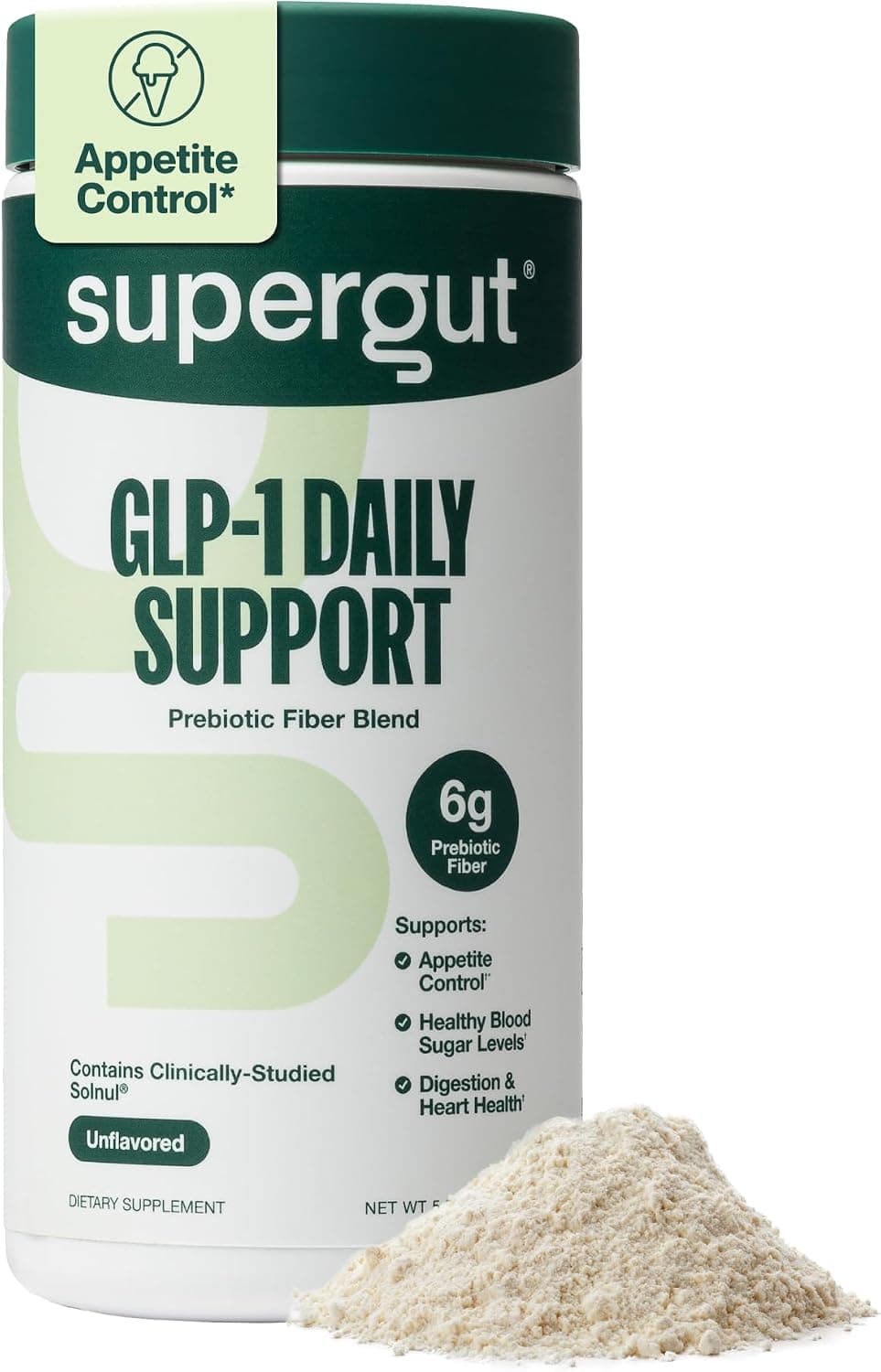
Supergut GLP-1 Daily Support (formerly GLP-1 Booster)
A pleasant, low-FODMAP resistant-starch fibre powder with a real mechanism behind it and a published trial behind the company. The trial was of a different product, in type 2 diabetes, and measured blood sugar rather than GLP-1 — and a scoop holds 6 g of fibre where the weight-loss research used 40.
Affiliate links: we may earn a commission at no extra cost to you. Prices and availability change — check the seller before buying.
Where to buy
Affiliate link: we may earn a commission at no extra cost to you.
Check the current priceYour questions, answered.
Are Supergut Prebiotic Bars healthy?
As snack bars go, the nutrition is good: about 10 g of fibre and 10 g of protein for 140 to 150 kcal with under 2 g of sugar. They are sweetened with erythritol and allulose, which some people do not tolerate, and they cost more per gram of fibre than Supergut’s powders.
Do Supergut bars boost GLP-1?
There is no good evidence that they do in any meaningful way. Fermentable fibre can raise GLP-1 slightly, but Supergut’s trial tested a different product and did not measure GLP-1, and fibre-driven GLP-1 rises do not reliably reduce eating. The bars are filling because of their fibre and protein.
What flavours are there?
Chocolate Brownie, Peanut Butter Chocolate and Strawberry Almond, sold in boxes of 12 (10 at some US retailers). All three contain milk and tree nuts; Peanut Butter Chocolate also contains peanuts.
Where can I buy Supergut bars?
In the US, on Supergut’s store, Amazon.com, Walmart, Target, GNC and Vitamin Shoppe. Outside the US, Supergut ships to most countries with some restrictions, and some retailers in other countries stock the bars. Compare the delivered cost per bar with a high-fibre snack from a local supermarket.
Will they upset my stomach?
They might at first. Each bar has 10 g of fermentable fibre plus erythritol and allulose, and all of these can cause wind or loose stools. Start with one bar a day, or half a bar, and let your gut adjust over a week or two.
Community experiences
Reader submissions open once a page is published from the editorial database. This overview is maintained in code, so there is nothing to attach a submission to yet. If you have used this product, send it through the contact page and it will be considered when submissions open.
References
- Supergut. Prebiotic Bars product page — the product described here; details read from retailer listings via search on 28 September 2026. supergut.com
- Central Market listing for Supergut Chocolate Brownie Prebiotic Bar, 1.62 oz — the bar weight, nutrition figures and ingredient list quoted here. centralmarket.com
- Walmart listing for Supergut Prebiotic Bar, Peanut Butter Chocolate, 12 pack — the flavour’s nutrition and allergen details quoted here. walmart.com
- Amazon.com listing for Supergut GLP-1 Boosting Prebiotic Bars, Chocolate Brownie, 12 count — the “GLP-1 boosting” description and subscription price quoted here. amazon.com
- Frias JP et al. (2023). A microbiome-targeting fibre-enriched nutritional formula improves quality of life and haemoglobin A1c in type 2 diabetes. Diabetes, Obesity and Metabolism 25(5):1203-1212. pubmed.ncbi.nlm.nih.gov
- Dietary fibers to boost endogenous GLP-1 secretion and satiety: a scoping review (2026). Frontiers in Endocrinology — 52 studies, 1,085 participants. frontiersin.org
- Li H et al. (2024). Resistant starch intake facilitates weight loss in humans by reshaping the gut microbiota. Nature Metabolism 6(3):578-597. nature.com
- Witkowski M et al. (2023). The artificial sweetener erythritol and cardiovascular event risk. Nature Medicine 29(3):710-718. pubmed.ncbi.nlm.nih.gov
- Reynolds A et al. (2019). Carbohydrate quality and human health: a series of systematic reviews and meta-analyses. The Lancet 393(10170):434-445. pubmed.ncbi.nlm.nih.gov
- World Health Organization (2023). Carbohydrate intake for adults and children: WHO guideline — at least 25 g of naturally occurring dietary fibre a day for adults. who.int
Page history
- First published, with all three flavours. We could not open Supergut’s product page, so the details come from US retailer and nutrition-database listings read via search on this date. This is a desk review: nobody on our team has eaten these bars.
- Scored 4.6 out of 10 against the five published product criteria. A filling, low-sugar snack with 10 g of fibre and protein. The marks lost are for a GLP-1 framing the evidence does not support, an undisclosed fibre blend, sugar-alcohol sweeteners and the highest price per gram of fibre in the Supergut range.
- Linked our new review of Supergut Prebiotic Shakes in the best alternatives and the comparison cards.
- Made the review global: removed references aimed at one country, named WHO fibre guidance alongside the US figure, and described stockists outside the US generally. No change to the score.
- Replaced the product image with a photo of the Strawberry Almond bar, and added that flavour’s 51 g net weight and 2 g of sugar from the wrapper.
Compare it with
Side by side on the five scores, the dose against the studied amount, the cost per serving and what each label discloses.
Keep asking good questions.
Supergut Foundational Daily Fiber
Supergut’s everyday fibre powder, reviewed against the research. Four low-FODMAP prebiotic fibres, 6 g a scoop, sensible claims about regularity and gut health — and about $10 a tub cheaper than the company’s GLP-1 powder. The weak spots are a blend with no individual amounts and a price per gram well above plain fibre.
Supergut Prebiotic Shakes
Supergut’s meal-replacement shake — also sold as GLP-1 Boosting Prebiotic Shakes — reviewed against the research. Each serving gives 15 g of prebiotic fibre (20 g in Mocha Latte) and 15 g of protein with about 1 g of sugar, and it is the format closest to the product in Supergut’s own diabetes trial. But it is sold on GLP-1 claims that trial never measured, the fibre blend is undisclosed, and at about 90 kcal a serving it is too light to replace a meal on its own.
Supergut GLP-1 Daily Support (formerly GLP-1 Booster)
A pleasant, low-FODMAP resistant-starch fibre powder with a real mechanism behind it and a published trial behind the company. The trial was of a different product, in type 2 diabetes, and measured blood sugar rather than GLP-1 — and a scoop holds 6 g of fibre where the weight-loss research used 40.