Supergut Foundational Daily Fiber review
Supergut’s everyday fibre powder, reviewed against the research. Four low-FODMAP prebiotic fibres, 6 g a scoop, sensible claims about regularity and gut health — and about $10 a tub cheaper than the company’s GLP-1 powder. The weak spots are a blend with no individual amounts and a price per gram well above plain fibre.

Our take: the Supergut we would actually buy
Foundational Daily Fiber is what Supergut sells when it is not selling GLP-1. It launched in September 2025 as the company’s everyday fibre powder, and its claims are modest: it promotes regularity, improves digestive health and supports a healthy gut microbiome. Those are claims the ingredients can plausibly meet.
That makes it a better product than our GLP-1 Daily Support review found its sister to be. Both give 6 g of fibre a scoop, both are certified low-FODMAP, and on the prices we read, this one costs about $10 less a tub — without a hormone promise the dose cannot keep.
The problems are the ones that run through the brand. The four fibres sit in one proprietary blend, so you cannot tell whether any of them reaches the dose its research used. And at around $0.21 to $0.25 per gram of fibre, before any cost of shipping it abroad, it is a premium way to buy something a bowl of oats or a spoon of psyllium also provides.
This is a desk review. We have read the published label details, retailer listings and the research on the four fibres. Nobody on our team has used this product. We could not open Supergut’s product page while writing, so the next section says where each figure came from.
What exactly are you buying?
A serving is one 7.8 g scoop, which listings give as 6 g of prebiotic fibre, with no sugar and no artificial colours or flavours. Supergut says the blend has a 2:1 ratio of soluble to insoluble fibre, chosen for digestive comfort.
The ingredient list is a single blend, “Supergut Foundational Daily Fiber Blend”:
- Resistant potato starch (Solnul) — a branded type 2 resistant starch.
- Soluble vegetable fibre (corn) — an easily mixed soluble fibre.
- Guar fibre (Sunfiber) — partially hydrolysed guar gum, a gentle soluble fibre with its own trials.
- Green banana powder resistant starch.
No amount is given for any of the four. Compared with GLP-1 Daily Support, the blend swaps oat beta-glucan for Sunfiber; the other three fibres are shared.
Listings describe it as non-GMO, vegan, dairy-free, low-FODMAP and “third-party tested”. We did not find a published certificate of analysis, so we record the testing claim as the brand’s statement.
Every flavour and format
| Flavour or format | Pack | Price seen |
|---|---|---|
| Unflavoured | 40-serving tub | $50 on Supergut’s store (another listing: $60) |
| Unflavoured | 20-serving canister (5.5 oz) | About $27 at US retailers — $1.35 a serving |
| Peach Mango | 18-serving tub | From about $27 — $1.50 a serving |
| Pomegranate Berry | 18-serving tub | From about $27 — $1.50 a serving |
| Raspberry Lemon | Listed by some retailers | Not confirmed |
| Flavoured variety stick packs | 15 single-serve sticks | $29.99 — $2.00 a serving |
Unflavoured, Peach Mango and Pomegranate Berry were the three launch flavours in Supergut’s September 2025 announcement; Raspberry Lemon appears in some later retail listings. Flavoured tubs hold fewer servings for the same price, so unflavoured is the cheaper way to buy the same fibre. Flavoured versions add flavouring and sweetening, so check the panel for your flavour.
What the evidence shows
Two of the fibres have their own trials
Partially hydrolysed guar gum, sold as Sunfiber, has the most relevant human evidence. In a 2016 randomised, placebo-controlled trial in people with irritable bowel syndrome, 6 g a day for 12 weeks significantly improved bloating scores against placebo, with the benefit lasting at least four weeks after stopping. It did not improve other IBS symptoms or quality-of-life scores, and caused no significant side effects.
Solnul resistant potato starch has a 2023 randomised trial, run for the ingredient’s maker: 3.5 g a day for four weeks increased Bifidobacterium and Akkermansia and improved stool consistency against placebo. That is a genuine prebiotic effect at a low dose.
The dose problem, again
The guar trial used 6 g of guar on its own. This scoop contains 6 g of fibre across four ingredients, so the guar is some fraction of that — we cannot tell how much. The same applies to Solnul. A second scoop helps, but the undisclosed blend means you are trusting the formulation rather than checking it.
Fibre itself is well supported
The case for more fibre does not depend on this product. A 2019 series of meta-analyses in The Lancet found people eating 25 to 29 g of fibre a day had lower rates of heart disease, stroke, type 2 diabetes and bowel cancer than those eating less. Guidance is similar around the world: the World Health Organization advises at least 25 g a day, and US dietary guidelines advise about 14 g per 1,000 kcal, roughly 25 to 34 g for most adults. Most people fall well short. A 6 g scoop is a useful top-up; it is not a substitute for fibre-rich food.
What this product does not claim, sensibly, is a GLP-1 or weight-loss effect. Our Supergut guide covers why that claim does not hold up on the sister product.
Safety and tolerability
These are food fibres, and the low-FODMAP certification is a genuine advantage for people with irritable bowel syndrome, who often react badly to fibres such as inulin. Expect some wind and bloating while your gut bacteria adjust; starting with half a scoop and building up over a week or two helps, as does drinking enough fluid.
Fibre can slow or reduce the absorption of some medicines if taken at the same time, so ask a pharmacist how to space it from anything you take regularly. If you have new or persistent gut symptoms, see your GP rather than adjusting a supplement.
Price: per gram of fibre
At $50 for 40 scoops of 6 g, the unflavoured tub works out at about $0.21 per gram of fibre, or $1.25 a scoop; at the $60 shown on another listing it is $0.25 a gram. The 20-serving canister at about $27 is roughly $0.23 a gram, flavoured tubs about $0.25, and the stick packs about $0.33.
Against its sister product, it is the better buy: GLP-1 Daily Support cost $60 for 40 scoops of the same 6 g on the day we checked, $10 more for a name. Against plain fibre such as psyllium husk, it is generally dearer per gram; compare on the day.
Supergut is sold across the US — on its own store, Amazon.com and at retailers including Walmart, Target, GNC and Vitamin Shoppe. Outside the US, its help centre says it ships to most countries with some products restricted, and some local retailers stock part of the range in other countries. If you are ordering from abroad, add international postage and any import charges to the dollar price before comparing it with fibre products sold where you live. We read these prices from listings rather than taking an order through checkout.
Best alternatives
The ones we have fully reviewed are linked, and appear in the comparison cards below this article. The others we name for comparison only: we have not reviewed them in full, so do not read their inclusion as a recommendation.
- Fibre from food — oats, beans, lentils, slightly green bananas, and potatoes or rice cooked and cooled. The cheapest and best-evidenced route to the same goal.
- NOW Psyllium Husk Powder (reviewed) — a single, well-studied fibre with strong evidence for regularity and cholesterol, and a clear dose. Less gentle for some people with IBS.
- Supergut GLP-1 Daily Support (reviewed) — the same 6 g of fibre a scoop with oat beta-glucan instead of Sunfiber, at about $10 more a tub and with GLP-1 claims the dose does not support.
- Partially hydrolysed guar gum on its own (not yet reviewed) — if IBS bloating is your reason for buying, the fibre with the relevant trial, at the trial’s 6 g dose, sold under brands including Sunfiber.
Who should skip it
Skip it if you already eat plenty of fibre, if you want the cheapest possible fibre supplement, or if you want a product with individual doses you can check. Anyone on regular medication should check spacing with a pharmacist first.
Dietary supplements are not approved for safety or effectiveness before sale by regulators in most countries, including the US FDA,, so the label is the manufacturer’s responsibility rather than a regulator’s endorsement.
Sources and shopping: our checklist
Before you order, choose unflavoured for the lowest price per gram, work out the delivered cost where you live, and compare it per gram of fibre with a plain fibre supplement. Start with half a scoop and judge it over three or four weeks: regularity, comfort and how full you feel.
Our commercial link for this product is our Supergut Foundational Daily Fiber link. It earns us a commission at no extra cost to you, and it has no influence on the score above — which is a 5.4, well ahead of GLP-1 Daily Support’s 3.8, held back by an undisclosed blend, doses we cannot check and a price per gram above plain fibre.
The fair summary is this. Foundational Daily Fiber is Supergut without the hype: gentle, low-FODMAP fibre with honest claims. If you want Supergut, this is the one to buy. If you just want more fibre, there are cheaper ways to get it.
Ingredient analysis
Guar fibre (Sunfiber, partially hydrolysed guar gum)
moderate evidenceA 2016 randomised trial in IBS found 6 g a day for 12 weeks improved bloating against placebo, but not other symptoms. Gentle and well tolerated. How much a scoop contains is not stated.
Resistant potato starch (Solnul)
moderate evidenceA supplier-run randomised trial found 3.5 g a day for four weeks increased Bifidobacterium and Akkermansia and improved stool consistency. How much a scoop contains is not stated.
Green banana powder resistant starch
weak evidenceAnother type 2 resistant starch that feeds gut bacteria. No product-specific evidence, and the amount is undisclosed.
Soluble vegetable fibre (corn)
weak evidenceAdds soluble fibre and mixes easily. No specific evidence behind it in this product.
Who it’s for. What to consider.
Who it may suit
An adult who wants a gentle, low-FODMAP fibre powder for regularity and gut comfort — particularly someone with IBS who reacts badly to inulin — and is happy to pay a brand price for the format.
Who should avoid it
Anyone who already eats plenty of fibre, or wants the cheapest fibre per gram. Anyone who wants to check individual ingredient doses. Anyone on regular medication until they have checked spacing with a pharmacist.
What stands out
6 g of prebiotic fibre a scoop from four low-FODMAP fibres
Modest claims — regularity, digestive health, microbiome — that the ingredients can plausibly support
Includes Sunfiber and Solnul, two fibres with their own randomised trials
About $10 a tub cheaper than GLP-1 Daily Support for the same fibre per scoop
Unflavoured, Peach Mango, Pomegranate Berry and stick-pack options, with no sugar
Worth considering
All four fibres sit in one proprietary blend with no individual amounts
The guar trial used 6 g of guar alone; here four fibres share 6 g
About $0.21 to $0.33 per gram of fibre depending on the format, above plain fibre
Priced in US dollars; buyers outside the US may pay postage and import charges
No published certificate of analysis for the “third-party tested” claim
Score breakdown
Five criteria, each out of 10, averaged to the overall score. See how we score products.
How does it compare?
A closer look at the alternatives. Compare the ingredients and serving sizes, then explore the full review.
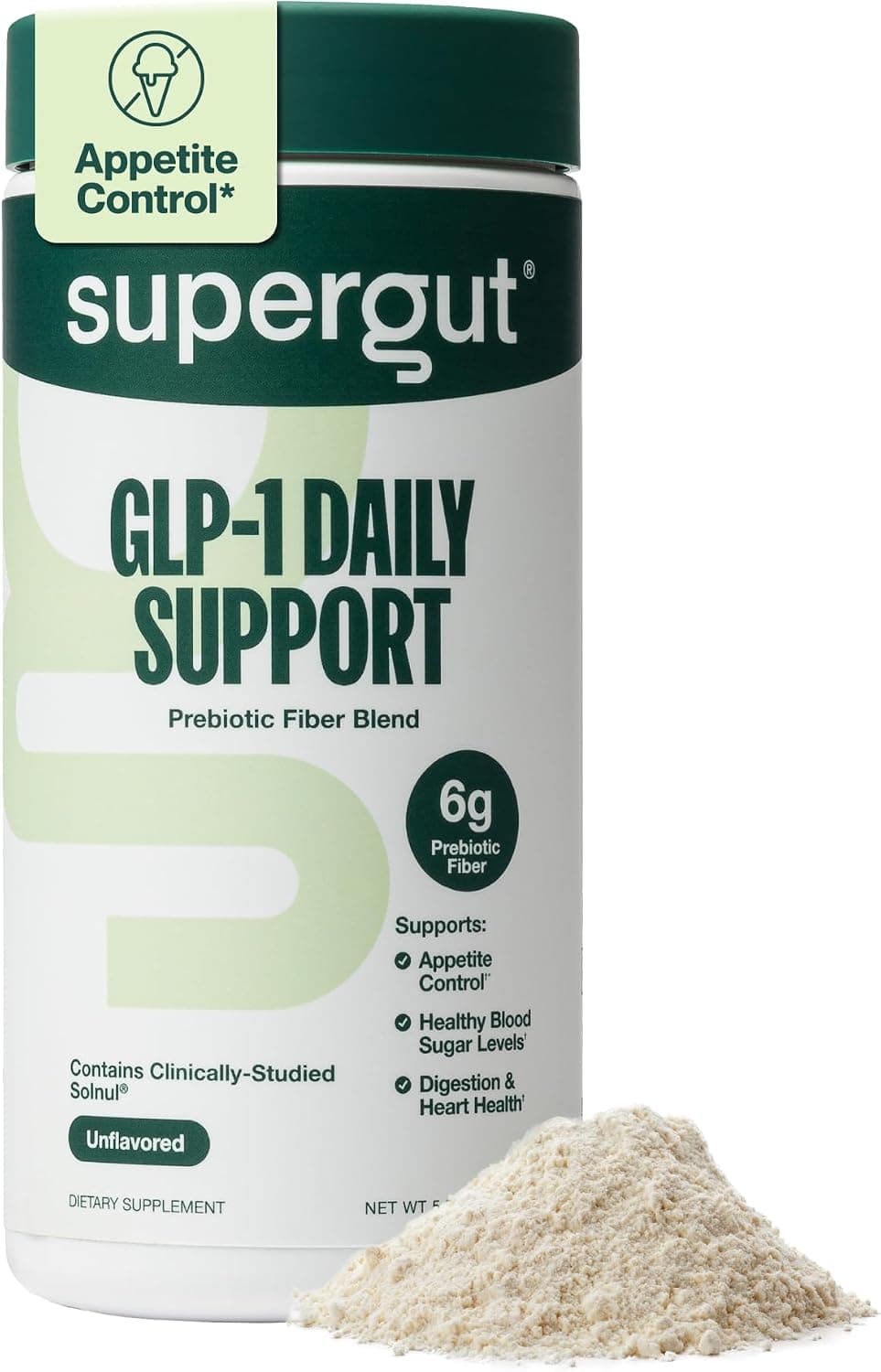
Supergut GLP-1 Daily Support (formerly GLP-1 Booster)
A pleasant, low-FODMAP resistant-starch fibre powder with a real mechanism behind it and a published trial behind the company. The trial was of a different product, in type 2 diabetes, and measured blood sugar rather than GLP-1 — and a scoop holds 6 g of fibre where the weight-loss research used 40.
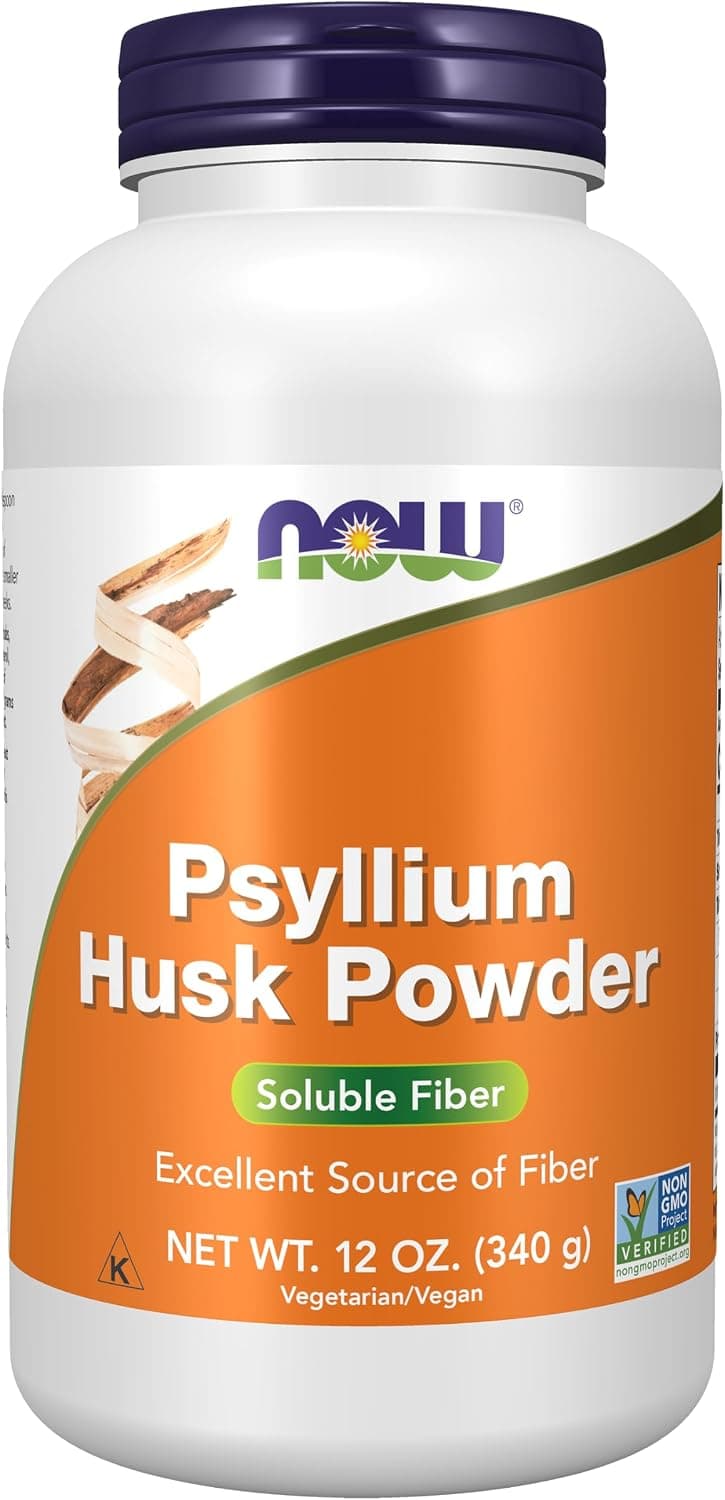
NOW Psyllium Husk Powder
A simple, unflavoured fibre powder with a clearly stated serving. Its appeal is the ingredient list; the real trade-offs are texture, preparation and how much you can verify about your bottle.
Affiliate links: we may earn a commission at no extra cost to you. Prices and availability change — check the seller before buying.
Where to buy
Affiliate link: we may earn a commission at no extra cost to you.
Check the current priceYour questions, answered.
Is Supergut Foundational Daily Fiber any good?
As a fibre supplement, yes: 6 g of gentle, low-FODMAP fibre a scoop with modest, plausible claims. Its weaknesses are an undisclosed blend and a price per gram above plain fibre. It is a better buy than Supergut’s GLP-1 Daily Support, which gives the same fibre per scoop for about $10 more a tub.
What flavours does it come in?
Unflavoured, Peach Mango and Pomegranate Berry at launch, with Raspberry Lemon in some retail listings, plus a flavoured variety box of 15 stick packs. Unflavoured comes in 40-serving tubs and 20-serving canisters; flavoured tubs hold 18 servings.
What is the difference between Foundational Daily Fiber and GLP-1 Daily Support?
Both give 6 g of fibre a scoop and share resistant potato starch, green banana resistant starch and soluble corn fibre. Foundational adds Sunfiber guar; GLP-1 Daily Support adds oat beta-glucan instead and is marketed on GLP-1 and appetite. On the prices we read, Foundational costs about $10 less a tub.
Is it good for IBS?
It may suit people with IBS better than many fibres, because it is certified low-FODMAP and includes partially hydrolysed guar gum, which improved bloating in a 2016 IBS trial. The amount of guar per scoop is not disclosed. Start with half a scoop and talk to your GP about persistent symptoms.
Where can I buy it?
In the US, on Supergut’s store, Amazon.com and at retailers including Walmart. Outside the US, Supergut says it ships to most countries with some restrictions, and some local retailers stock parts of the range. Add postage and import charges, and compare the delivered price per gram of fibre with fibre sold locally.
Community experiences
Reader submissions open once a page is published from the editorial database. This overview is maintained in code, so there is nothing to attach a submission to yet. If you have used this product, send it through the contact page and it will be considered when submissions open.
References
- Supergut (2025). Supergut Debuts New Product: Foundational Daily Fiber — PR Newswire release describing the blend, the 2:1 soluble-to-insoluble ratio and the launch flavours. prnewswire.com
- Supergut. Foundational Daily Fiber product page — the product described here; details read via search and, for the $50 price, directly on 25 September 2026. supergut.com
- Walmart listing for Supergut Foundational Daily Fiber, unflavoured, 5.5 oz, 20 servings — the canister size quoted here. walmart.com
- Amazon.com listing for Supergut Foundational Daily Fiber, Peach Mango, 18 servings — the flavoured pack size and ingredient names quoted here. amazon.com
- Niv E et al. (2016). Randomized clinical study: partially hydrolyzed guar gum (PHGG) versus placebo in the treatment of patients with irritable bowel syndrome. Nutrition & Metabolism 13:10. pubmed.ncbi.nlm.nih.gov
- Bush JR et al. (2023). Consumption of Solnul resistant potato starch produces a prebiotic effect in a randomized, placebo-controlled clinical trial. Nutrients 15(7):1582. pubmed.ncbi.nlm.nih.gov
- Reynolds A et al. (2019). Carbohydrate quality and human health: a series of systematic reviews and meta-analyses. The Lancet 393(10170):434-445. pubmed.ncbi.nlm.nih.gov
- World Health Organization (2023). Carbohydrate intake for adults and children: WHO guideline — at least 25 g of naturally occurring dietary fibre a day for adults. who.int
Page history
- First published, with every flavour and format we could find and Supergut’s launch reel shown on request. We could not open Supergut’s product page, so the details come from its launch press release and US retailer listings read via search on this date. This is a desk review: nobody on our team has used this product.
- Scored 5.4 out of 10 against the five published product criteria. Modest claims and well-tolerated fibres. The marks lost are for a proprietary blend with no individual amounts, doses we cannot check against the trials, and a price per gram above plain fibre.
- Made the review global: removed references aimed at one country, named WHO fibre guidance alongside the US figure, and described stockists outside the US generally. No change to the score.
Compare it with
Side by side on the five scores, the dose against the studied amount, the cost per serving and what each label discloses.
- Supergut Foundational Daily Fiber vs NOW Psyllium Husk PowderNot scored
- Supergut Foundational Daily Fiber vs Supergut GLP-1 Daily Support (formerly GLP-1 Booster)3.8/10
- Supergut Foundational Daily Fiber vs Supergut Prebiotic Bars4.6/10
- Supergut Foundational Daily Fiber vs Supergut Prebiotic Shakes5.2/10
Keep asking good questions.
Supergut GLP-1 Daily Support (formerly GLP-1 Booster)
A pleasant, low-FODMAP resistant-starch fibre powder with a real mechanism behind it and a published trial behind the company. The trial was of a different product, in type 2 diabetes, and measured blood sugar rather than GLP-1 — and a scoop holds 6 g of fibre where the weight-loss research used 40.
NOW Psyllium Husk Powder
A simple, unflavoured fibre powder with a clearly stated serving. Its appeal is the ingredient list; the real trade-offs are texture, preparation and how much you can verify about your bottle.