Brand guide4 stages · 15 topics · 9 sources
The complete Supergut guide: reviews, research and what it adds up to
Supergut makes resistant-starch fibre powders, bars and shakes, and markets much of the range on GLP-1 and appetite. This page brings together everything we have published on the brand — full reviews, the articles that cover it, a plain reading of the company’s own trial and the wider research on resistant starch — so you can judge the range in one place.
Every stage, from first look to daily use
Start at the beginning, or jump to the question you came with. Each stage links to the topics inside it.
The four questions people ask first
Short answers, each linked to the part of the guide that shows the working.
Is Supergut legit?
Yes, as a company — it has a medical lead and a published randomised trial. The marketing is the weak point.
Read moreDoes it boost GLP-1?
Fermentable fibre can raise GLP-1 a little, but its trial did not measure GLP-1, and a rise does not reliably mean eating less.
Read moreWill it help me lose weight?
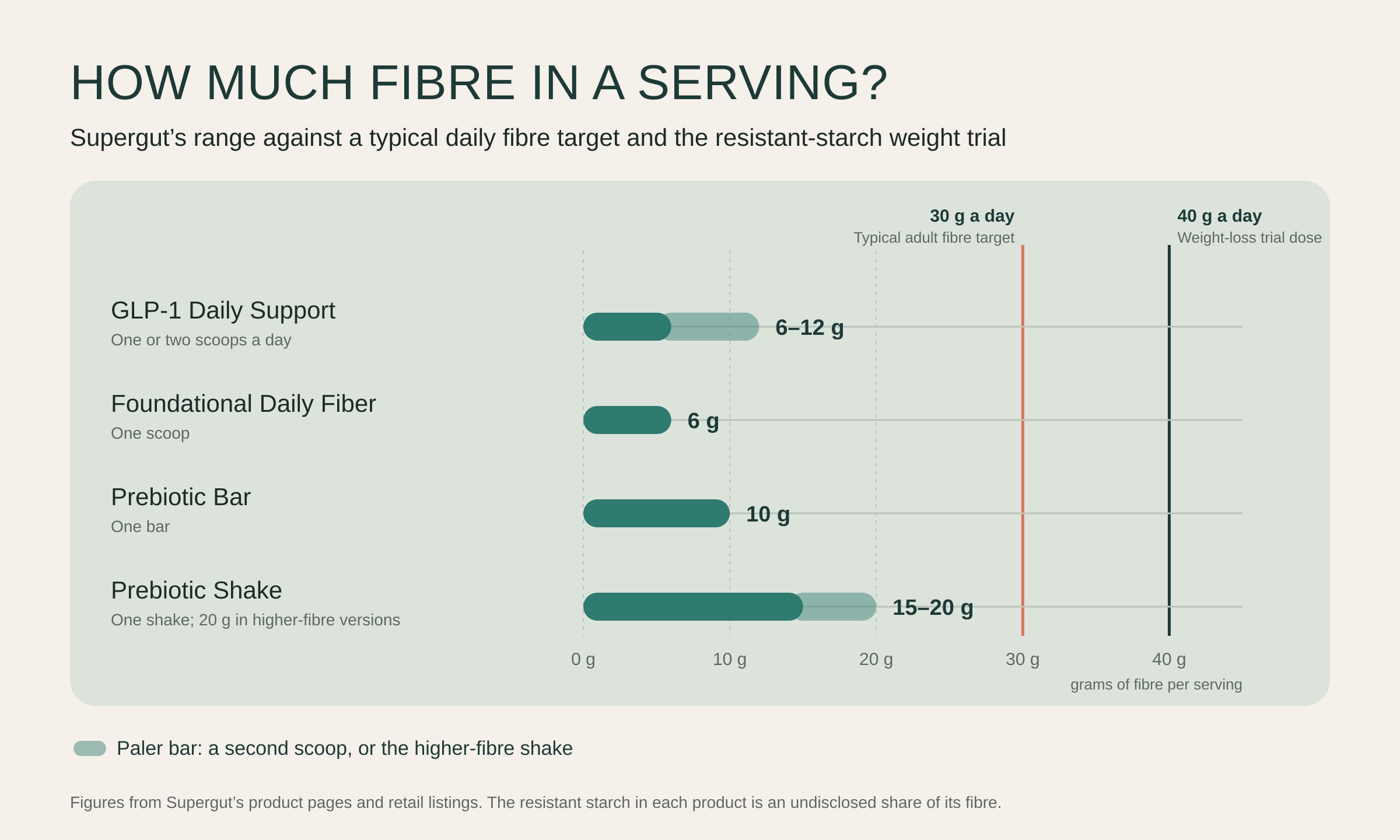
Not much on its own. The weight trial used 40 g of resistant starch a day; a scoop has 6 g of fibre in total.
Read moreWhich product is the best value?
Per gram of fibre, the Prebiotic Shakes, which also add 15 g of protein. Among the powders, Foundational Daily Fiber: the same 6 g a scoop as the GLP-1 version for about $10 less a tub, and it scores 5.4 against 3.8.
Read moreUnderstanding Supergut
What the brand sells, who is behind it, and the idea every product is built on.
What Supergut sells
Supergut sells fibre. Its powders, bars and shakes are built around a blend of resistant starch — from green bananas and potatoes — with oat beta-glucan and soluble corn fibre. The range splits into everyday fibre products and a GLP-1-branded line marketed on appetite and cravings.
The distinction matters, because the fibre inside is broadly the same. On the figures we could read, GLP-1 Daily Support and Foundational Daily Fiber both give 6 g of fibre a scoop; the GLP-1 version costs about $10 more per tub.
Who is behind it
Supergut was founded in Los Angeles by Marc Washington, launching in 2020 as Muniq and rebranding as Supergut in 2022. Its science lead is Dr Chris Damman, a gastroenterologist who joined in 2021 as chief medical and science officer. The company started direct to consumer and now sells through US retailers including Target, Sprouts, GNC and Vitamin Shoppe.
In March 2025 it announced new funding led by Full Frame Growth Partners and appointed Tracey Warner Halama, formerly chief executive of Vital Proteins, as CEO, with Washington moving to executive chairman. Coverage of the round credited much of the brand’s 2024 growth to its GLP-1 product.
That commercial context matters for a reader. The GLP-1 framing is the brand’s growth engine, which is a reason to read its claims carefully rather than a reason to dismiss them.
How resistant starch is meant to work
Resistant starch is starch that escapes digestion in the small intestine and is fermented by bacteria in the colon. Fermentation produces short-chain fatty acids — acetate, propionate and butyrate — which act on the L-cells of the gut that release GLP-1 and other appetite hormones. It is the best-described route by which a food ingredient can nudge GLP-1, and our GLP-1 explainer covers it in detail.
What the evidence shows
The company’s own trial, and what the wider research on resistant starch does and does not support.
The company’s own trial
Supergut’s headline evidence is a randomised, double-blind, placebo-controlled trial published in 2023 in Diabetes, Obesity and Metabolism. It enrolled 192 adults with type 2 diabetes — average HbA1c 7.8 per cent and BMI 35.9 — and gave them a fibre-enriched nutritional shake containing resistant starch and oat beta-glucan, a matching shake without the fibre, or dietary advice alone, for 12 weeks. Participants built up to two shake packets a day, with at least one replacing a meal.
The fibre shake beat the placebo shake on its primary outcome, a diabetes-distress score, and lowered HbA1c by 0.64 percentage points more than placebo. Two butyrate-producing bacterial species increased. For people with type 2 diabetes, that is a meaningful result.
What it does not show is just as important:
- It tested a meal-replacement shake, taken in place of a meal — not the GLP-1 powder, and not as an addition to a normal diet.
- It enrolled people with type 2 diabetes, not the general buyer.
- Its published abstract reports no GLP-1 measurement and no appetite outcome.
- Four of its nine authors were Supergut employees, including its chief medical officer, alongside academic co-authors from Stanford and UCLA.
Supergut’s product pages also cite a 2026 pilot and observational study run with Tiny Health, noting that some results are self-reported. We could not find it published.
A GLP-1 rise is not the same as eating less
A 2026 scoping review in Frontiers in Endocrinology pooled 52 studies with 1,085 participants. Only some fibre types raised GLP-1 consistently, and studies that did find a rise showed only a non-significant tendency towards feeling fuller. A higher reading on a blood test did not reliably translate into eating less.
The dose gap
The strongest human evidence that resistant starch helps with weight is a 2024 randomised crossover trial in Nature Metabolism: 37 people with excess weight took 40 g a day of resistant starch from high-amylose maize for eight weeks and lost a mean of 2.8 kg against a control starch, with better insulin sensitivity. That is roughly seven times the total fibre in a scoop of GLP-1 Daily Support, and the scoop’s resistant starch is only part of that.
One ingredient has its own trial
Supergut’s blends include Solnul, a resistant potato starch. In a 2023 randomised trial run for the ingredient’s maker, 3.5 g a day for four weeks increased Bifidobacterium and Akkermansia and improved stool consistency against placebo. That is a genuine prebiotic effect at a low dose. It did not measure GLP-1, appetite or weight, and the amount of Solnul in Supergut’s products is not disclosed.
Fibre itself is well supported
None of this makes fibre a bad idea. A 2019 series of meta-analyses in The Lancet found that people eating 25 to 29 g of fibre a day had lower rates of heart disease, stroke, type 2 diabetes and bowel cancer than those eating less. Guidance is similar around the world: the World Health Organization advises at least 25 g a day, and US dietary guidelines advise about 14 g per 1,000 kcal, roughly 25 to 34 g for most adults, and most people eat well short of either. Adding fibre, from any source, is sound advice. What the evidence does not support is paying a premium for fibre sold as a GLP-1 product.
Choosing a product
Our scored reviews of the range, and where to buy it.
What we have reviewed
We score every product against the five published criteria on our evidence grading page. We have reviewed four Supergut products in full — every product in the core range: the everyday fibre powder, the meal-replacement shakes, the snack bars and the GLP-1-branded powder.
Supergut Foundational Daily Fiber
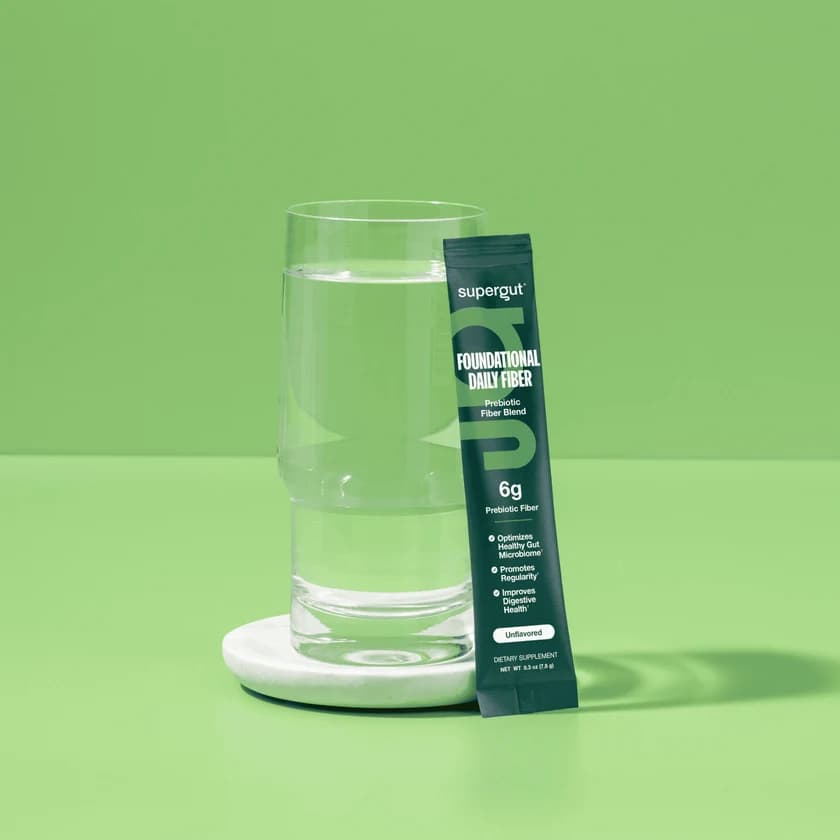
Supergut’s everyday fibre powder, reviewed against the research. Four low-FODMAP prebiotic fibres, 6 g a scoop, sensible claims about regularity and gut health — and about $10 a tub cheaper than the company’s GLP-1 powder. The weak spots are a blend with no individual amounts and a price per gram well above plain fibre.
Affiliate link: we may earn a commission at no extra cost to you.
Check the current price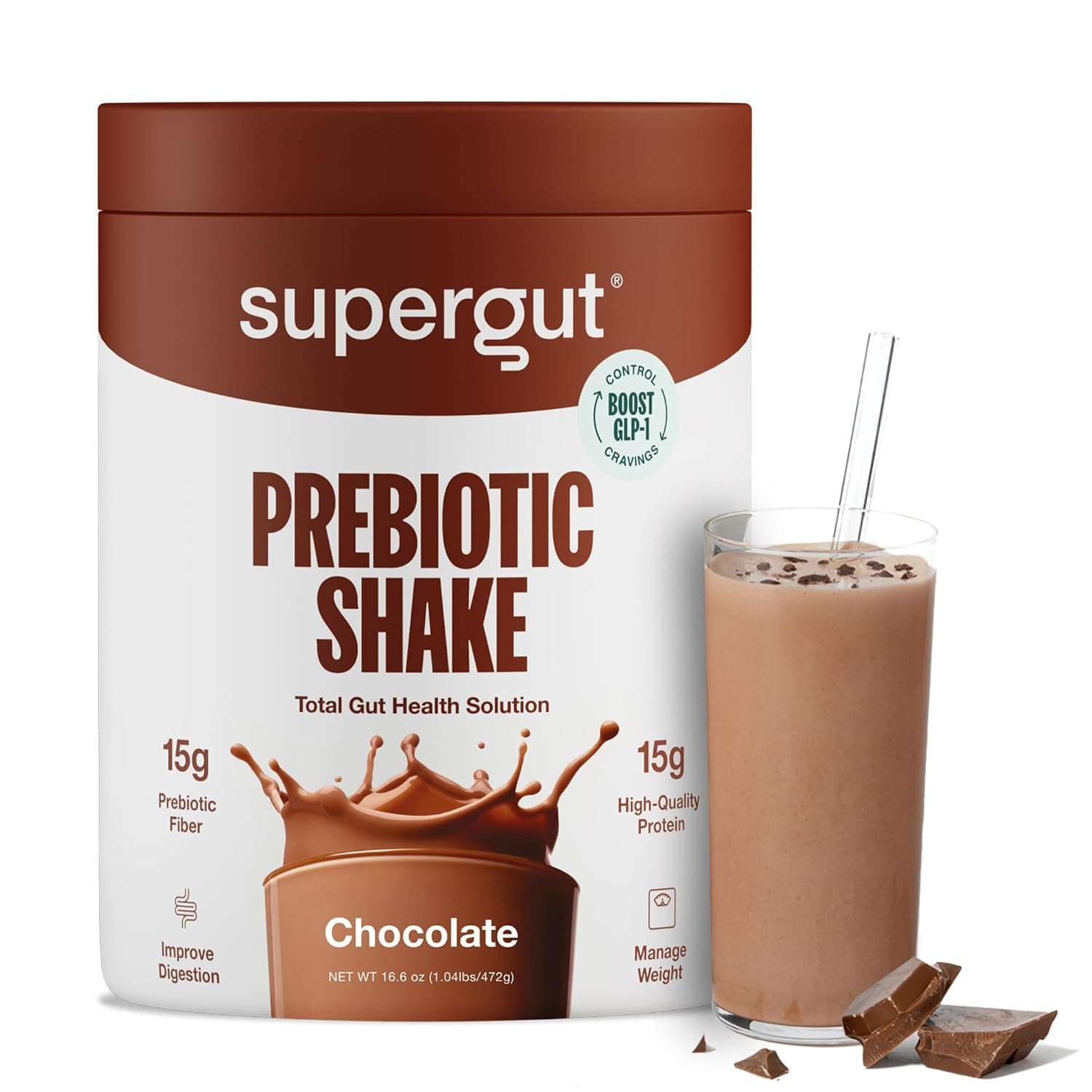
Supergut Prebiotic Shakes
Supergut’s meal-replacement shake — also sold as GLP-1 Boosting Prebiotic Shakes — reviewed against the research. Each serving gives 15 g of prebiotic fibre (20 g in Mocha Latte) and 15 g of protein with about 1 g of sugar, and it is the format closest to the product in Supergut’s own diabetes trial. But it is sold on GLP-1 claims that trial never measured, the fibre blend is undisclosed, and at about 90 kcal a serving it is too light to replace a meal on its own.
Affiliate link: we may earn a commission at no extra cost to you.
Check the current price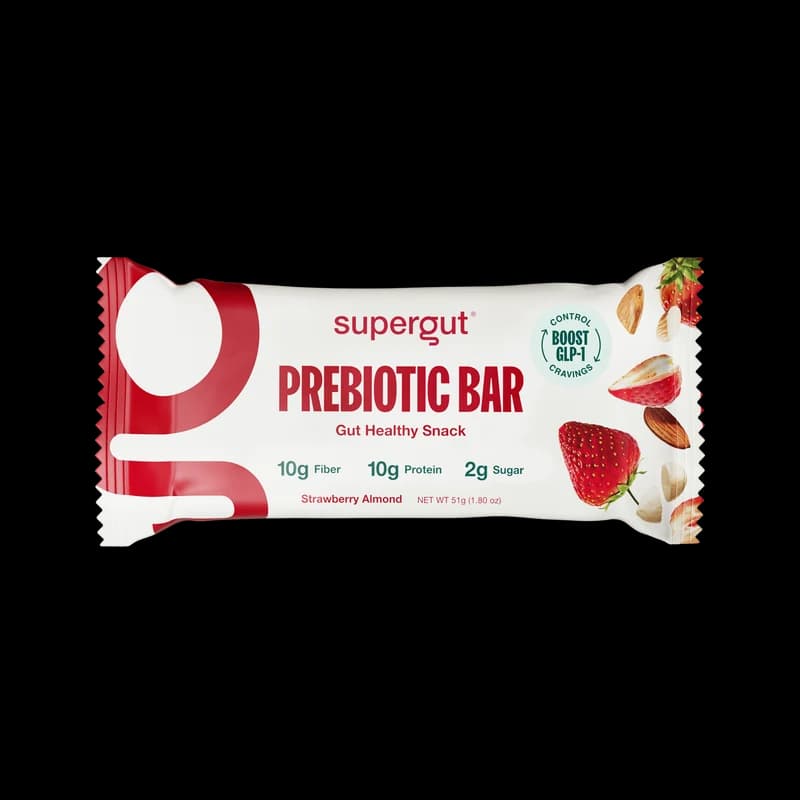
Supergut Prebiotic Bars
Supergut’s snack bar, reviewed against the research. Each bar gives 10 g of fibre and 10 g of protein for about 140 to 150 kcal with almost no sugar — a genuinely filling snack. But it is sold on GLP-1 and cravings the evidence does not support, it is sweetened with erythritol and allulose, and per gram of fibre it costs more than any other Supergut product.
Affiliate link: we may earn a commission at no extra cost to you.
Check the current price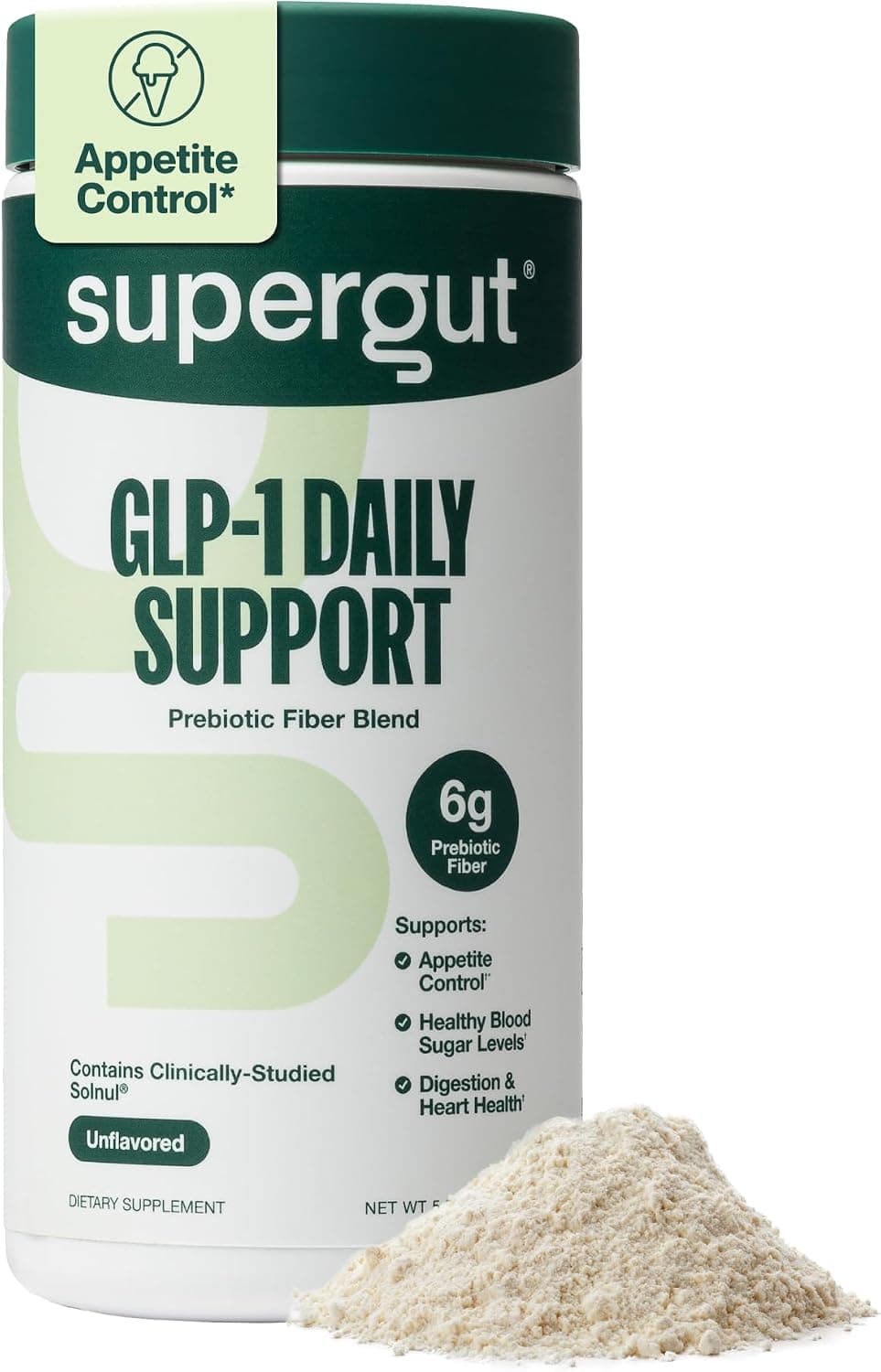
Supergut GLP-1 Daily Support (formerly GLP-1 Booster)
A pleasant, low-FODMAP resistant-starch fibre powder with a real mechanism behind it and a published trial behind the company. The trial was of a different product, in type 2 diabetes, and measured blood sugar rather than GLP-1 — and a scoop holds 6 g of fibre where the weight-loss research used 40.
Where to buy Supergut
Supergut is sold across the US — on its own store, Amazon.com and at retailers including Walmart, Target, GNC and Vitamin Shoppe. Outside the US, its help centre says it ships to most countries with some products restricted, and some local retailers stock part of the range in other countries. If you are ordering from abroad, add international postage and any import charges to the dollar price before comparing it with fibre products sold where you live.
For most buyers, wherever they live, the cheaper and better-evidenced route to the same goal is food: oats, beans, lentils, slightly green bananas, and potatoes or rice cooked and cooled, which forms more resistant starch. If you want a powder, compare the price per gram of fibre with a plain fibre supplement such as psyllium — and if the low-FODMAP certification matters to you because of irritable bowel syndrome, that is a genuine reason to consider Supergut specifically.
Using it well
How to start, what to expect, who should be careful, and cheaper ways to the same fibre.
Starting slowly
Supergut’s own directions tell you to start with one scoop and build up, and that is sound advice for any fermentable fibre. Take one scoop a day, mixed into water or another drink, for the first week or two, and move to two only if your gut is comfortable. Drink plenty of fluid as you raise your fibre intake.
The directions on the GLP-1 Daily Support page disagree slightly — one section says one scoop, another says “just two scoops a day” — and the servings on the tub are counted at one scoop. At two a day, a 40-serving tub lasts 20 days.
Side effects
Expect some wind and bloating in the first weeks while your gut bacteria adjust; it usually settles. GLP-1 Daily Support carries Monash University low-FODMAP certification, which makes it gentler than many fibre products for people with irritable bowel syndrome, who often react badly to fibres such as inulin.
If you have new or persistent gut symptoms — a change in bowel habit, pain, or blood — see your GP rather than adjusting a supplement.
Medicines and medical conditions
Fibre can slow or reduce the absorption of some medicines taken at the same time, so ask a pharmacist how to space it from anything you take regularly. The company’s trial lowered HbA1c in type 2 diabetes, so anyone on diabetes medicines should mention it to their prescriber before starting.
If you take a prescription GLP-1 medicine, which slows the stomach and often causes constipation, raising fibre gradually can help — but that is advice about fibre in general, and no substitute for the prescribing team’s advice.
What to expect
Judge Supergut as fibre, over a few weeks: regularity, fullness after meals, how your gut feels. Do not expect the effects of a GLP-1 medicine, or much weight loss on its own — the resistant-starch trial that produced weight loss used 40 g a day, several times what a scoop contains.
Cheaper routes to the same fibre
Most of what Supergut offers can be had from ordinary food: oats, beans, lentils, slightly green bananas, and potatoes, rice or pasta cooked and then cooled, which increases their resistant starch. Our guide to natural GLP-1 alternatives ranks the food-based options by evidence.
If you want a supplement, a plain fibre such as psyllium husk has strong evidence for regularity and cholesterol at a fraction of the price per gram. The case for Supergut specifically is its low-FODMAP certification and the format — not a GLP-1 effect.
Judge it as fibre, not as GLP-1
Supergut is more credible than most brands in the GLP-1 supplement aisle: it has a medical lead, a published randomised trial and products built on well-tolerated fibres. Its problem is the gap between that evidence and the name on the tub. The trial tested a meal-replacement shake in type 2 diabetes and measured blood sugar; the GLP-1 products are sold on appetite and GLP-1, at a fibre dose far below the weight research.
Judge the range as fibre, and it is reasonable. Judge it as a GLP-1 treatment, and the evidence does not yet support the claim. Our full review of GLP-1 Daily Support scores it accordingly.
Where Supergut comes up elsewhere
The articles on this site that discuss the brand, and what each one adds.