Optimum Nutrition Opti-Men review
The gym-shelf men’s multivitamin, reviewed against what multivitamin research actually shows. The vitamin doses are sensible and the vitamin D is right for a UK winter — but most men who eat reasonably do not need a multivitamin, the extras are too small to matter, and it costs up to ten times as much a day as a supermarket A–Z.

Our take: a sensible multivitamin at a gym-shop price
Opti-Men is one of the best-known multivitamins on the sports-nutrition shelf, and the tub makes three promises: it supports metabolic and immune function, it reduces fatigue, and it packs 36 active ingredients. The first two are lawful claims about the vitamins inside it. The third is true, and mostly beside the point.
The honest summary is that the core of Opti-Men — the vitamins and trace minerals — is well judged. Vitamin D is at the 10 µg a day the NHS advises for autumn and winter, the B vitamins sit at a few times the reference intake without approaching the levels the NHS warns about, and nothing in the formula looks reckless. What the brand adds on top — an amino acid blend, fruit and vegetable concentrates and botanical extracts — is present in amounts too small to do anything you would notice.
The bigger question is whether you need a multivitamin at all, and for most men who eat reasonably, the evidence says no. That makes this a review about price: at roughly 50p to 67p a day, Opti-Men costs several times what a supermarket A–Z multivitamin does for a similar vitamin and mineral panel.
This is a desk review. We have read the published nutrition panel, UK retailer listings and the research on multivitamins in healthy adults. We have not taken these tablets, tested their contents or run a trial. We could not open the brand’s own GB product page while writing, so the next section explains exactly where each figure came from.
What exactly are you buying?
A serving is three tablets, taken once a day with food, so the 90-tablet tub lasts 30 days. The front label calls it a “food supplement with vitamins, minerals, amino acids and herbal extracts” and a “multivitamin for active men”, with 36 active ingredients.
Be careful which Opti-Men you are reading about. The American product sold under the same name is a different, much higher-dose formula — its panel lists 10,000 IU of vitamin A and 75 mg of thiamin — and its figures are widely copied onto UK retail pages. The UK and European tub says 36 active ingredients, and the figures below are for that formula. If the tub you receive says something different, trust the tub.
The vitamins and minerals in three tablets
The European panel, as published by GymBeam, lists per three tablets, with the percentage of the reference intake (NRV) in brackets:
- Vitamins: vitamin A 400 µg (50%), vitamin D 10 µg (200%), vitamin E 30 mg (250%), vitamin K 75 µg (100%), vitamin C 225 mg (281%), thiamin 4.0 mg (364%), riboflavin 4.5 mg (321%), niacin 54 mg (337%), vitamin B6 5.4 mg (386%), folic acid 90 µg (45%), vitamin B12 9.0 µg (360%), biotin 180 µg (360%), pantothenic acid 18 mg (300%).
- Minerals: calcium 120 mg (15%), magnesium 80 mg (21%), zinc 12 mg (120%), copper 2.0 mg (200%), manganese 2.0 mg (100%), selenium 30 µg (55%).
The percentages all match the standard GB and EU reference intakes, which is a good sign the panel was transcribed correctly. A UK retailer’s listing independently gives the same 225 mg of vitamin C, 30 mg of vitamin E and 12 mg of zinc. We could not confirm the remaining figures against the brand’s GB page, so treat them as the published European formula rather than a reading of the tub.
A UK retailer’s ingredient list begins: bulking agent (microcrystalline cellulose), a branched-chain amino acid blend (L-leucine, L-isoleucine, L-valine), calcium carbonate, L-ascorbic acid (vitamin C), L-glutamine, magnesium oxide, anti-caking agents, D-alpha-tocopheryl acetate (vitamin E) and nicotinamide (vitamin B3). Ingredients are listed by weight, so the filler comes first, and the amino acids come before most of the vitamins simply because a gram of amino acids outweighs milligrams of vitamins.
The extras: amino acids, concentrates and botanicals
Opti-Men is sold as “more than a multi” because of what sits beside the vitamins: an amino acid blend of about 1 g, including branched-chain amino acids and glutamine, plus fruit and vegetable concentrates and botanical extracts such as green tea and ginger. On the listings we could read, the individual amounts of the concentrates and botanicals are not given.
A gram of amino acids is trivial next to a normal diet. A single scoop of whey provides around 20 to 25 g of protein, and a chicken breast more than that; our protein calculator will show that a lifter’s daily target is measured in the region of 100 g or more. The same logic applies to the concentrates: a few hundred milligrams of mixed fruit and vegetable powder cannot stand in for a portion of either, as our fruit and vegetable powder page explains. These extras make the ingredient count longer. They do not make the tablet more useful.
What does the evidence say about multivitamins?
For well-fed men, not much
The largest randomised trial of a daily multivitamin in men is the Physicians’ Health Study II, which followed 14,641 male US doctors aged 50 and over for a median of 11 years. The cancer results showed a small reduction in total cancer — 17.0 against 18.3 cases per 1,000 person-years, a hazard ratio of 0.92 — with no effect on prostate or colorectal cancer. The cardiovascular results showed no reduction in heart attacks, strokes or cardiovascular death.
Later work has pointed the same way. The US Preventive Services Task Force’s 2022 recommendation concluded that the evidence is insufficient to say whether multivitamins help prevent heart disease or cancer. A 2024 analysis of 390,124 generally healthy US adults followed for more than 20 years found that daily multivitamin use was not linked to living longer.
None of that is evidence of harm. It is evidence that, for people who already eat enough, topping up nutrients they are not short of does little. The NHS says most people should be able to get the vitamins and minerals they need from a varied diet, and our guide to which vitamins to take daily sets out the short list of exceptions.
Where it does help: vitamin D, and gaps in your diet
The clearest case for Opti-Men in the UK is vitamin D. The NHS advises everyone to consider 10 µg a day in autumn and winter, when sunlight is too weak for the skin to make enough, and all year round for people who are rarely outdoors or cover their skin. Three tablets give exactly that. Our vitamin D3 evidence page covers why, and why more is not better. But a plain 10 µg vitamin D tablet costs a few pence a day.
The other genuine use is as insurance for a diet with gaps: long spells of eating the same few foods, heavy calorie restriction while cutting weight, or a diet that cuts out whole food groups. Vegans in particular need a reliable source of vitamin B12, and Opti-Men’s 9 µg covers that; our vitamin B12 page explains who else is at risk.
What the GB label is allowed to say
“Supports metabolic and immune function” and “reduces fatigue” are shorthand for claims on the Great Britain nutrition and health claims register. Vitamin C, several B vitamins and magnesium, for example, are authorised to “contribute to the reduction of tiredness and fatigue” when a daily serving supplies at least 15 per cent of the reference intake, and Opti-Men meets that condition.
That makes the claims legal, and it is worth being clear about what they mean. They describe what these nutrients do in the body. They do not say that taking more than you need will give you more energy or a stronger immune system, and the trials above suggest it will not. If you are tired all the time, that is a reason to see your GP, not to buy a multivitamin.
Is anything in it too high?
We checked the panel against the NHS guidance on how much of each nutrient from supplements is unlikely to cause harm. Nothing in Opti-Men exceeds it.
- Vitamin B6: 5.4 mg, against the NHS advice not to take more than 10 mg a day from supplements unless a doctor advises it.
- Zinc: 12 mg, against an NHS ceiling of 25 mg a day from supplements.
- Vitamin A: 400 µg, well under the 1.5 mg a day from food and supplements combined that the NHS links to weaker bones over time.
- Niacin: 54 mg as nicotinamide, the form that does not cause the flushing associated with nicotinic acid.
- Manganese: 2 mg, inside the NHS’s 4 mg a day from supplements — though the NHS sets a lower 0.5 mg figure for older people, who should check with a pharmacist.
The risk is stacking. Pre-workouts, “testosterone support” products, zinc tablets and some protein powders carry the same nutrients, and it is easy to double your B6 or zinc without noticing. Add up the labels before you combine products.
Third-party testing: what the brand does and does not claim
This matters mainly if you compete under anti-doping rules. As we set out in our Micronised Creatine review, Optimum Nutrition’s customer-service page on Informed Sport says its Middlesbrough manufacturing site is Informed-Sport registered, and names only three specific products as registered: Gold Standard 100% Whey England Rugby, Gold Standard 100% Plant and the Optimum Bar. Opti-Men is not among them, and that page does not say where Opti-Men is made.
A registered site is a genuine quality signal for an ordinary buyer. It is not a certificate for the tub in your hand. If you are drug-tested, buy a batch-tested product you can look up in the certifier’s database.
Price: how much is a day of Opti-Men?
A 90-tablet tub is 30 days. Search listings for UK retailers on 28 September 2026 showed the 90-tablet pack from about £14.95 at one sports-nutrition retailer to £19.99 at another, with a UK price comparison site listing a best price between £17.62 and £19.06. That works out at roughly 50p to 67p a day. We read these prices from search listings rather than taking an order through checkout, so confirm the delivered price before you pay.
Against other multivitamins, on the same day’s listings:
- Tesco A–Z Multivitamins & Minerals, 90 one-a-day tablets from £4.95 — about 5.5p a day, or roughly a tenth of the cost of Opti-Men.
- Vitabiotics Wellman Original, 30 one-a-day tablets from £4.29 at the cheapest listing — about 14p a day.
- Myprotein Alpha Men, 120 tablets at two a day, from £11.99 — about 20p a day.
These are not identical formulas, and we have not reviewed any of them in full, so this is a price comparison rather than a recommendation. But the core vitamins and minerals — the part of any multivitamin with a plausible benefit — are broadly covered by all of them. What Opti-Men charges extra for is mostly the amino acids, concentrates and botanicals, which we do not think do anything at these doses.
If vitamin D is the only thing you actually need, a 10 µg vitamin D tablet is cheaper still.
Who should skip it, and what to watch for
Retailer listings repeat the label’s advice that Opti-Men is not for anyone under 18 and that you should not exceed the recommended daily dose. Take it with food: three tablets of minerals on an empty stomach are a common cause of nausea.
Riboflavin (vitamin B2) turns urine bright yellow within hours. That is harmless and expected, not a sign that the tablet is “passing straight through”.
Anyone taking prescription medicines should check with a pharmacist first. Vitamin K matters for people on warfarin, and minerals such as calcium, magnesium and zinc can reduce the absorption of some antibiotics and thyroid medicines if taken at the same time. The botanical blend includes green tea extract; the amount is not given, and at typical multivitamin doses it is very unlikely to be a concern, but our green tea extract page covers the rare liver problems linked to much larger doses.
Food supplements sold in Great Britain are not approved by a regulator for safety or effectiveness before sale, so the label is the manufacturer’s responsibility rather than a regulator’s endorsement.
Opti-Men, a cheaper multi, or none?
For most men who eat a varied diet, the evidence-based choice is no multivitamin, plus 10 µg of vitamin D from October to March. That covers the one gap the NHS expects most people in the UK to have.
If you want a multivitamin as insurance — because your diet is restricted, you are cutting hard, or you simply prefer one tablet to thinking about it — a supermarket A–Z covers the core nutrients for a few pence a day. Opti-Men is a reasonable pick if you like the brand and do not mind paying for it, and its formula is sensible. It will not make your training any better than a cheaper multivitamin would.
If your real goal is building muscle, the money is better spent on the things with evidence behind them: enough protein from food or a whey protein, and creatine, which is one of the few gym supplements with a strong evidence base.
Best alternatives
The ones we have fully reviewed are linked, and appear in the comparison cards below this article. The others we name for comparison only: we have not reviewed them in full, so do not read their inclusion as a recommendation.
- A plain 10 µg vitamin D tablet — the best alternative for most men, because vitamin D is the one gap the NHS expects most people in the UK to have in autumn and winter. Supermarket own-brand tablets cost a few pence a day.
- Nature Made Vitamin D3 1000 IU (reviewed) — a single-ingredient, USP-verified vitamin D at 25 µg a softgel. It is a US product, so UK buyers will usually pay import prices; the point is the approach, not the brand.
- Tesco A–Z Multivitamins & Minerals (not yet reviewed) — if you want a multivitamin as insurance, about 5.5p a day for a one-a-day tablet, roughly a tenth of the cost of Opti-Men.
- Vitabiotics Wellman Original (not yet reviewed) — the high-street men’s multivitamin, about 14p a day at the cheapest listing we saw.
- Myprotein Alpha Men (not yet reviewed) — the closest sports-shop rival at about 20p a day, two tablets rather than three.
Sources and shopping: our UK buying checklist
Before you order, check three things: the tub says 36 active ingredients (the UK and European formula, not the American one), the seller is the brand or an authorised retailer, and the delivered price. Then divide the price by 30 to get the cost per day, and compare it with a supermarket A–Z on the same day. Counterfeit sports nutrition is a documented problem on marketplaces, and a verifiable seller is the simplest protection.
When the tub arrives, check that the seal is intact, that the label is in English with a GB or EU address for the responsible business, and that the batch code and best-before date are legible. Read the nutrition panel against the figures above; if they differ, the tub is right and this page should be corrected.
Our commercial link for Optimum Nutrition in the UK is our UK Optimum Nutrition link. It earns us a commission at no extra cost to you, and it has no influence on the score above — which is a 5.0, held back by weak evidence that well-fed men benefit from a multivitamin and a price several times that of a supermarket equivalent, not by anything unsafe in the formula.
The fair summary is this. Opti-Men is a well-built multivitamin with a good vitamin D dose and nothing alarming in it. Most of what you pay extra for is too small to matter, and most men who buy it do not need a multivitamin at all.
Ingredient analysis
Vitamin D
strong evidenceMatches the NHS advice for autumn and winter. The evidence is strong for preventing and correcting deficiency, which is common in the UK in the darker months; it is much weaker for benefits in people who already have enough.
Full evidence on Vitamin DB vitamins (B1, B2, B3, B5, B6, B12, biotin, folic acid)
moderate evidenceAuthorised to contribute to normal energy metabolism and to reducing tiredness, which matters when intake is low. B12 is genuinely useful for vegans. There is little evidence that extra B vitamins improve energy in people who already get enough. B6 is inside the NHS 10 mg a day limit.
Full evidence on Folic acidVitamins A, C, E and K
weak evidenceSensible, safe amounts. Trials of antioxidant vitamins in well-nourished adults have not shown protection against heart disease or cancer, and vitamin C beyond dietary needs is simply excreted.
Minerals (zinc, copper, selenium, manganese, calcium, magnesium)
moderate evidenceZinc and the trace minerals are at useful doses within NHS limits. Calcium and magnesium are token amounts. Minerals can reduce the absorption of some antibiotics and thyroid medicines.
Amino acid blend (BCAAs, L-glutamine and others)
weak evidenceFar too small to matter: a single scoop of whey provides 20 g or more of protein. There is no evidence that a gram of amino acids in a multivitamin affects training or recovery.
Fruit and vegetable concentrates and botanical extracts (including green tea and ginger)
weak evidenceWithout amounts there is nothing to assess, and a multivitamin tablet has room for only milligrams. These do not replace fruit and vegetables.
Full evidence on Green tea extractWho it’s for. What to consider.
Who it may suit
An adult man whose diet has real gaps — heavy calorie restriction, a narrow or plant-based diet — who wants one daily product covering vitamin D and B12, and is happy to pay a brand premium over a supermarket multivitamin.
Who should avoid it
Anyone under 18, which the label excludes. Men eating a varied diet who only need vitamin D in winter. Anyone on warfarin, thyroid medicines or regular antibiotics without checking with a pharmacist. Anyone already taking other products with B6, zinc or vitamin A. Competing athletes who need a batch-certified product.
What stands out
10 µg of vitamin D per serving, exactly the NHS autumn and winter recommendation
Vitamin and trace mineral doses are useful but stay inside NHS guidance on safe amounts from supplements
9 µg of vitamin B12, which covers the main gap in a vegan diet
Niacin as nicotinamide, which does not cause flushing
The vitamin and mineral panel is internally consistent with standard reference intakes
Worth considering
About 50p to 67p a day, against about 5.5p for a supermarket A–Z multivitamin
Large trials show little benefit from multivitamins in men who already eat reasonably
The 1 g amino acid blend and the fruit, vegetable and botanical extracts are too small to have any effect
Amounts of the concentrates and botanicals are not given on the listings we could read
Calcium and magnesium are token doses at 15% and 21% of the reference intake
Three tablets a day, and not one of the products Optimum Nutrition names as Informed Sport registered
Score breakdown
Five criteria, each out of 10, averaged to the overall score. See how we score products.
How does it compare?
A closer look at the alternatives. Compare the ingredients and serving sizes, then explore the full review.
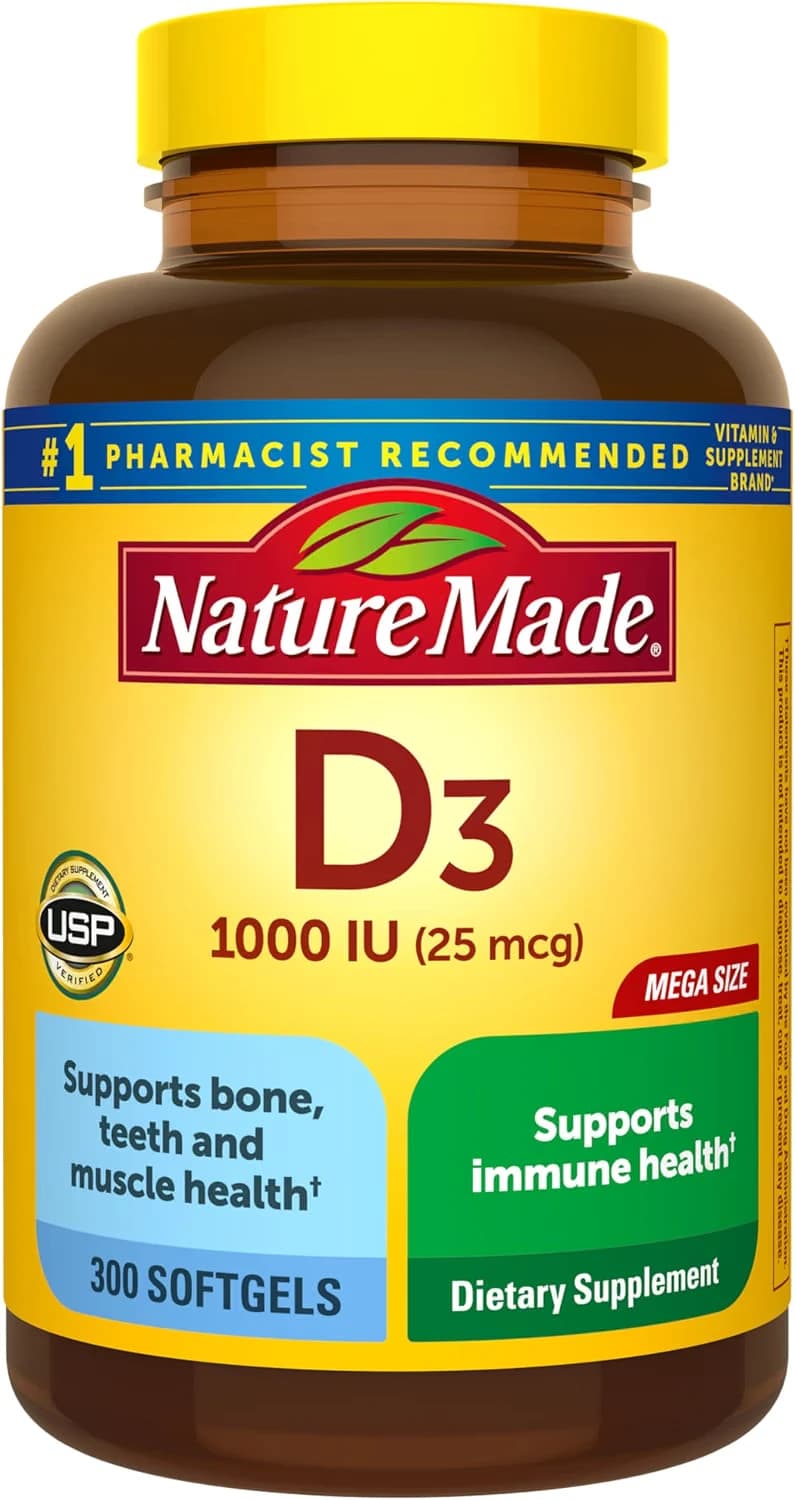
Nature Made Vitamin D3 1000 IU
One active ingredient, its strength given in both units, USP verified for potency, and about six cents a day. The best-value product we have reviewed — on a manufacturer page that still contradicts its own label by a factor of two.
Affiliate links: we may earn a commission at no extra cost to you. Prices and availability change — check the seller before buying.
Where to buy
Affiliate link: we may earn a commission at no extra cost to you.
Check the current priceYour questions, answered.
Is Optimum Nutrition Opti-Men worth it in the UK?
For most men, no. The formula is sensible and the vitamin D dose is right for a UK winter, but most men who eat a varied diet do not need a multivitamin. If you want one anyway, a supermarket A–Z covers the core vitamins and minerals for about 5.5p a day, against about 50p to 67p for Opti-Men.
How many Opti-Men tablets should I take a day?
Three tablets once a day with food, which is one serving. A 90-tablet tub lasts 30 days. Do not take more than the recommended daily dose, and take the tablets with a meal to reduce the chance of nausea.
Is the UK Opti-Men the same as the American one?
No. The UK and European tub has 36 active ingredients and moderate doses, such as 400 µg of vitamin A and 4 mg of thiamin. The American Opti-Men is a different, much higher-dose formula. Many UK retail pages copy the American figures, so check the panel on the tub itself.
Does Opti-Men give you more energy?
Only if you were short of the nutrients it contains. The “reduces fatigue” claim is an authorised claim for vitamins such as C, B6 and B12, and describes their normal role in the body. Trials do not show extra energy from topping up nutrients you already get enough of. If you are always tired, see your GP.
Why does Opti-Men turn urine bright yellow?
Riboflavin, or vitamin B2. Your body excretes what it does not need, and riboflavin is naturally bright yellow. It is harmless and expected, and it does not mean the rest of the tablet is being wasted.
Does Opti-Men help build muscle?
Not directly. Its 1 g amino acid blend is tiny next to the 20 g or more of protein in a normal meal or a scoop of whey. A multivitamin can fill gaps in a restricted diet, but muscle is built by training, enough protein and enough calories. Creatine has far better evidence for strength.
Can I take Opti-Men with other supplements?
Usually, but add up the labels first. Pre-workouts, zinc tablets and testosterone support products often carry the same B6, zinc and vitamin A. The NHS advises no more than 10 mg of B6 and 25 mg of zinc a day from supplements. Opti-Men alone provides 5.4 mg and 12 mg.
Is Opti-Men Informed Sport certified?
Not as a product, on the brand’s own account. Optimum Nutrition names only Gold Standard 100% Whey England Rugby, Gold Standard 100% Plant and the Optimum Bar as Informed Sport registered. If you are drug-tested, use a batch-tested product you can look up.
Community experiences
Reader submissions open once a page is published from the editorial database. This overview is maintained in code, so there is nothing to attach a submission to yet. If you have used this product, send it through the contact page and it will be considered when submissions open.
References
- GymBeam product page for Optimum Nutrition Opti-Men — the source of the European 36-ingredient nutrition panel and %NRV figures quoted here, read via search listings on 28 September 2026. gymbeam.com
- Discount Supplements UK listing for Optimum Nutrition Opti-Men — independent confirmation of 225 mg vitamin C, 30 mg vitamin E and 12 mg zinc per three tablets. discount-supplements.co.uk
- Protein Package UK listing for Optimum Nutrition Opti-Men — the source of the ingredient order and the three-tablets-with-food directions. proteinpackage.co.uk
- Gaziano et al. (2012), JAMA. Multivitamins in the prevention of cancer in men: the Physicians’ Health Study II randomised controlled trial, 14,641 men followed for a median of 11.2 years. pubmed.ncbi.nlm.nih.gov
- Sesso et al. (2012), JAMA. Multivitamins in the prevention of cardiovascular disease in men: the Physicians’ Health Study II randomised controlled trial. pubmed.ncbi.nlm.nih.gov
- US Preventive Services Task Force (2022), JAMA. Vitamin, mineral and multivitamin supplementation to prevent cardiovascular disease and cancer: recommendation statement. pubmed.ncbi.nlm.nih.gov
- Loftfield et al. (2024), JAMA Network Open. Multivitamin use and mortality risk in three prospective US cohorts: 390,124 adults followed for more than 20 years. pubmed.ncbi.nlm.nih.gov
- NHS. Vitamin D — the advice to consider 10 µg a day in autumn and winter. nhs.uk
- NHS. Vitamins and minerals — guidance on how much of each nutrient from supplements is unlikely to cause harm, including vitamin B6, zinc, vitamin A and manganese. nhs.uk
- Great Britain nutrition and health claims register — the authorised claims for vitamins and minerals, including the reduction of tiredness and fatigue. gov.uk
- Optimum Nutrition customer service. Which products are Informed Sport registered, and the distinction between the Informed-Sport registered Middlesbrough site and product-level certification. service.optimumnutrition.com
- PriceSpy UK comparison for Optimum Nutrition Opti-Men 90 tablets — one of the price listings quoted here, read via search on 28 September 2026. pricespy.co.uk
Page history
- First published for the UK market. We could not open Optimum Nutrition’s GB product page, so the nutrition panel is the European 36-ingredient formula as published by GymBeam, partly confirmed on a UK retailer listing, and prices come from search listings for UK retailers on this date. This is a desk review: nobody on our team has used this product. No other multivitamin on the site has a full review yet, so the comparison block shows our vitamin D review, and the multivitamins are compared in a best-alternatives section.
- Scored 5.0 out of 10 against the five published product criteria. The formula is sensible and safe. The marks lost are for weak evidence that well-fed men benefit from a multivitamin, extras too small to matter, undisclosed botanical amounts, and a daily cost several times that of a supermarket A–Z.
Compare it with
Side by side on the five scores, the dose against the studied amount, the cost per serving and what each label discloses.
- Optimum Nutrition Opti-Men vs NOW Omega-3 Molecularly Distilled6.4/10
- Optimum Nutrition Opti-Men vs Nature Made Vitamin D3 1000 IU7.4/10
- Optimum Nutrition Opti-Men vs Optimum Nutrition Gold Standard 100% Whey7.0/10
- Optimum Nutrition Opti-Men vs Myprotein Impact Whey Protein7.6/10
- Optimum Nutrition Opti-Men vs Kinetica Whey Protein8.0/10
- Optimum Nutrition Opti-Men vs Yu Sleep1.8/10
- Optimum Nutrition Opti-Men vs Pendulum Akkermansia4.0/10
- Optimum Nutrition Opti-Men vs Optimum Nutrition Micronised Creatine Powder7.4/10
- Optimum Nutrition Opti-Men vs Optimum Nutrition Gold Standard 100% Casein Protein Powder6.6/10
- Optimum Nutrition Opti-Men vs Optimum Nutrition Serious Mass5.8/10
Keep asking good questions.
Nature Made Vitamin D3 1000 IU
One active ingredient, its strength given in both units, USP verified for potency, and about six cents a day. The best-value product we have reviewed — on a manufacturer page that still contradicts its own label by a factor of two.